
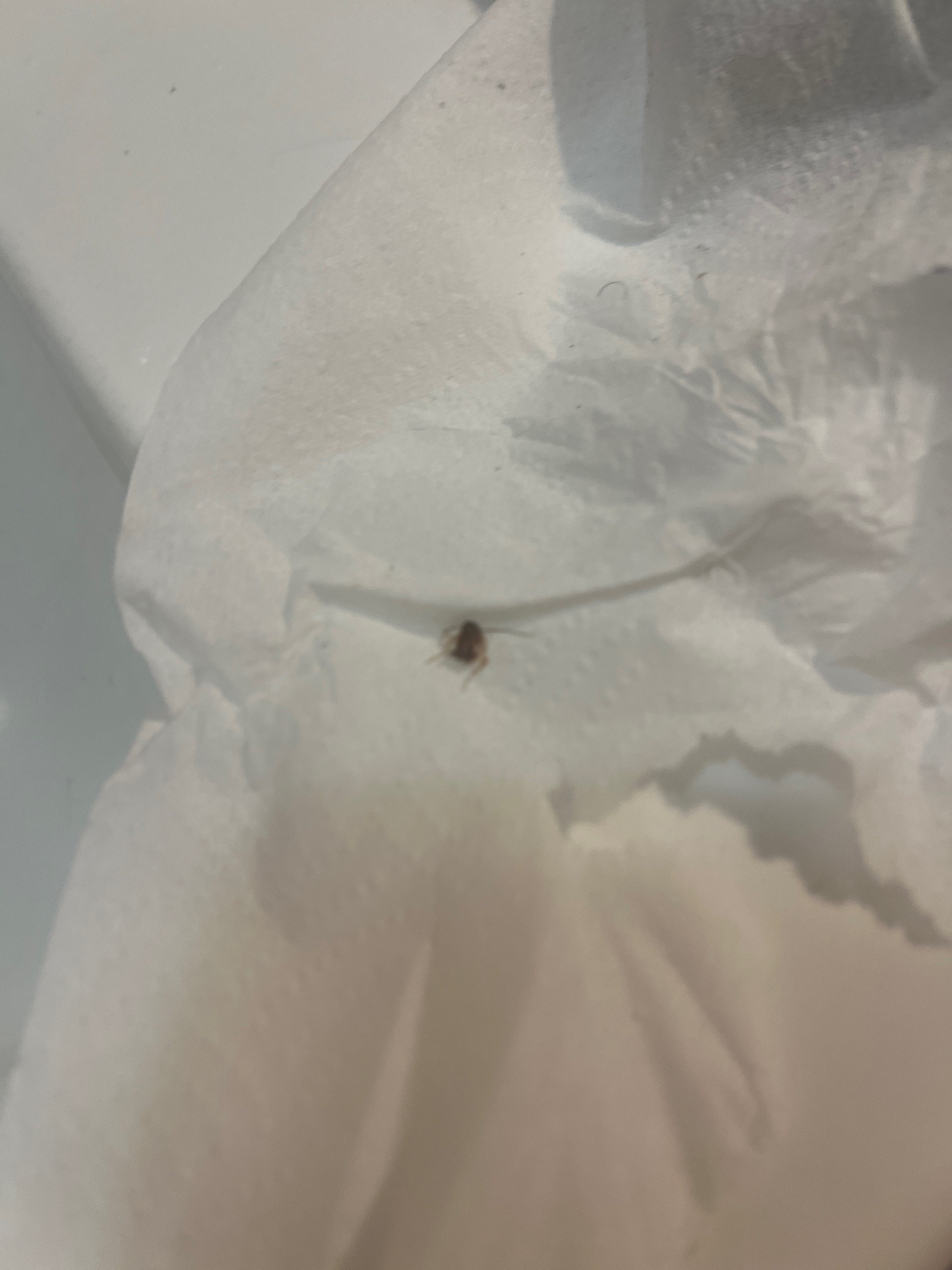
Flea (likely cat flea)
Ctenocephalides felis
- Order & Family
- Siphonaptera, Pulicidae
- Size
- Adults are about 1.5–3.3 mm long; the pictured insect appears consistent with this scale.
Natural Habitat
Pet fur, carpets, bedding, upholstery, and other sheltered household areas. Immature stages develop in floor debris and animal resting sites.
Diet & Feeding
Adults consume blood, primarily from cats, dogs, wildlife, and occasionally humans. Larvae feed on dried blood and organic debris in the environment.
Behavior Patterns
Wingless and laterally flattened, with powerful jumping legs; adults move rapidly through fur or fabric. Eggs and larvae usually remain off-host, while adults can reproduce quickly under warm, humid conditions.
Risks & Benefits
Bites cause itchy papules and may trigger flea-allergy dermatitis; fleas can transmit pathogens and the dog tapeworm, Dipylidium caninum. They have little household benefit, though they form prey for other organisms in natural ecosystems.