
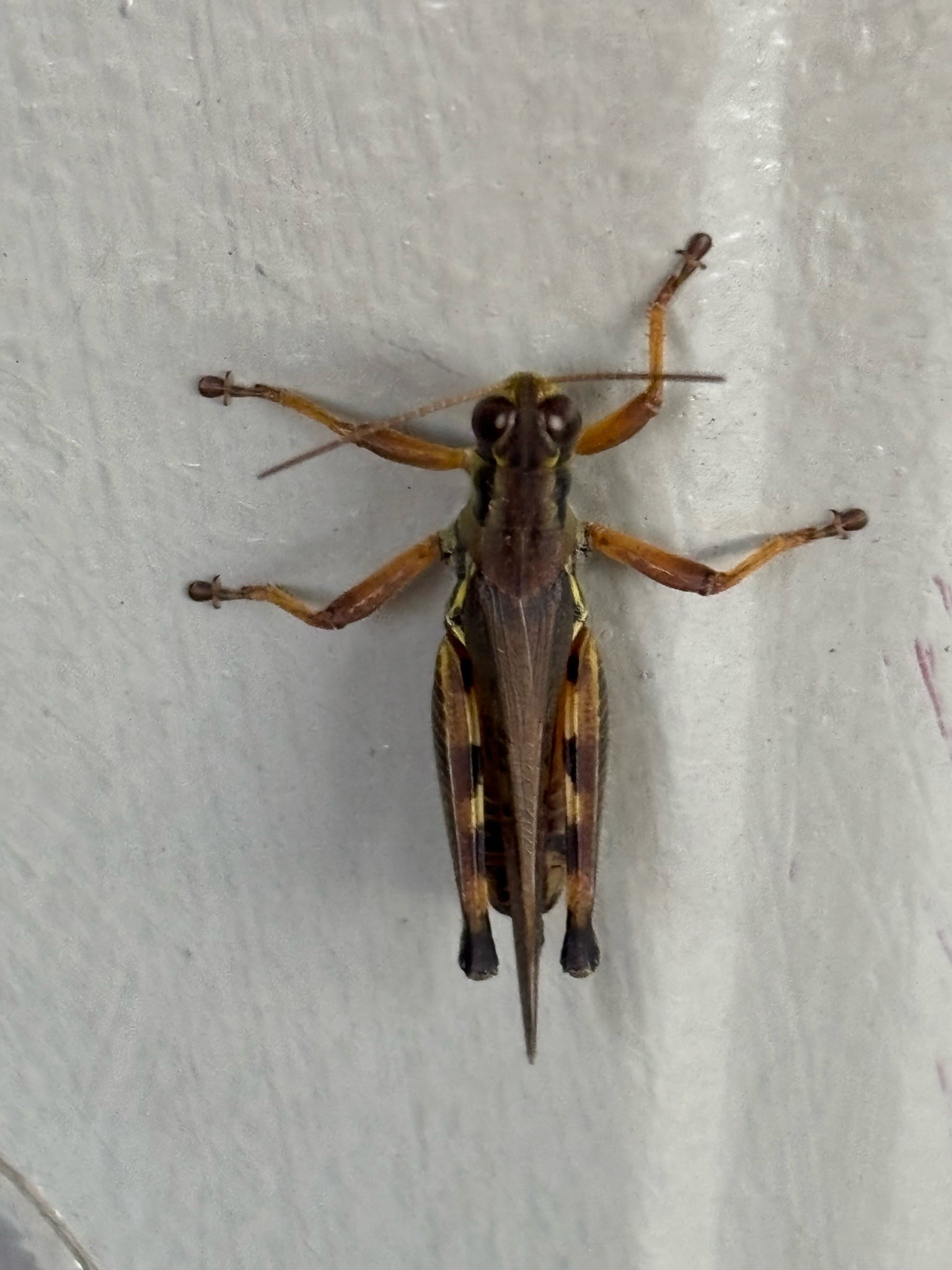
Short-horned grasshopper (likely spur-throated grasshopper)
Acrididae; exact species cannot be confirmed from the image alone
- Order & Family
- Orthoptera, Acrididae
- Size
- Typically 2–5 cm (0.8–2 in) long; females are generally larger than males.
Natural Habitat
Grasslands, fields, roadsides, gardens, and other sunny areas with herbaceous vegetation. Many species also occupy dry scrub or agricultural margins.
Diet & Feeding
Primarily herbivorous, feeding on grasses, leaves, and other plant tissue. Some species occasionally consume dead insects or animal matter.
Behavior Patterns
Powerful hind legs enable jumping, while adults commonly fly short distances; many produce sounds by rubbing body parts together. They develop through incomplete metamorphosis, with nymphs resembling smaller, wingless adults.
Risks & Benefits
Generally harmless to people, though abundant populations can damage crops and garden plants. They are important prey for birds, reptiles, amphibians, and predatory insects, and contribute to nutrient cycling.