
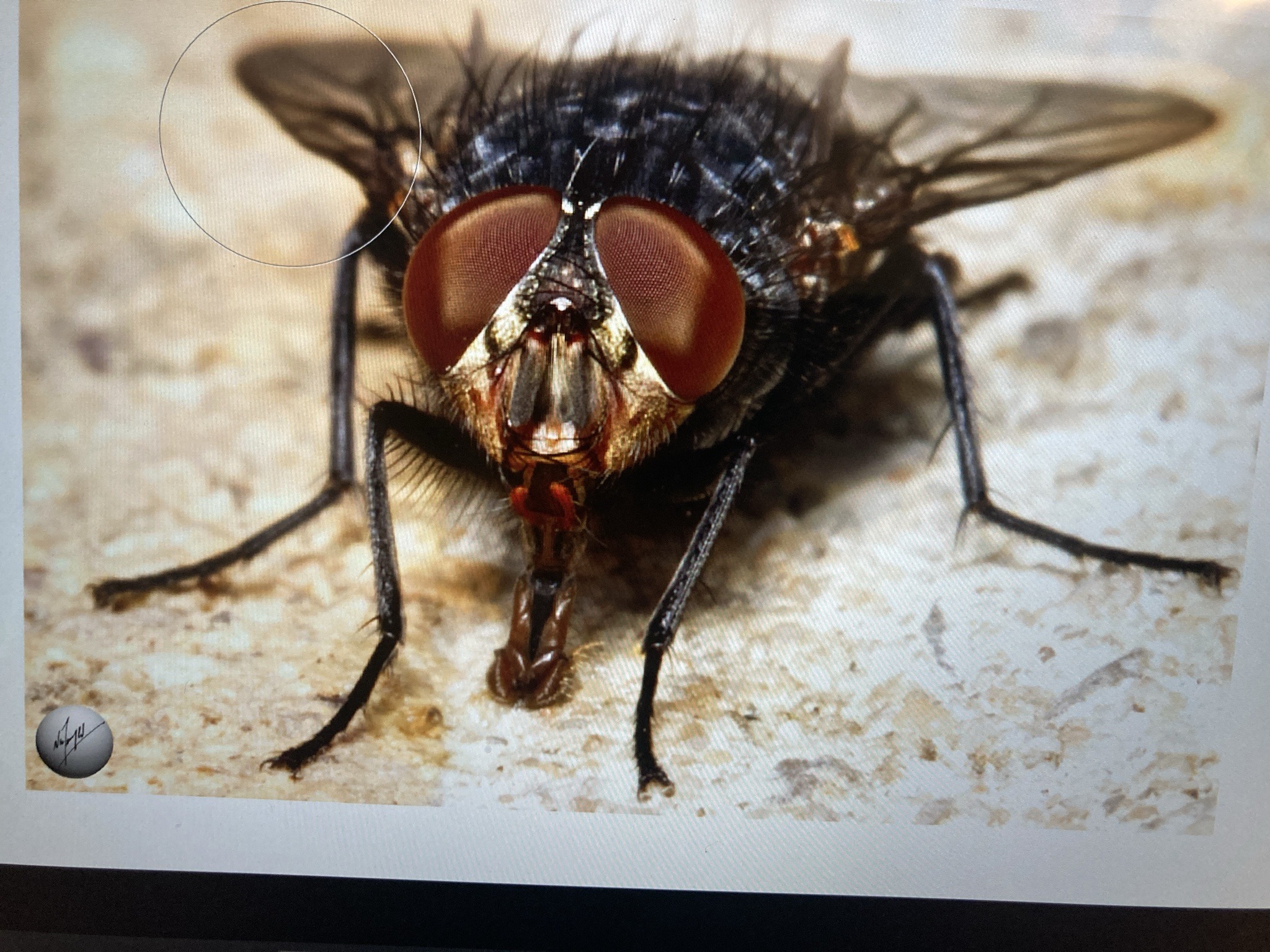
Housefly
Musca domestica
- Order & Family
- Diptera; Muscidae
- Size
- About 6–7 mm (0.24–0.28 in) long.
Natural Habitat
Human dwellings, farms, food facilities, garbage areas, and animal manure. Adults commonly rest on walls, food surfaces, and waste.
Diet & Feeding
Adults consume liquid or liquefied food, including sugars, food residue, feces, and decaying organic matter. Larvae feed mainly in manure and rotting material.
Behavior Patterns
Highly mobile day-fliers with rapid wingbeats; they groom frequently and regurgitate digestive fluids onto solid food. Females lay batches of eggs in moist organic waste, with development often completed in 1–3 weeks in warm conditions.
Risks & Benefits
Can mechanically transmit pathogens such as Salmonella, Shigella, and some parasitic organisms to food and surfaces. Larvae help decompose organic waste and serve as prey for spiders, birds, and other predators.