
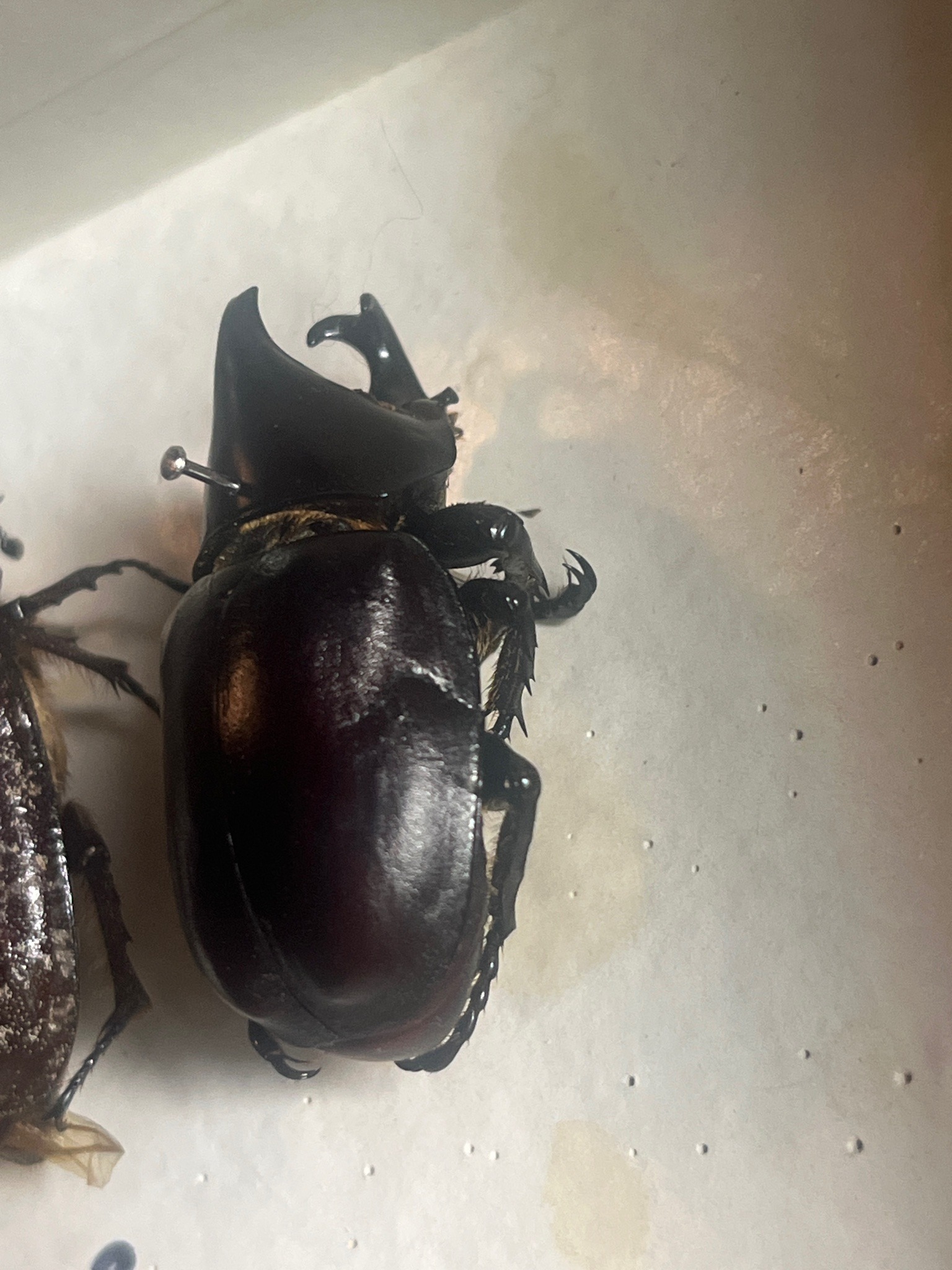
Community identification
Hercules beetle (likely a rhinoceros beetle)
Dynastes hercules
- Order & Family
- Coleoptera; Scarabaeidae (rhinoceros beetles)
- Size
- Males commonly measure 5–6.5 in (12–17 cm) including the horns; females are usually 2–3 in (5–8 cm) and hornless.
Natural Habitat
Tropical forests of Central and South America, especially humid lowland and montane forests. Adults occur on tree trunks, in leaf litter, and around fermenting fruit.
Diet & Feeding
Larvae consume decaying wood and organic matter. Adults mainly eat fruit, tree sap, and occasionally nectar.
Behavior Patterns
Males use their large horns to wrestle rivals for access to females. Adults are mostly nocturnal, strong fliers, and attracted to lights; development from egg to adult can take one to two years.
Risks & Benefits
Harmless to people, though males can pinch if handled. Larvae help decompose wood and recycle nutrients; the species is valued in education and conservation but may be threatened by habitat loss and collecting.