
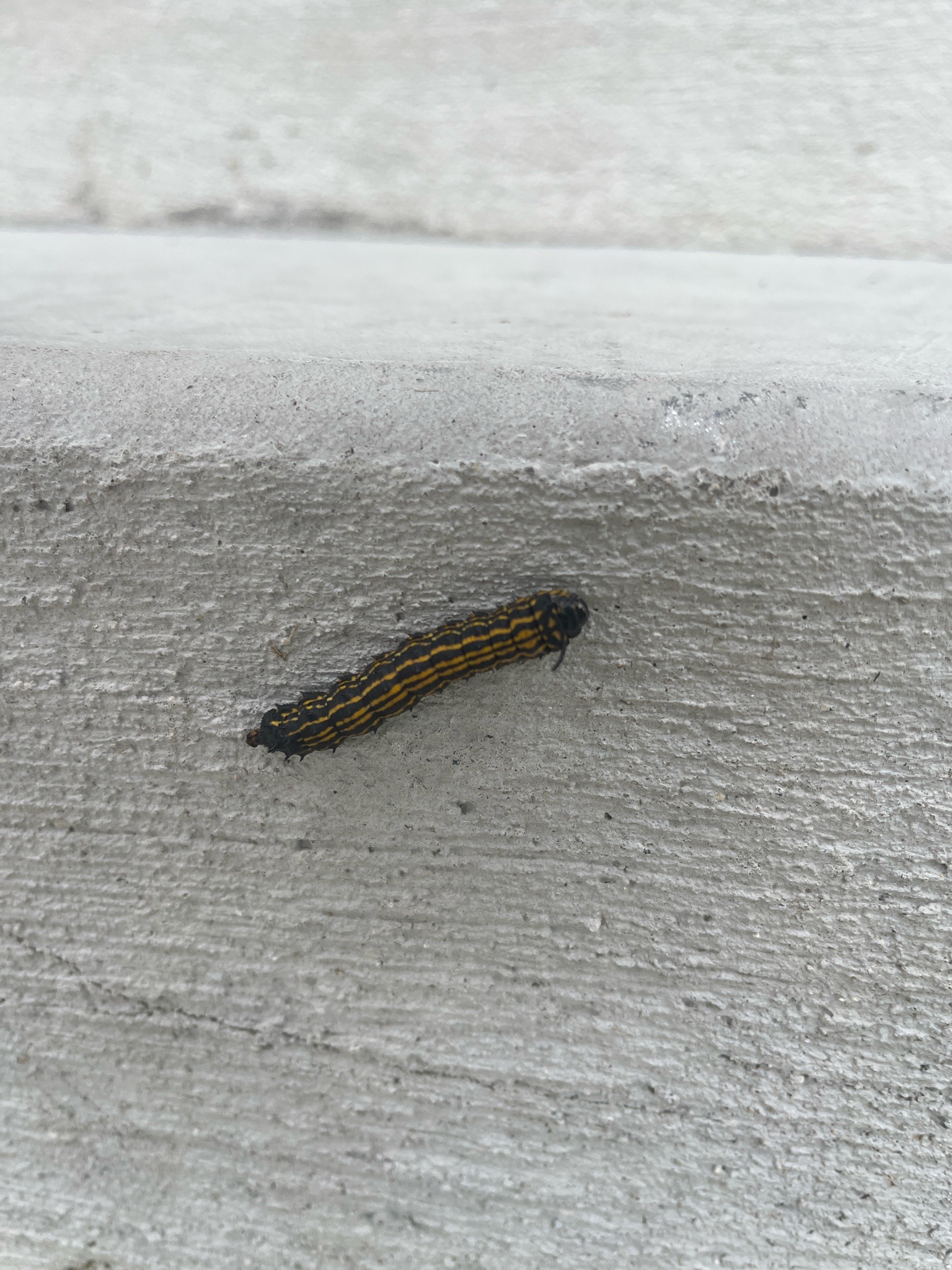
Community identification
White-marked tussock moth caterpillar (likely)
Orgyia leucostigma
- Order & Family
- Lepidoptera; Erebidae (subfamily Lymantriinae)
- Size
- Typically 25–35 mm (1–1.4 in) when mature.
Natural Habitat
Woodlands, parks, gardens, and urban areas across much of eastern and central North America, on deciduous trees and shrubs.
Diet & Feeding
Larvae chew leaves of many trees and shrubs, including oak, maple, birch, and fruit trees; adults generally do not feed.
Behavior Patterns
Caterpillars are active during the day and may wander on trunks, walls, and other surfaces before pupating. They develop through several molts and produce silk cocoons containing irritating hairs.
Risks & Benefits
Larval hairs can cause itchy skin rashes, eye irritation, or respiratory discomfort, especially in sensitive people; avoid handling. They are native herbivores and serve as food for birds and other predators, though outbreaks can defoliate plants.