
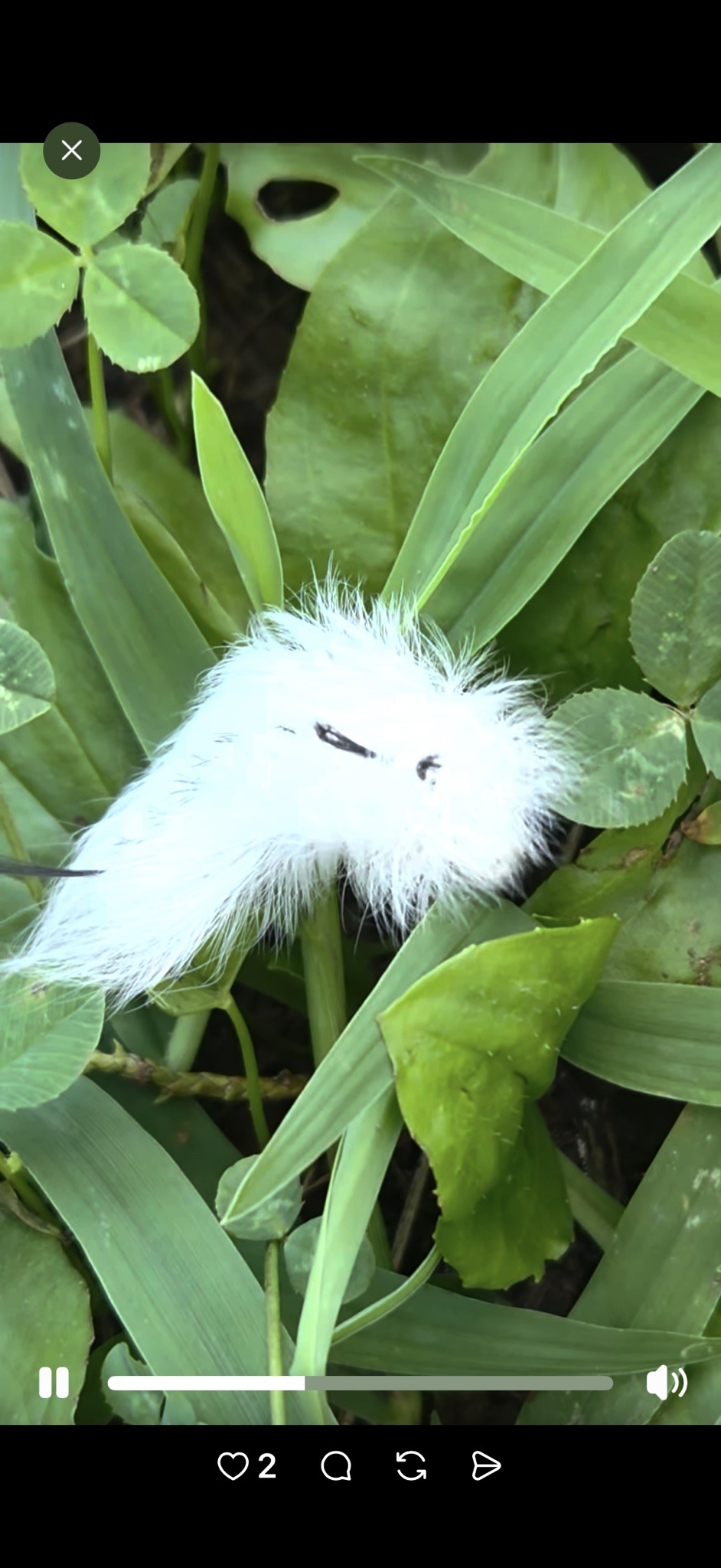
Community identification
White-haired caterpillar (likely tussock moth caterpillar)
Uncertain from image; possibly Orgyia spp.
- Order & Family
- Lepidoptera; family Erebidae (subfamily Lymantriinae)
- Size
- Typically 2–5 cm (0.8–2 in) long when mature, depending on species.
Natural Habitat
Vegetation in gardens, meadows, forest edges, and other areas with host plants.
Diet & Feeding
Chews leaves from a wide range of trees, shrubs, and herbaceous plants; larvae are foliage feeders.
Behavior Patterns
Larvae are often solitary and conspicuously hairy, with distinctive tufts or plumes. They pupate in loose silk cocoons and adults generally emerge as moths; species may produce multiple generations annually.
Risks & Benefits
Do not handle it: some tussock-moth caterpillars have irritating or urticating hairs that can cause rash, eye irritation, or respiratory symptoms. They contribute to food webs, though abundant populations can defoliate plants.