
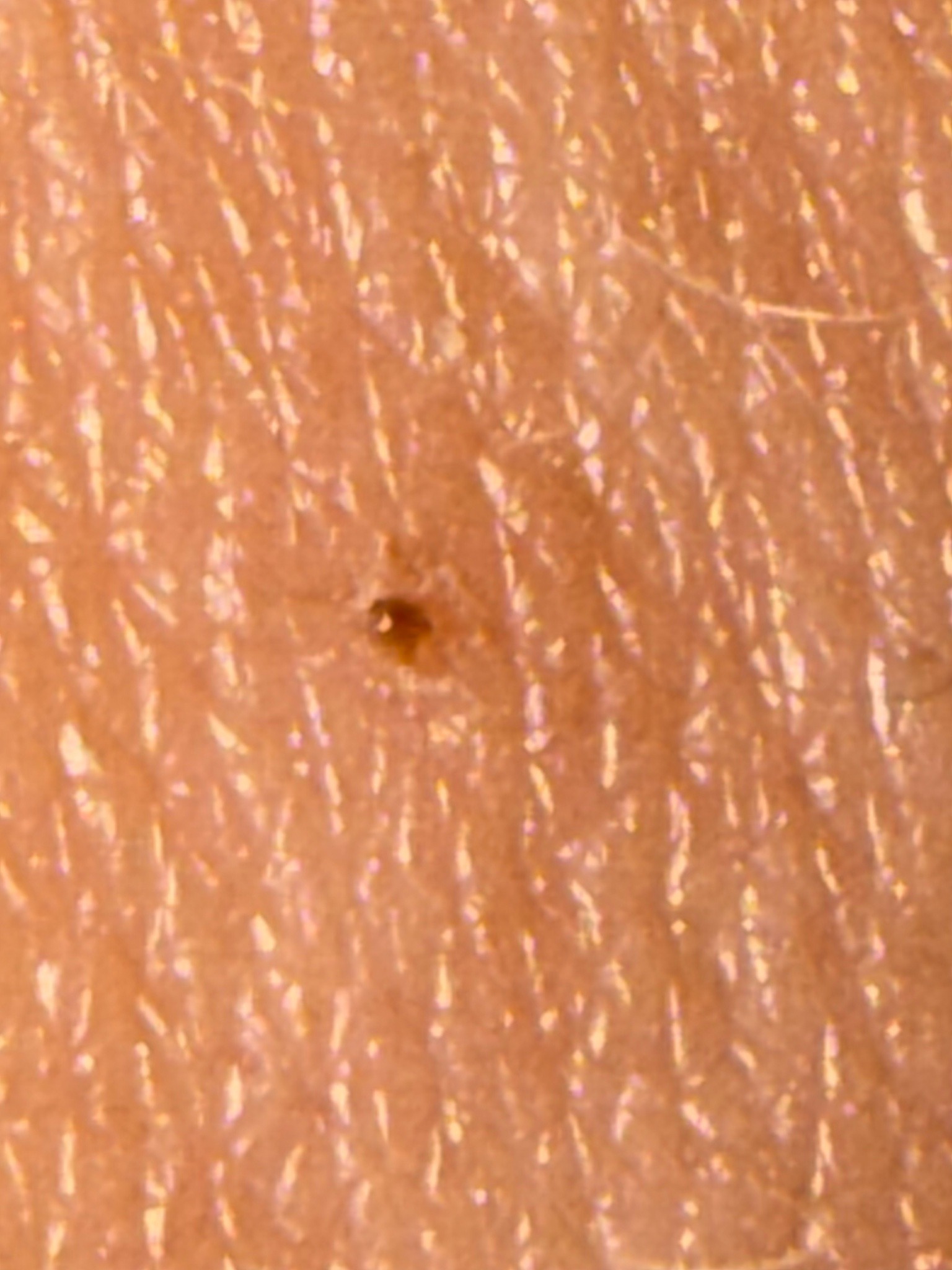
Community identification
Likely chigger (harvest mite larva)
Trombiculidae, likely *Trombicula* or *Neotrombicula* species
- Order & Family
- Arachnida: Trombidiformes; family Trombiculidae
- Size
- About 0.15–0.3 mm, usually barely visible without magnification.
Natural Habitat
Leaf litter, grassy vegetation, soil, and woodland edges; larvae attach temporarily to animals and people.
Diet & Feeding
Larvae feed on liquefied skin tissue and lymph after injecting digestive enzymes; adults and nymphs eat small arthropods and organic matter.
Behavior Patterns
Six-legged larvae climb vegetation and attach to passing hosts, commonly causing intensely itchy bites for several days. They do not burrow into skin or remain attached long-term.
Risks & Benefits
Can cause itchy dermatitis; some Asian species transmit scrub typhus, but this is not typical of North American chiggers. Adults and nymphs help regulate small soil-arthropod populations.