
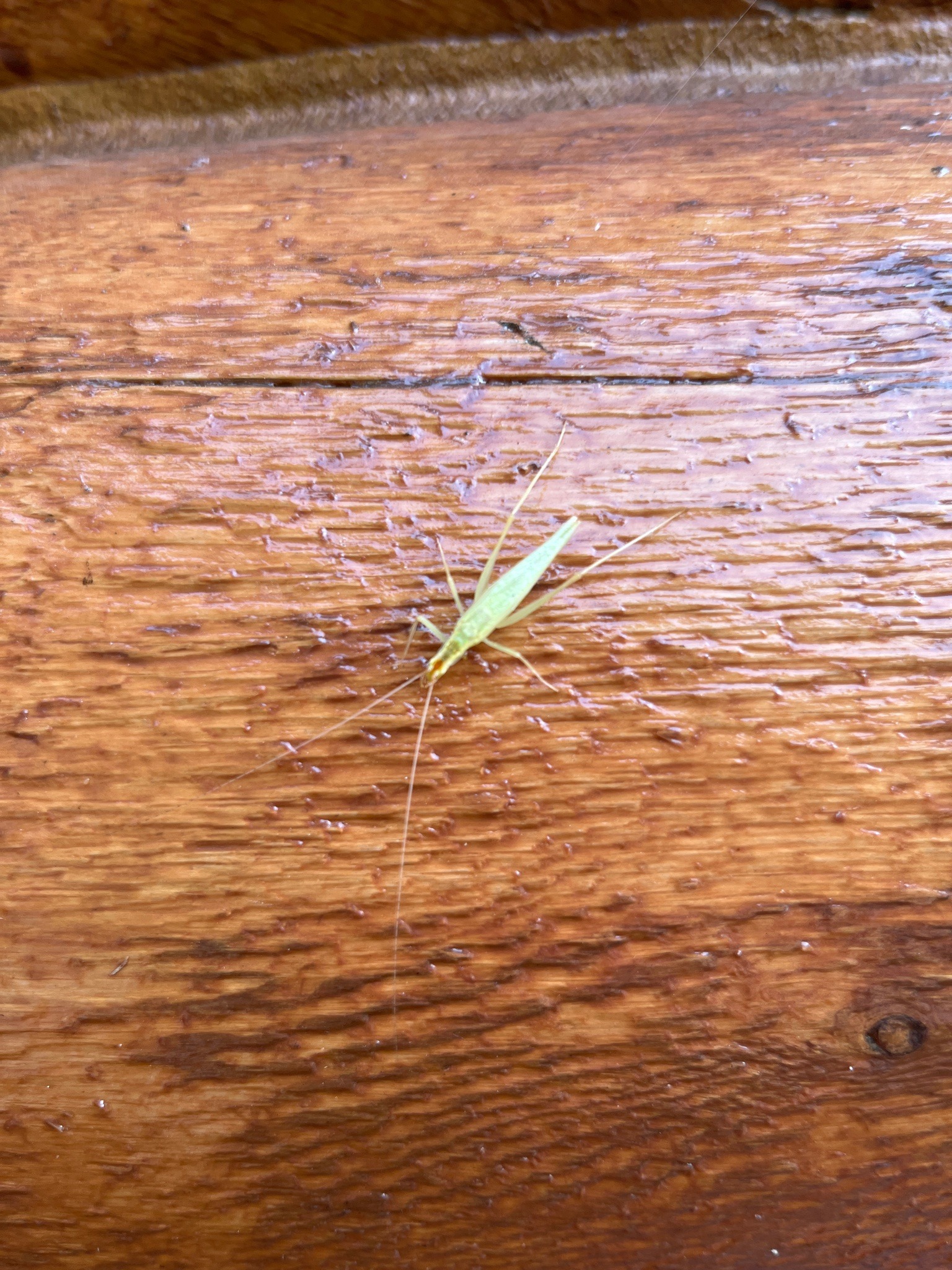
Community identification
Green lacewing
Chrysopidae (likely Chrysoperla species)
- Order & Family
- Neuroptera; Chrysopidae
- Size
- Adults typically 10–15 mm long, excluding antennae; wingspan is about 20–30 mm.
Natural Habitat
Vegetation, gardens, woodland edges, and buildings near outdoor lights; adults may enter homes. Common wherever aphids and other small soft-bodied insects occur.
Diet & Feeding
Larvae are voracious predators of aphids, scale insects, mites, thrips, and insect eggs. Adults mainly eat nectar, pollen, and honeydew, though some species also prey on insects.
Behavior Patterns
Adults are delicate, mostly nocturnal flyers attracted to lights. Females often lay stalked eggs, while larvae—called aphid lions—actively hunt prey and pass through three stages before pupating.
Risks & Benefits
Harmless to people and pets; they do not bite or sting. Highly beneficial biological-control insects because their larvae suppress garden and crop pests.