
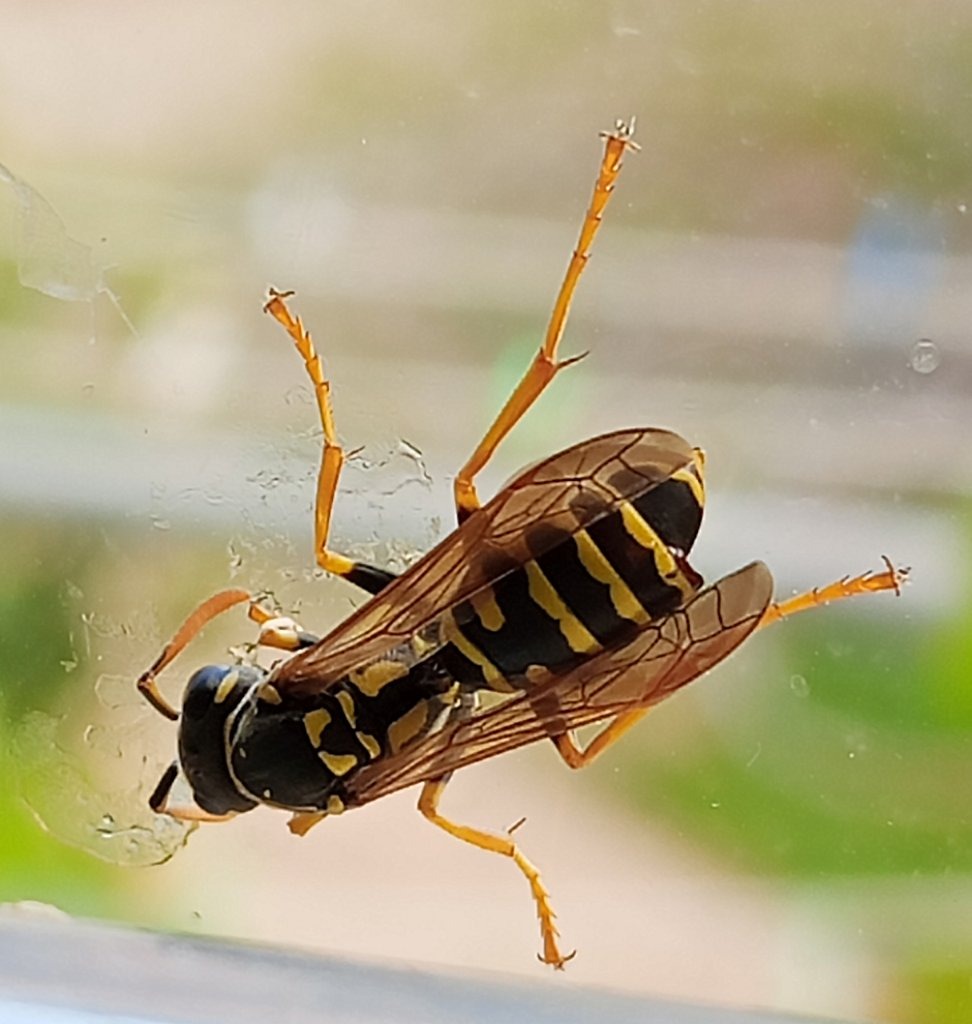
Community identification
Bald-faced hornet (aerial yellowjacket)
Dolichovespula maculata
- Order & Family
- Hymenoptera; Vespidae
- Size
- Workers are about 12–15 mm; queens reach roughly 18–20 mm. The pictured insect appears consistent with a large yellowjacket-type wasp.
Natural Habitat
Forested areas, gardens, and urban settings; adults may enter buildings accidentally, especially near windows. Nests are usually enclosed paper structures in trees, shrubs, or on buildings.
Diet & Feeding
Adults eat nectar, fruit juices, and other sugary liquids. They capture insects and chew them into prey pulp for larvae.
Behavior Patterns
Highly social and active during daylight, with annual colonies founded by a queen in spring. They defend nests aggressively when disturbed and die off in late autumn except for new queens.
Risks & Benefits
Can deliver painful stings and may sting repeatedly near the nest; people allergic to venom face greater risk. They benefit ecosystems by pollinating plants and suppressing caterpillars and other insects.