
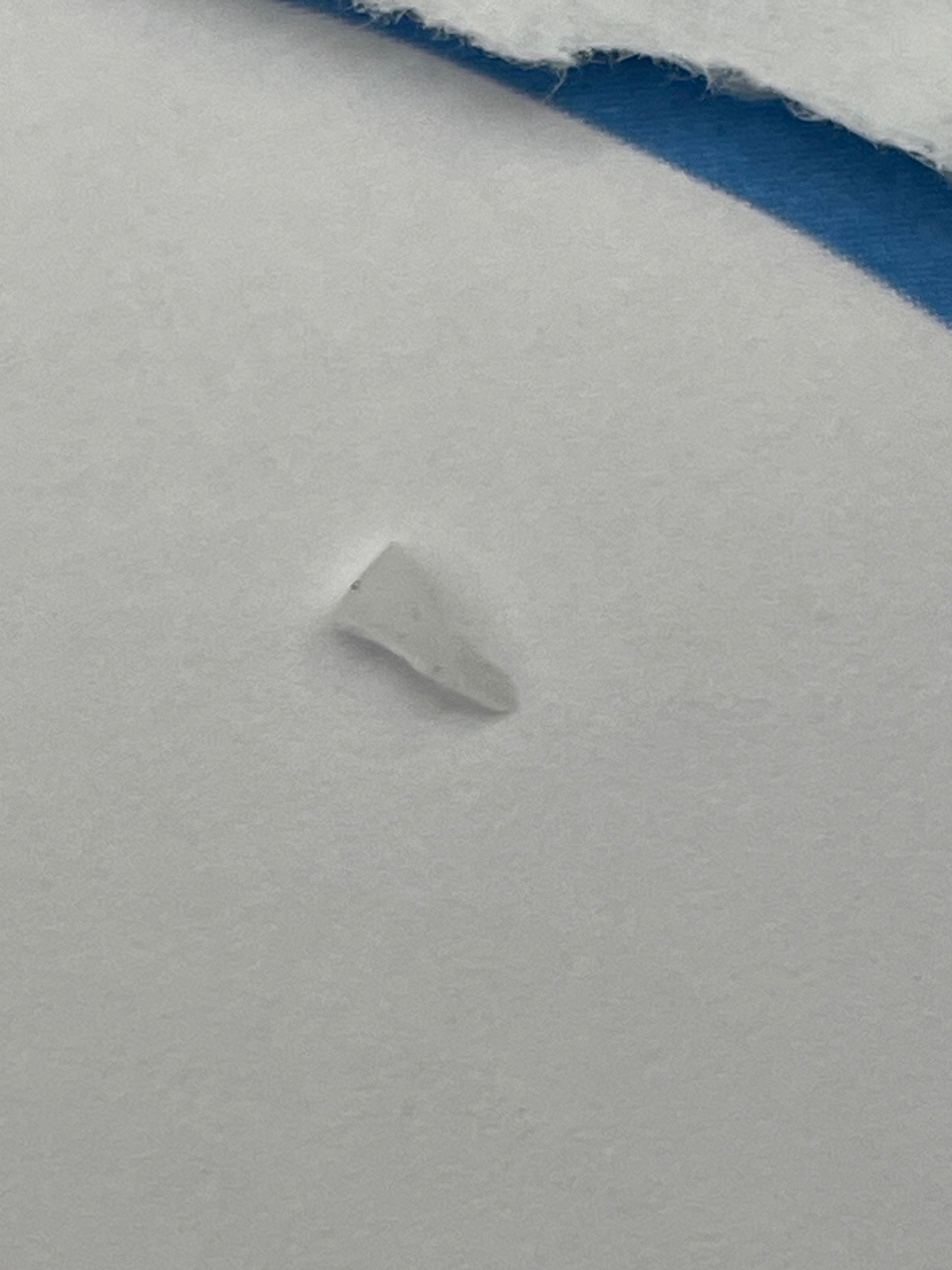
Likely clothes moth larval case (case-bearing clothes moth)
Tinea pellionella
- Order & Family
- Lepidoptera; Tineidae
- Size
- Larval case typically 4–10 mm long; adult moths are about 6–9 mm long.
Natural Habitat
Indoors, especially closets, carpets, upholstered furniture, and stored textiles. Larvae hide inside portable silk-and-fiber cases.
Diet & Feeding
Larvae eat keratin-containing materials such as wool, fur, feathers, hair, and other animal fibers, often leaving irregular holes. Adults generally do not feed.
Behavior Patterns
The larva constructs and carries a spindle-shaped case made from silk and textile fibers, emerging to graze while remaining concealed. It pupates within or near the case; adults are small, weak-flying moths attracted to dark, undisturbed areas.
Risks & Benefits
Not dangerous to people and does not bite or transmit disease. Larvae can damage woolens, furs, carpets, and other natural-fiber items; infestations are usually manageable through laundering, heat, vacuuming, and storage in sealed containers.