
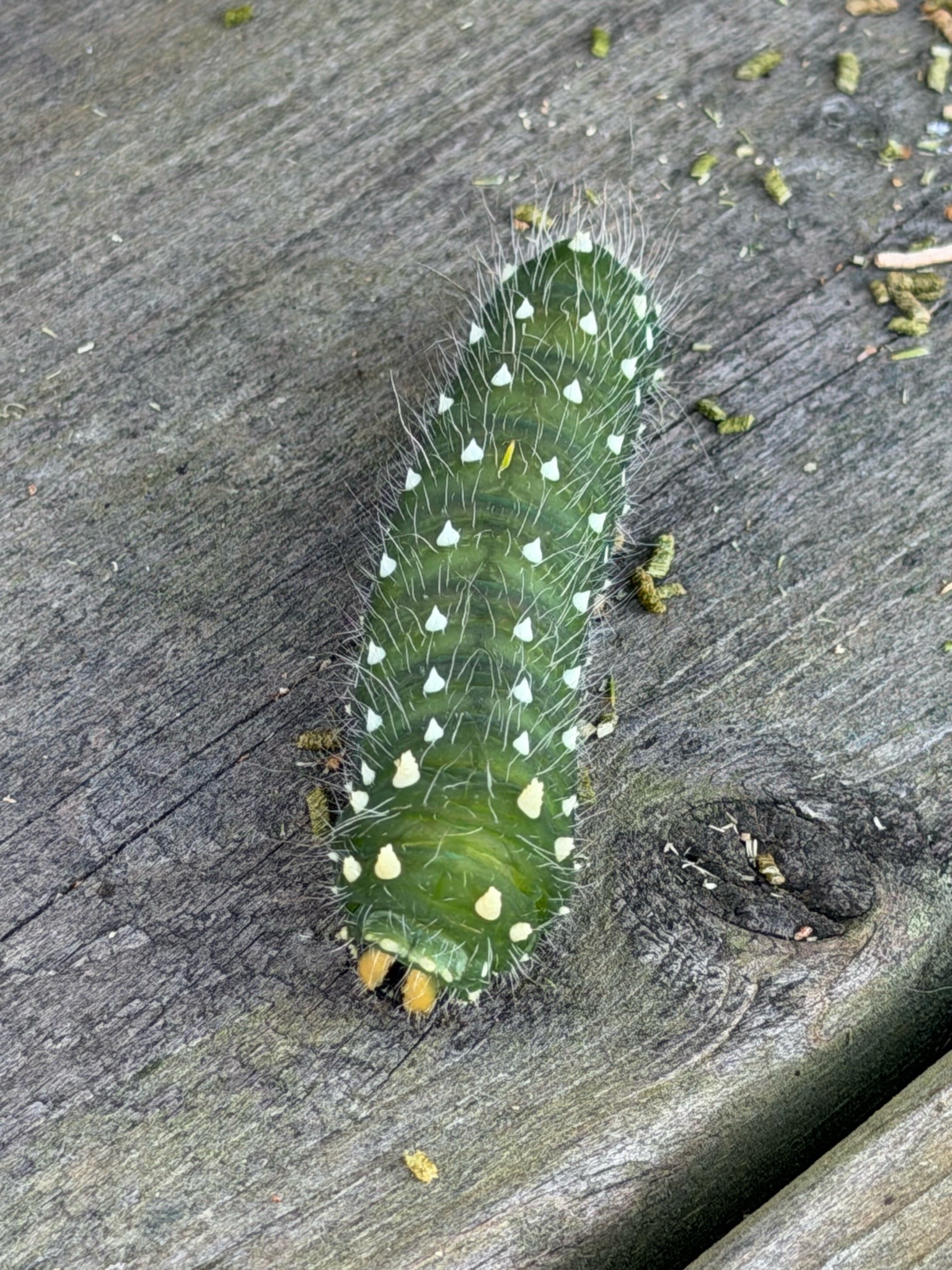
Community identification
White-marked tussock moth caterpillar
Orgyia leucostigma
- Order & Family
- Lepidoptera; Erebidae (tussock moth subfamily Lymantriinae)
- Size
- Mature caterpillars are typically 25–35 mm (1–1.4 in) long.
Natural Habitat
Woodlands, forest edges, parks, gardens, and urban trees across much of eastern and central North America.
Diet & Feeding
Chews leaves of many deciduous trees and shrubs, including oak, maple, birch, willow, and fruit trees; larvae are generalist feeders.
Behavior Patterns
Solitary larvae feed on foliage and pass through several molts before pupating in a silk-covered cocoon. The conspicuous hairs and white tufts discourage predators; adults emerge to mate, and females are wingless.
Risks & Benefits
The urticating hairs can cause itchy dermatitis or respiratory irritation, especially when shed hairs become airborne. Larvae contribute to food webs and usually cause limited, localized defoliation, though outbreaks can stress trees.