
Community identification
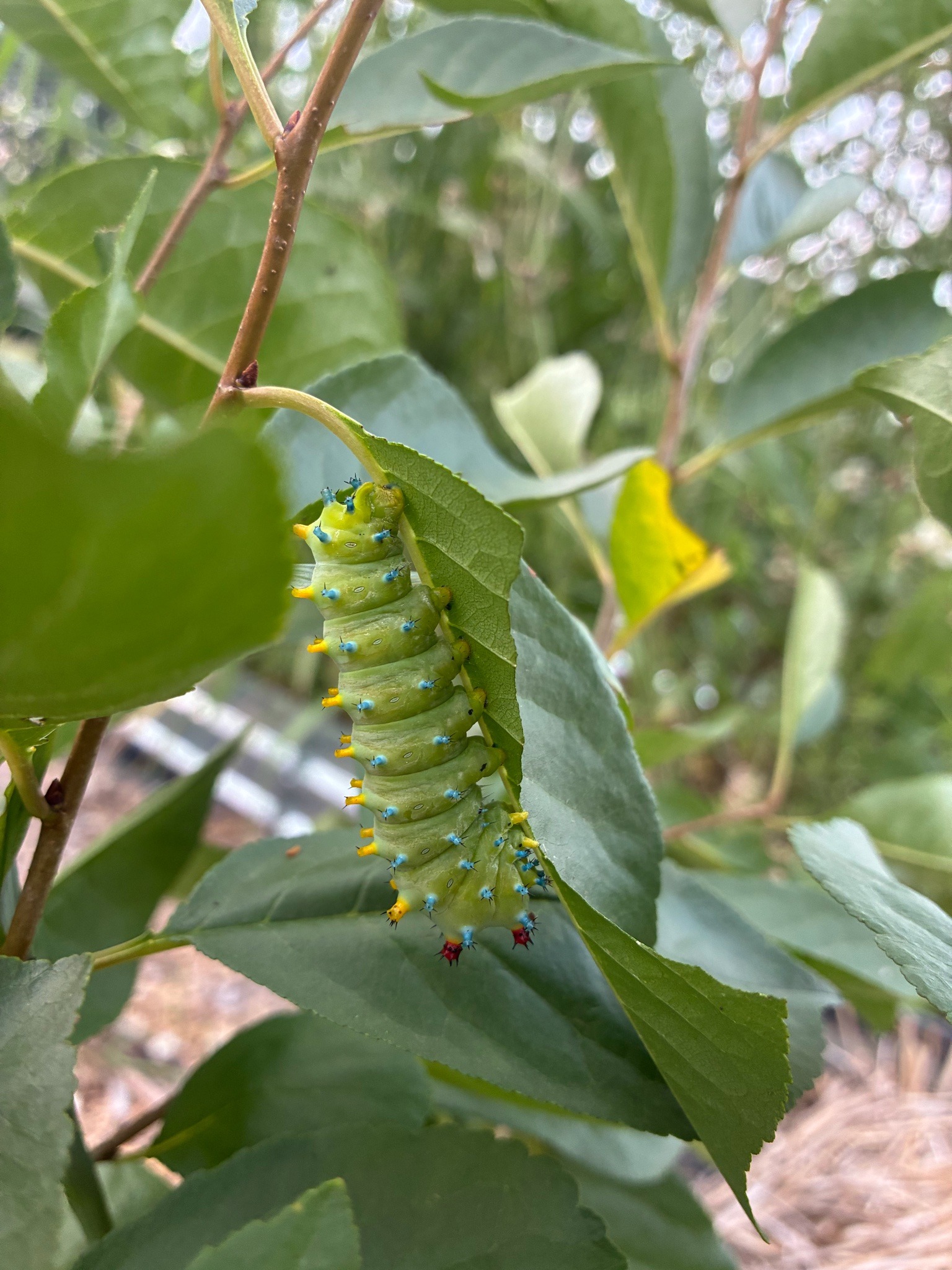
Cecropia moth caterpillar
Hyalophora cecropia
- Order & Family
- Lepidoptera: Saturniidae
- Size
- Up to 4.5 inches (11.5 cm) long in the final instar stage
Natural Habitat
Deciduous forests, woodlands, orchards, urban and suburban areas across North America
Diet & Feeding
Herbivorous; feeds on foliage from host trees and shrubs including maple, birch, cherry, apple, willow, and lilac
Behavior Patterns
Solitary defoliator that undergoes five instar stages, changing color from black to bright green with blue, yellow, and red spiny tubercles. When mature, it spins a large, tough silk cocoon on twigs to overwinter before emerging as a giant silk moth.
Risks & Benefits
Benefits include serving as a pollinator in its adult moth form and providing food for birds and beneficial insects. Harmless to humans and rarely causes significant agricultural or forestry damage due to low population densities.