
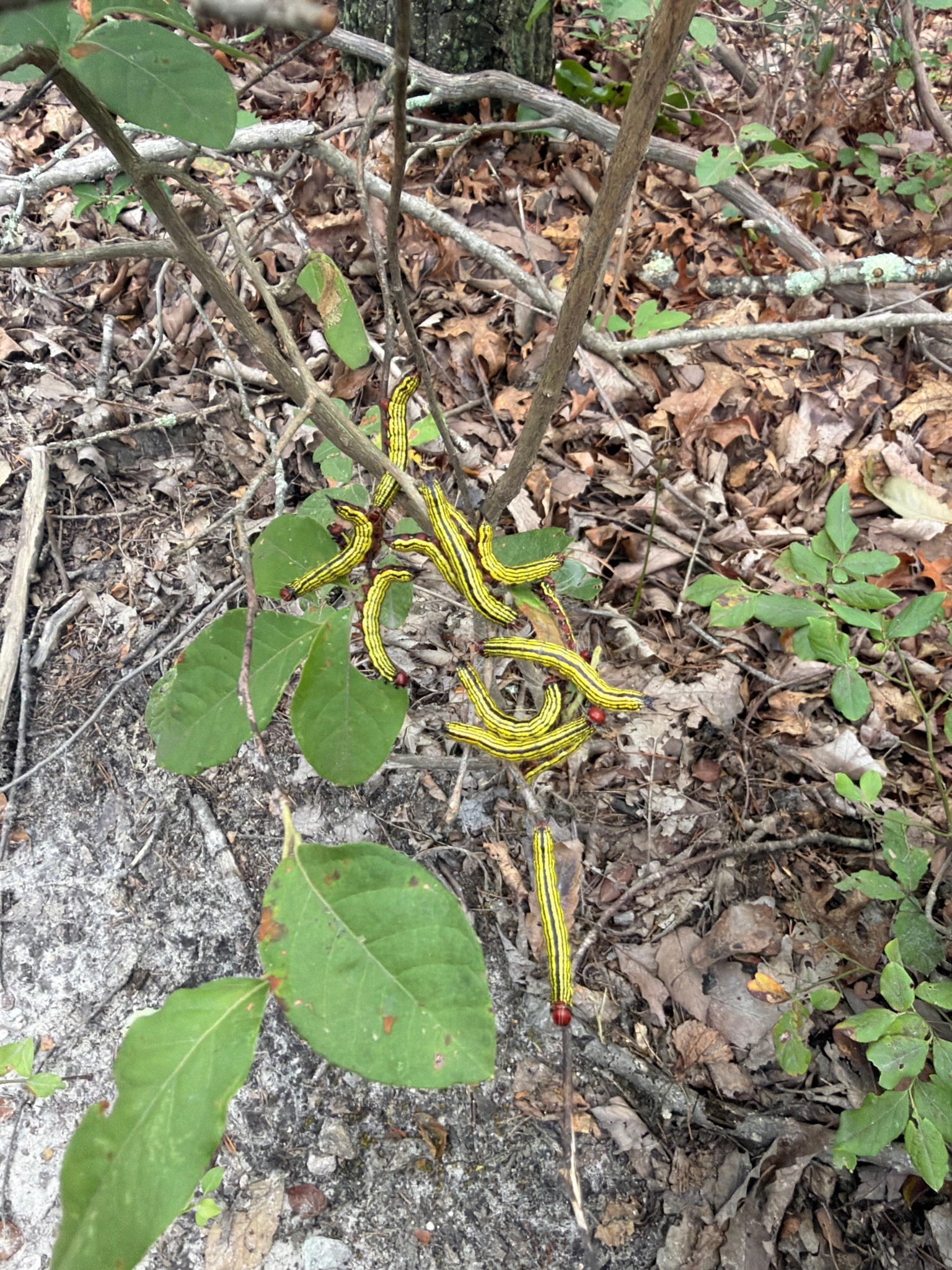
Walnut caterpillar
Datana integerrima
- Order & Family
- Lepidoptera, Notodontidae
- Size
- Mature larvae are about 35–50 mm (1.4–2 in) long; adults have wingspans of roughly 40–50 mm.
Natural Habitat
Woodlands, forest edges, and landscapes containing walnut, hickory, pecan, or butternut trees, especially in eastern North America.
Diet & Feeding
Larvae feed gregariously on the leaves of walnut-family trees and may cause noticeable defoliation. Adults do not feed extensively and primarily reproduce.
Behavior Patterns
Caterpillars cluster on foliage by day and may rear their front and rear ends when disturbed. They eventually descend to the ground, burrow into soil or leaf litter to pupate, and produce multiple generations in warm regions.
Risks & Benefits
They are not venomous and generally pose no direct danger to people, though their hairs can occasionally irritate sensitive skin. They support birds and other predators, but heavy infestations can stress or defoliate host trees.