
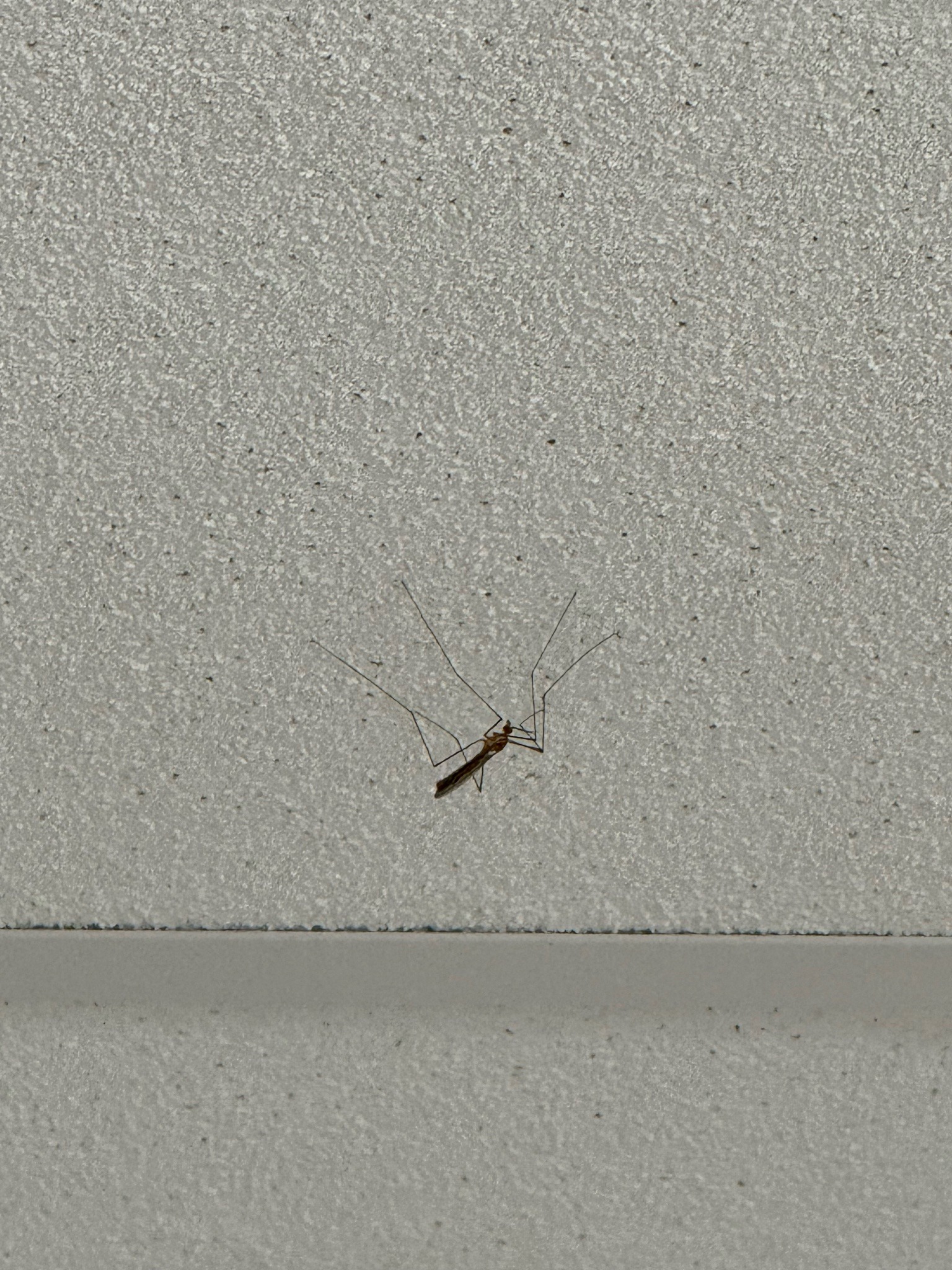
Community identification
Crane fly
Tipulidae spp.
- Order & Family
- Diptera; family Tipulidae
- Size
- Adults typically measure 10–25 mm in body length, with legs spanning up to 50 mm.
Natural Habitat
Moist vegetation, lawns, wetlands, woodland edges, and areas near water; adults often rest on walls and windows.
Diet & Feeding
Many adults feed little or consume nectar; some do not feed. Larvae commonly eat decaying plant matter, roots, or grasses.
Behavior Patterns
Weak fliers with long, easily detached legs; adults are most active around dusk and attracted to lights. Larvae develop in moist soil or aquatic habitats, usually producing one generation annually.
Risks & Benefits
Adults are harmless and do not bite or sting. Larvae help decompose organic matter, though some species can damage turfgrass roots.