
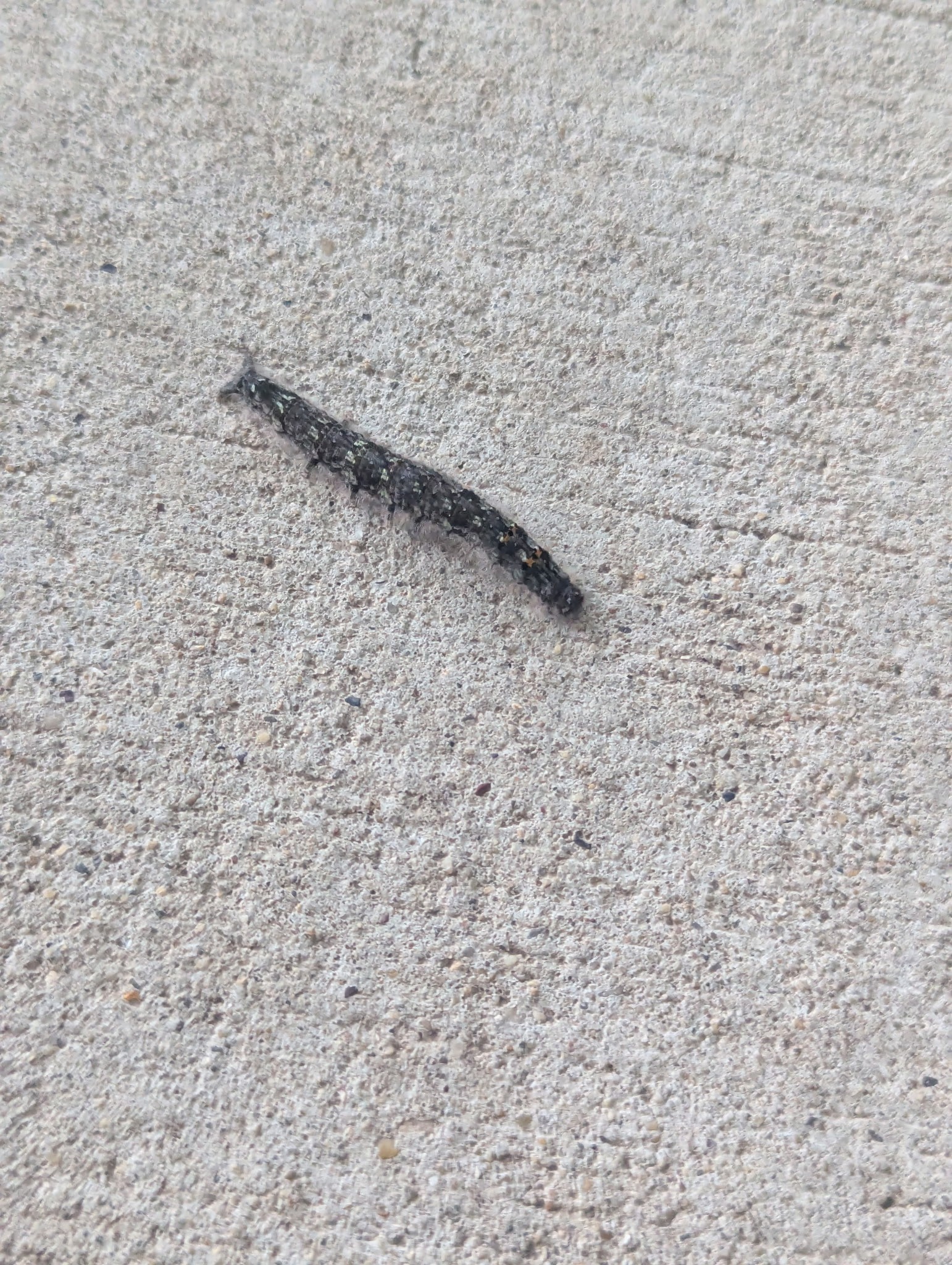
Community identification
Bagworm (likely evergreen bagworm)
Thyridopteryx ephemeraeformis
- Order & Family
- Lepidoptera, Psychidae
- Size
- Larvae and cases commonly reach 1–5 cm long, depending on age and species.
Natural Habitat
Vegetated landscapes, especially evergreen trees and shrubs; larvae may wander onto walls, patios, and other surfaces.
Diet & Feeding
The caterpillar feeds on foliage, particularly arborvitae, juniper, cedar, and other evergreens, while carrying a silken case covered with plant debris.
Behavior Patterns
Larvae construct portable cases, extend their heads and legs to feed, and retreat inside when disturbed. Mature larvae attach the case to vegetation, pupate inside, and adults emerge to mate; females are wingless and remain in the case.
Risks & Benefits
Usually harmless to people and pets, but heavy infestations can defoliate and weaken ornamental trees. They provide food for birds and parasitoid wasps.