
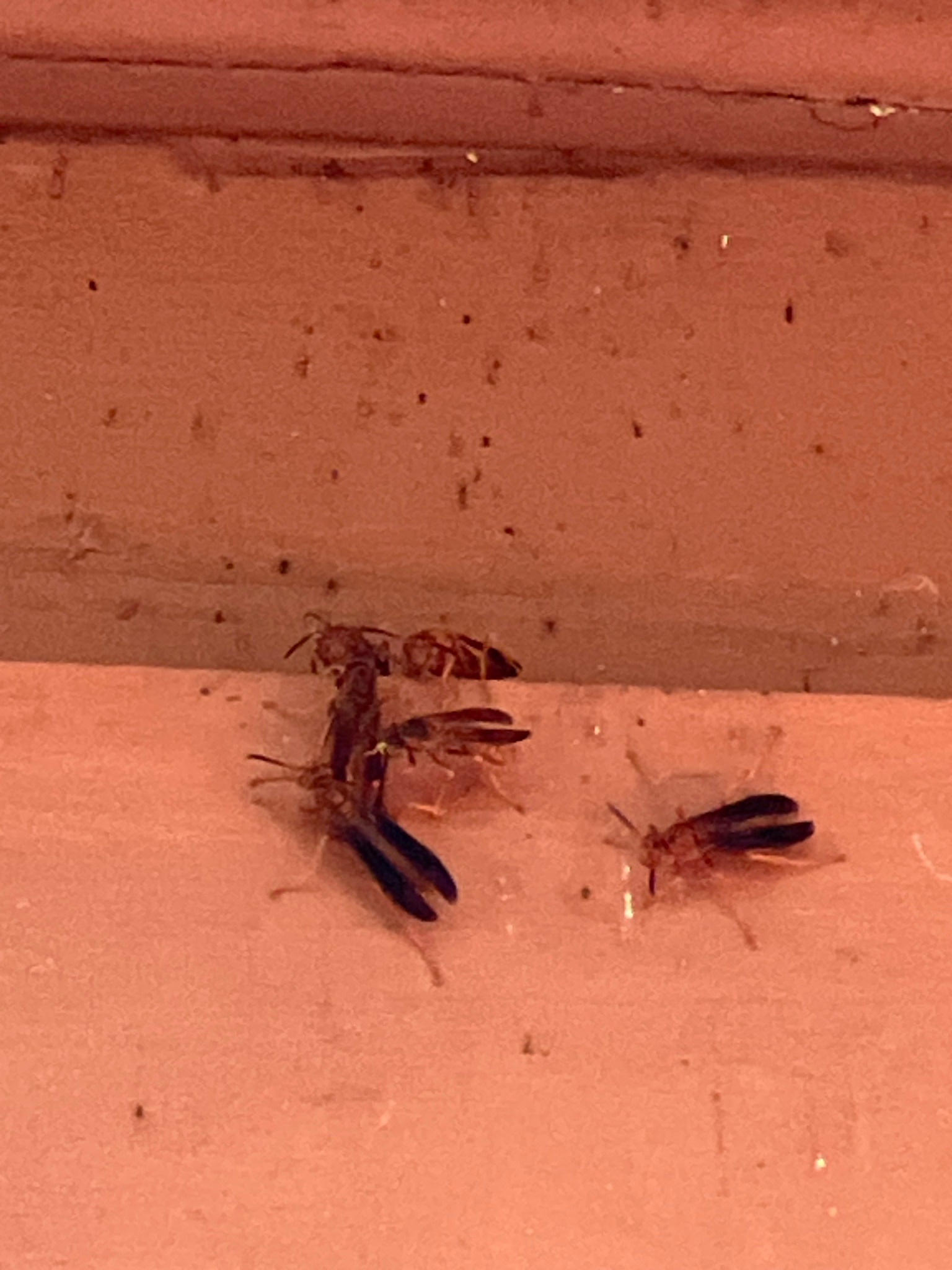
Community identification
Winged termites (alates)
Termitoidea (likely Reticulitermes spp.)
- Order & Family
- Blattodea; family Rhinotermitidae (tentative)
- Size
- Adults are typically 6–12 mm long, excluding wings; wings are usually longer than the body.
Natural Habitat
Moist soil, decaying wood, wall voids, and wooden structures; often emerge indoors from established colonies.
Diet & Feeding
Workers digest cellulose from wood, cardboard, and other plant material using gut microbes. Alates generally stop feeding during dispersal flights.
Behavior Patterns
Winged reproductives swarm under warm, humid conditions, then shed their wings and pair to establish new colonies. Their presence indoors can indicate a nearby infestation.
Risks & Benefits
They can cause significant structural damage when colonies infest timber. Ecologically, termites recycle dead wood and return nutrients to soil; identification should be confirmed against winged ants, which have narrower waists and elbowed antennae.