
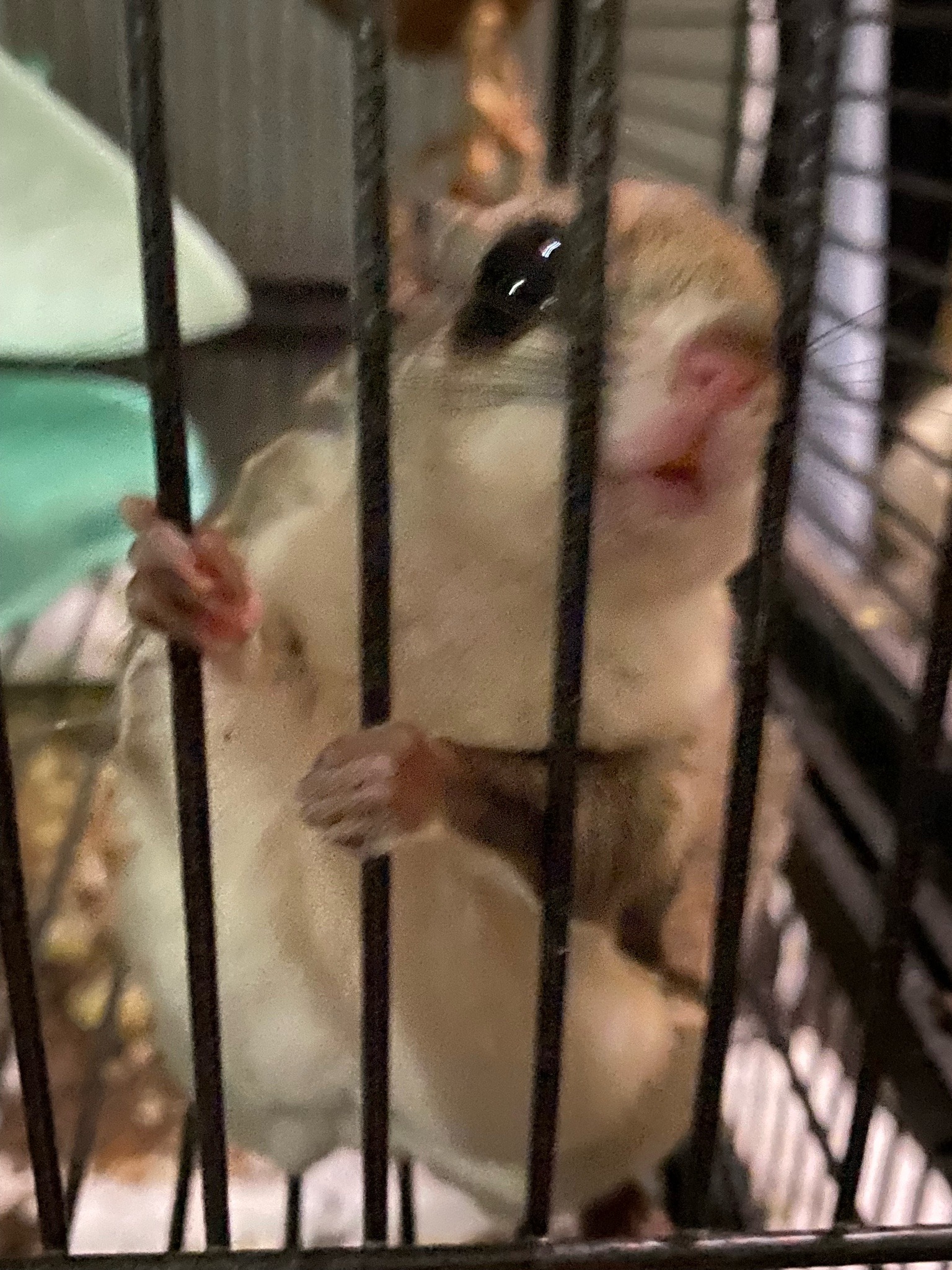
Pet rat (fancy rat)
Rattus norvegicus
- Order & Family
- Rodentia; Muridae
- Size
- Adults typically measure 20–28 cm (8–11 in) in body length, excluding the 15–23 cm (6–9 in) tail; commonly weigh 250–600 g.
Natural Habitat
Domestic form kept in cages and homes; the wild brown rat inhabits urban areas, farms, sewers, fields, and riverbanks worldwide.
Diet & Feeding
Omnivorous, eating grains, seeds, vegetables, fruits, insects, eggs, and animal proteins. Pet rats require a balanced commercial diet supplemented with fresh foods.
Behavior Patterns
Highly social, intelligent, and mostly nocturnal or crepuscular; they climb, burrow, groom, forage, and communicate through scent and high-frequency sounds. Females can produce several litters annually.
Risks & Benefits
Healthy pets pose little risk, but bites, allergens, and contamination from urine or feces are possible; wild rats can transmit pathogens and damage food or structures. They benefit research and can provide companionship as domesticated animals.