
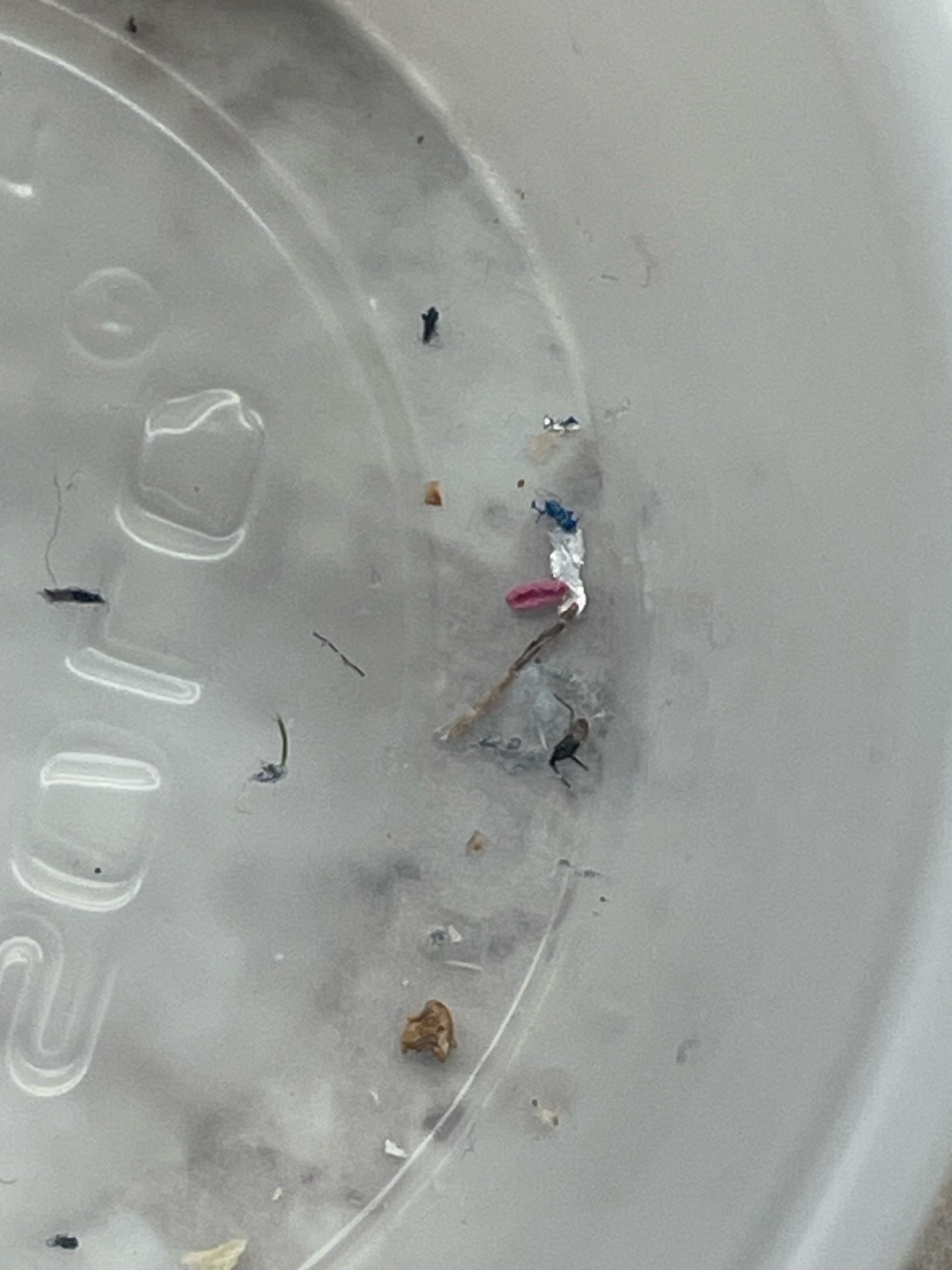
Community identification
Unclear—likely a tiny springtail or small fly fragment
Not reliably identifiable from this image
- Order & Family
- Indeterminate; the specimen is too small, obscured, and possibly damaged
- Size
- The visible dark specks appear roughly 1–3 mm, but scale and specimen identity are uncertain.
Natural Habitat
If a springtail, it commonly inhabits damp soil, leaf litter, compost, bathrooms, and other humid surfaces. If a small fly, it may occur around decaying organic matter or indoor drains.
Diet & Feeding
Springtails feed mainly on fungi, algae, decaying plant matter, and microbes; small flies may feed on decaying organic material or microorganisms.
Behavior Patterns
Springtails favor moisture and may jump using a forked furcula; they do not bite. Small nuisance flies typically crawl or fly weakly near moist organic residues.
Risks & Benefits
Springtails are harmless to people and help decompose organic matter. Most comparable tiny flies are nuisance insects rather than disease threats, though large numbers can indicate excess moisture or decomposition.