
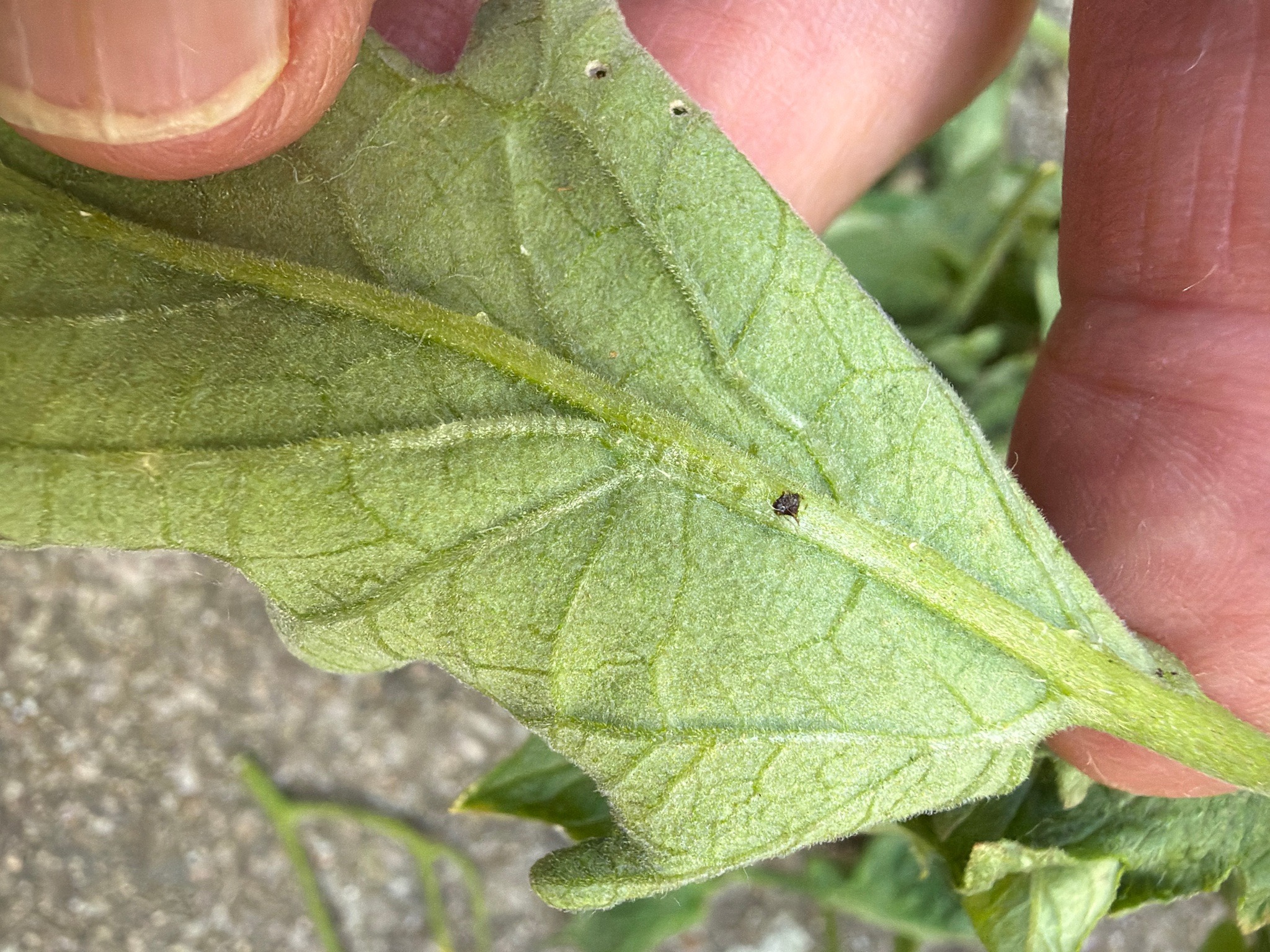
Community identification
Potato aphid (likely)
Macrosiphum euphorbiae
- Order & Family
- Hemiptera, Aphididae
- Size
- Adults are about 2–4 mm long; winged forms are slightly more elongated. The tiny dark insects shown are consistent with aphids or aphid nymphs.
Natural Habitat
Common on potato, tomato, rose, and many herbaceous plants, especially on leaf undersides and tender shoots in gardens, fields, and greenhouses.
Diet & Feeding
Pierces plant tissue with sucking mouthparts and feeds on phloem sap. It may cause curling, yellowing, stunting, and sticky honeydew buildup.
Behavior Patterns
Often forms colonies on new growth and reproduces rapidly by live birth during warm seasons; winged individuals disperse when plants become crowded or stressed. Ants may protect colonies for honeydew.
Risks & Benefits
Can weaken crops and transmit plant viruses, though potato aphids do not bite people. They provide food for lady beetles, lacewings, hoverfly larvae, and parasitoid wasps.