Angle Shades Moth Identification Guide
A moth with crumpled, leaf-like wings marked by a bold green-tinged chevron pattern, resembling a withered leaf even up close.
Read the full Angle Shades Moth encyclopedia entry →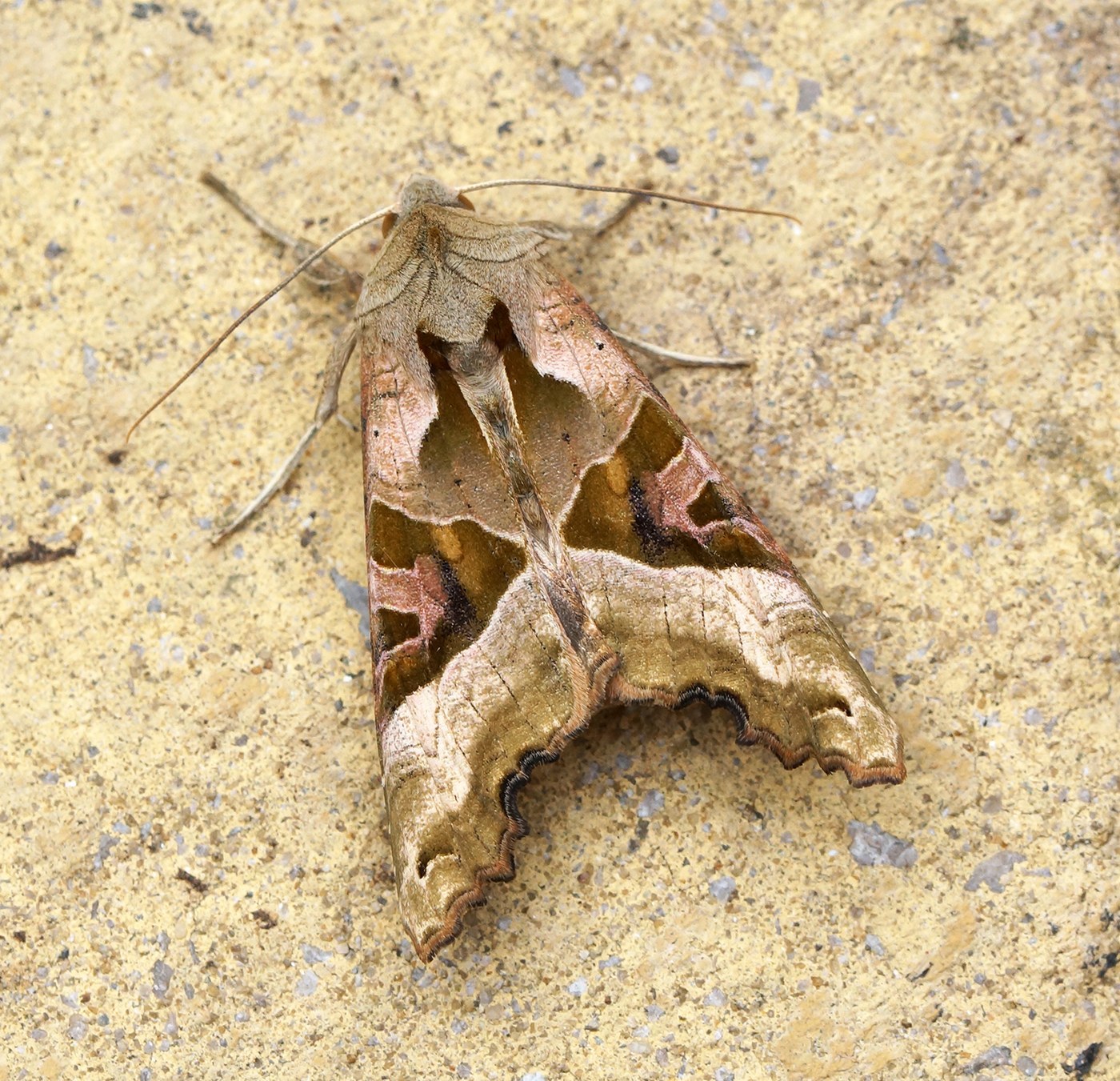
Key Visual Features
The angle shades moth has one of the most distinctive wing shapes among common moths:
- Size: Medium moth, wingspan roughly 3.5-5 cm (1.4-2 in).
- Color: Base color of pinkish-brown to olive-tan, often with a fresh greenish tint on newly emerged individuals that fades with age.
- Signature mark: A bold, dark brown to olive-green diagonal chevron or ribbon-like band crossing each forewing at an angle, giving the species its name.
- Wing shape and posture: Wings held crumpled and rolled at the edges rather than flat, creating a ragged, twisted, leaf-like silhouette unlike most other moths.
- Body: Slender body tucked beneath the irregularly folded wings.
- Antennae: Thin, thread-like antennae typical of owlet moths.
Where and When You're Likely to See It
Angle shades moths are common in gardens, hedgerows, woodland edges, and parks, thanks to caterpillars that feed on a wide range of low plants and shrubs. Adults are nocturnal and readily come to lights and sugar bait, and can be found from spring through autumn, with overlapping generations in many regions extending the flight period considerably. During the day, they rest on foliage, fences, or walls, where the crumpled, twisted wing shape mimics a dead or curled leaf, making them surprisingly hard to notice despite their fairly large size.
Similar-Looking Moths
- Other 'shades' moths: Some related species share a similar chevron pattern, but few combine it with the same degree of crumpled wing texture.
- Large yellow underwing and similar owlet moths: Larger and flatter-winged at rest, lacking the angle shades' rolled, leaf-like wing posture.
- Copper underwing moth: Similarly patterned in browns, but has smoother, flatter wings without the diagonal chevron band.
Quick ID Checklist
- Pinkish-brown to olive wings, sometimes greenish when fresh
- Bold diagonal chevron band across each forewing
- Crumpled, rolled wing edges unlike typical flat-winged moths
- Resembles a curled dead leaf at rest
- Long flight season, spring through autumn
Frequently asked questions
Why do angle shades moths look wrinkled or crumpled?
The wings are naturally held with rolled, uneven edges rather than flat, which is a deliberate resting posture that mimics a withered or curled dead leaf.
Does the green tint fade over time?
Yes, freshly emerged individuals often show a brighter greenish cast that gradually fades to a duller pinkish-brown or tan as the moth ages.
When is the best time of year to see this moth?
It has an unusually long flight season, commonly appearing from spring through autumn due to overlapping generations in many areas.
What is the most reliable way to identify it among garden moths?
The combination of a bold diagonal chevron band and distinctly crumpled, rolled wing edges is unique enough to separate it from most other similarly colored moths.
Angle Shades Moth identified by the community
Recent Angle Shades Moth finds identified with Bug Identifier.