Assassin Bug Identification Guide
Learn to spot an assassin bug by its narrow head, curved beak, and ambush posture on plants and in leaf litter.
Read the full Assassin Bug encyclopedia entry →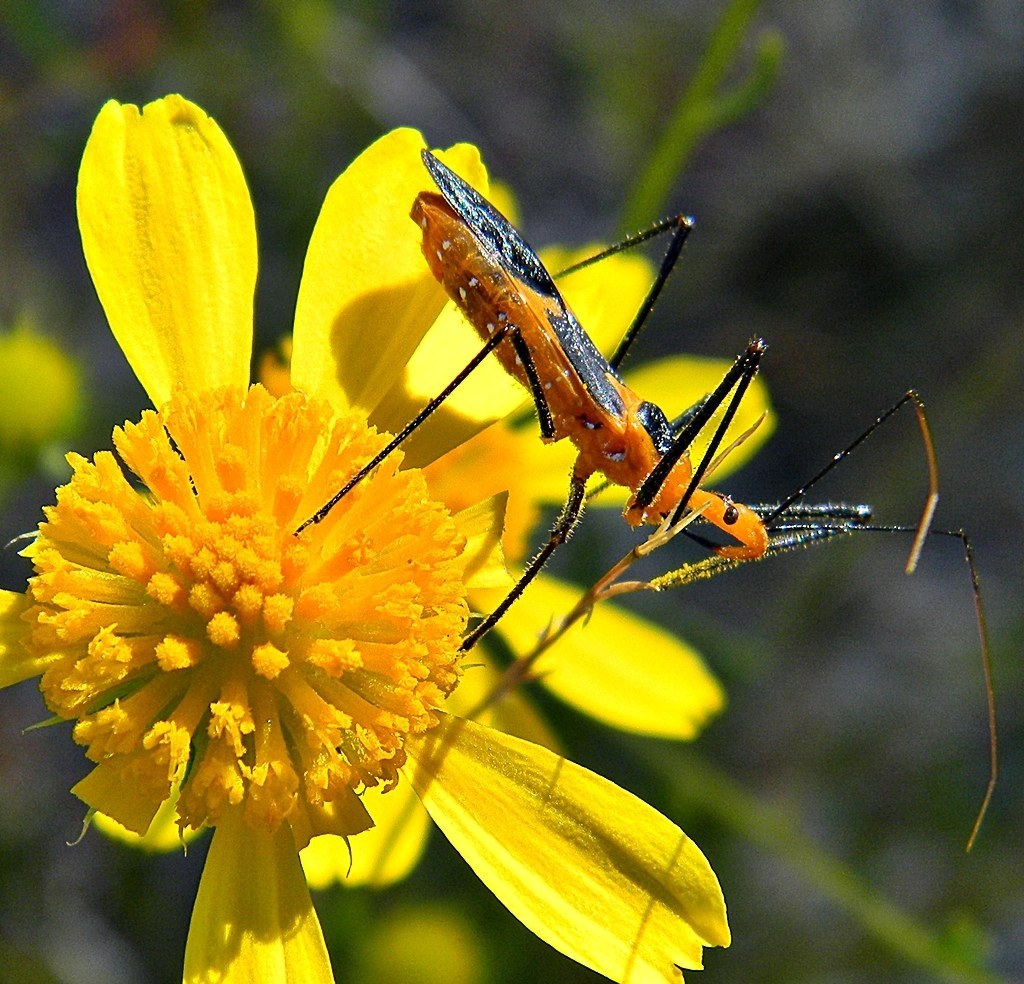
Key Visual Features
Assassin bugs are true bugs (order Hemiptera) built for an ambush lifestyle, and their shape reflects that.
- Size: Variable by species, generally 0.5-1 inch (13-25 mm) long.
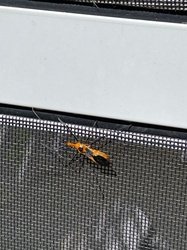
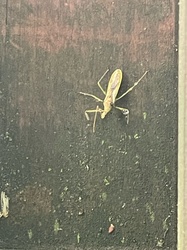
- Body shape: Elongated body with a distinctly narrow, extended head and a noticeably long "neck" region behind the eyes.
- Coloring: Ranges widely — brown, black, gray, or brightly patterned with orange, red, or yellow depending on species; some have a matte, textured look.
- Beak: The defining feature is a short, thick, curved beak (rostrum) tucked under the head, used to pierce prey; it is held close to the body when not in use.
- Wings: Forewings are leathery at the base and membranous at the tip, folded flat in an X-pattern over the back, typical of true bugs.
- Legs and antennae: Long, sometimes spiny legs suited for grasping; antennae are thread-like and often longer than the head.
Where and When You'll See It
Assassin bugs are found in gardens, fields, leaf litter, and on tree bark from spring through fall, wherever their insect prey is abundant. Many species sit motionless on foliage or bark, waiting to ambush passing insects, while others actively stalk their prey across plant surfaces. They are most active during the day but some species are found at night near lights. Nymphs resemble smaller, wingless versions of adults and can appear more brightly colored or oddly patterned.
Similar-Looking Bugs
- Wheel bug: A specific type of assassin bug with a distinctive cog-like crest on the thorax, much larger and stockier than most other assassin bugs.
- Leaf-footed bug: Has flattened, leaf-like expansions on the hind legs and a straight, thinner beak rather than the thick curved beak of an assassin bug.
- Stink bug: Broader, shield-shaped body with a short beak, lacking the elongated head and neck of an assassin bug.
Quick ID Checklist
- Narrow, elongated head with a distinct "neck"
- Short, thick, curved beak tucked beneath the head
- Long, thread-like antennae
- Wings folded in an X-pattern over a leathery-tipped body
- Often seen motionless on foliage in an ambush posture
Frequently asked questions
What is the most reliable feature for identifying an assassin bug?
The short, thick, strongly curved beak tucked under an elongated, narrow head is the most distinctive identification feature of this group.
How do assassin bugs differ from stink bugs?
Assassin bugs have an elongated head and neck with a curved beak, while stink bugs have a broad, shield-shaped body and a straighter, shorter beak.
Do young assassin bugs look like the adults?
Nymphs are wingless and often more brightly colored or oddly shaped, but they share the same narrow head and curved beak as adults.
Where are assassin bugs usually found?
They are commonly seen on foliage, tree bark, and in leaf litter in gardens and fields, often sitting still while waiting to ambush prey.
Assassin Bug identified by the community
Recent Assassin Bug finds identified with Bug Identifier.