Bald-faced Hornet Identification Guide
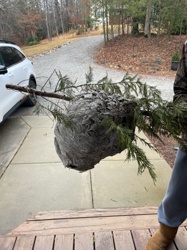
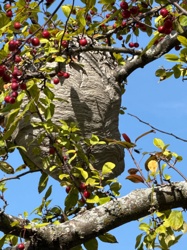
Spot this large black-and-white wasp by its ivory-marked face and distinctive gray, football-shaped paper nest.
Read the full Bald-faced Hornet encyclopedia entry →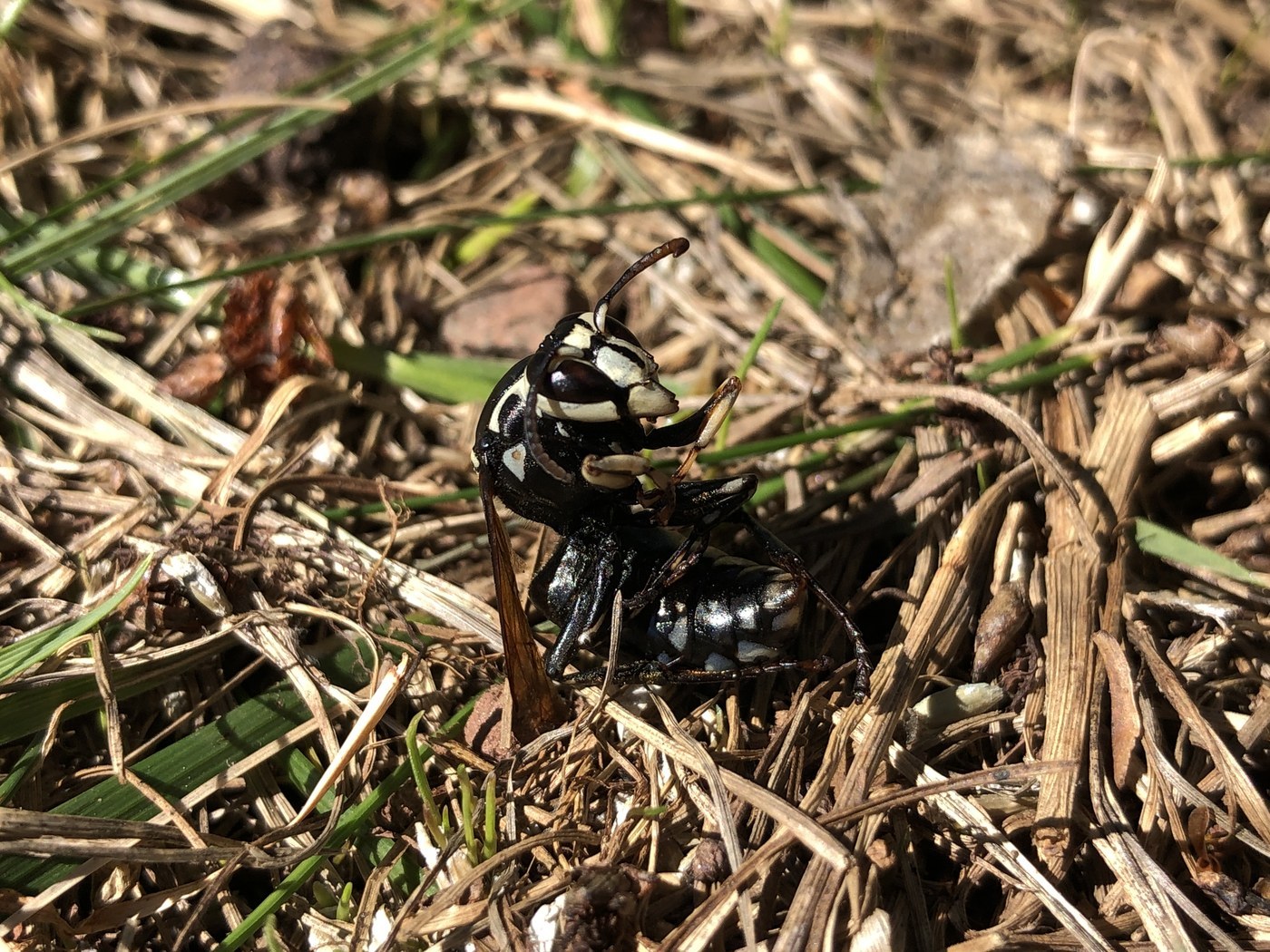
Key Visual Features
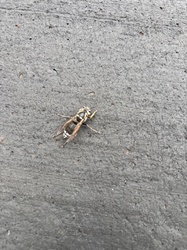
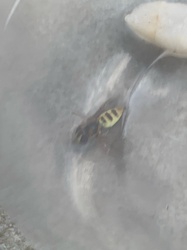
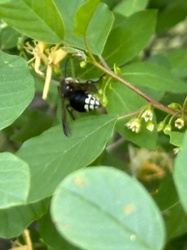
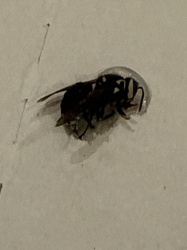
The bald-faced hornet is a large, boldly patterned wasp named for the mostly white markings on its face.
- Workers measure about 5/8 to 3/4 inch (1.6-2 cm) long, with queens somewhat larger, giving the species a robust, sturdy build.
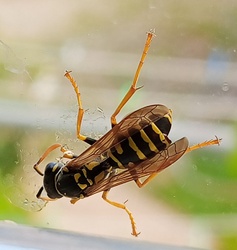
- The body is predominantly black rather than the yellow-and-black pattern typical of many wasps, with bold ivory-white markings concentrated on the face, thorax, and tip of the abdomen.
- The face shows a distinct white or pale marking covering much of its surface, which is the source of the "bald-faced" name.
- The abdomen tapers and shows white banding or blotches near the rear segments, contrasting sharply against the otherwise black body.
- Wings are dark-tinted and folded along the body at rest, and like other wasps, the waist is narrow, connecting a stout thorax to the abdomen.
Where and When You'd See It
Bald-faced hornets build large, gray, papery nests shaped somewhat like an inverted teardrop or football, often suspended from tree branches, shrubs, or the eaves of buildings. Nests are constructed from chewed wood fibers mixed with saliva, giving them a distinctive swirled, papery texture. Colonies grow through spring and summer, reaching their largest size and most visible activity in late summer and early fall, after which the nest is abandoned each year. Workers forage during the day for insects and sugary substances, often seen around gardens, forest edges, and outdoor areas with abundant flowers or prey.
Similar-Looking Bugs
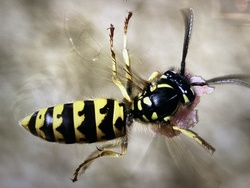
- Yellowjackets share a stocky build but show bold yellow-and-black banding rather than the black-and-white pattern of the bald-faced hornet.
- Paper wasps are more slender, build small open-comb nests rather than the enclosed football-shaped structure, and typically show brown or reddish tones mixed with yellow rather than black and white.
- True hornets are similarly large but usually show some yellow or orange banding rather than the stark black-and-white contrast of the bald-faced hornet.
- The combination of an almost entirely black body with bold white facial markings and a large gray enclosed paper nest is highly distinctive and rarely confused with other wasps once observed closely.
Quick ID Checklist
- Mostly black body with bold ivory-white face markings
- White banding or blotches near the tip of the abdomen
- Large, robust build, roughly 5/8 to 3/4 inch long
- Builds a large, gray, enclosed, football-shaped paper nest
- Nest often hangs from tree branches, shrubs, or building eaves
Frequently asked questions
Why is it called the bald-faced hornet?
Its face is marked with a large area of white or ivory coloring, giving it a pale, 'bald' appearance compared to the mostly black body.
How can I recognize a bald-faced hornet nest?
Look for a large, gray, papery structure shaped like an inverted teardrop or football, usually hanging from a tree branch, shrub, or building eave.
How is this species different from a yellowjacket?
The bald-faced hornet is mostly black with white markings, while yellowjackets show bold yellow-and-black banding.
When are bald-faced hornet nests most noticeable?
Nests grow largest and are most visible in late summer and early fall, after a full season of colony growth.
Bald-faced Hornet identified by the community
Recent Bald-faced Hornet finds identified with Bug Identifier.