
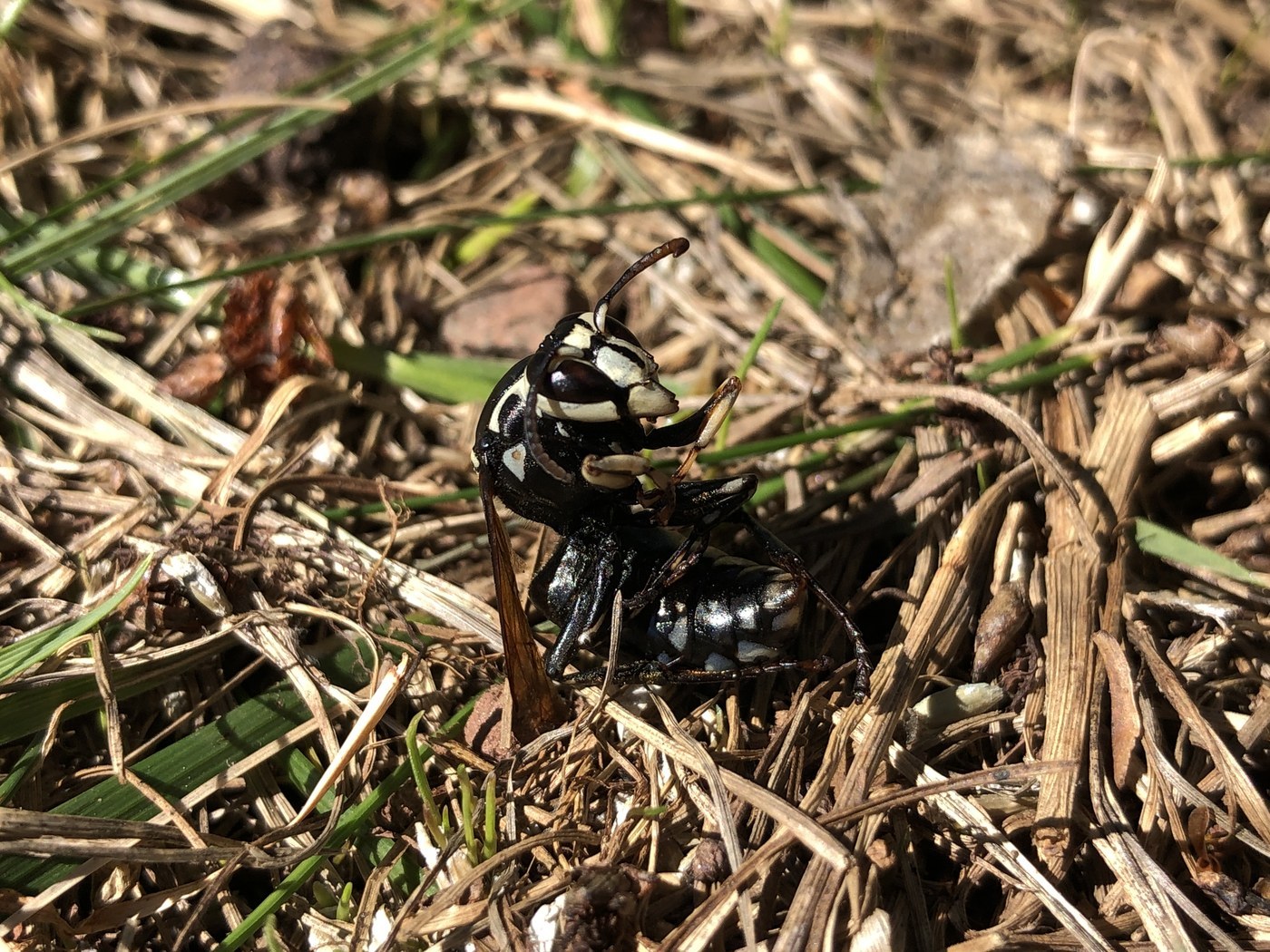
Bald-faced Hornet
Dolichovespula maculata
A black-and-white social wasp, actually a type of yellowjacket rather than a true hornet, best known for building large, football-shaped gray paper nests suspended from tree branches or eaves.
- Size
- 12–20 mm
- Habitat
- Woodland edges, shrubs, and tree branches across North America
- Danger
- Stings
Spotted a bug like this?
Identify any bug or insect from a photo, free.
Overview
Despite its common name, the Bald-faced Hornet is not a true hornet but an aerial yellowjacket in the genus Dolichovespula within the wasp family Vespidae, native to North America. Its bold black-and-ivory-white coloring and distinctive whitish face are what earned it the 'bald-faced' name.
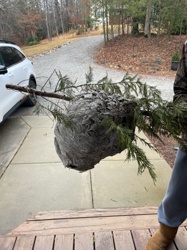
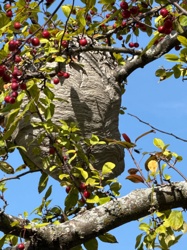
It is especially notable for constructing one of the most recognizable social insect nests in North America: a large, gray, papery, egg- or football-shaped structure often built hanging from tree branches, shrubs, or building eaves, sometimes reaching the size of a basketball by late summer. This exposed aerial nest style differs from the enclosed cavity nests of true hornets.
Ecologically, it functions as an active predator of flies, caterpillars, and other soft-bodied insects, making it a beneficial regulator of pest insect populations within the gardens and woodlands it inhabits.
How to Identify
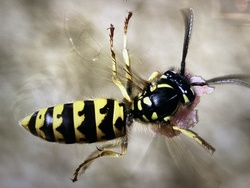
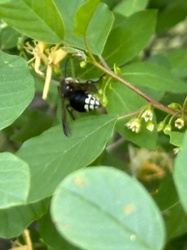
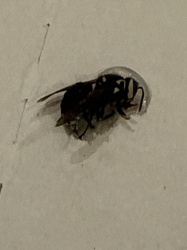
- Robust body colored primarily black with distinctive ivory-white markings on the face, thorax, and tip of the abdomen.
- Face has a mostly white or pale marking, giving rise to the 'bald-faced' name, in contrast to the yellow-and-black pattern of typical yellowjackets.
- Wings are dark and folded along the body at rest; body is smooth and shiny like other vespid wasps.
- Nest is the most reliable identification clue: a large, gray, papery, enclosed, teardrop or football-shaped structure hanging in trees or shrubs, distinct from the open-comb nests of paper wasps.
Habitat & Range
Found throughout most of North America, from southern Canada through the United States, in wooded areas, forest edges, parks, and suburban landscapes with trees and shrubs. Nests are typically built well above ground, often 3 meters (10 feet) or higher in trees, though they may also appear on buildings. Colonies are active from spring through the first hard frost of fall.
Behavior & Diet
Workers actively hunt flies, caterpillars, and other insects to provision the larvae, while adults feed on nectar and sugary substances such as ripe fruit. The species is known for strong nest defense when the paper nest is disturbed, with workers cooperating in defense, and for coordinated group behavior in nest-building and foraging. Its predatory habits make it a useful natural control on populations of many garden and woodland pest insects.
Life Cycle
In spring a single overwintered queen begins building a small paper nest and rearing the first generation of workers alone, after which workers take over construction and foraging duties as the colony expands the nest in concentric paper layers. By late summer, the colony can include several hundred workers, and it produces new queens and males that leave the nest to mate. Only the newly mated queens survive winter in sheltered locations such as under bark or leaf litter, and the old nest is abandoned and not reused, with the whole colony completing one generation per year.
Frequently asked questions
Is the Bald-faced Hornet actually a hornet?
No, despite the common name it is classified as a yellowjacket in the genus Dolichovespula, not a true hornet of the genus Vespa.
How can I recognize its nest?
It builds a large, gray, papery, enclosed, egg- or football-shaped nest usually suspended from tree branches, shrubs, or eaves, distinct from open-comb paper wasp nests.
Do the same nests get reused each year?
No, colonies are annual and the paper nest is abandoned at the end of the season, with a new nest built from scratch by a queen the following spring.
What does it eat?
Workers hunt flies, caterpillars, and other insects to feed larvae, while adults themselves feed on nectar and sugary plant sources.
Bald-faced Hornet guides
In-depth guides for identifying, understanding, and living alongside Bald-faced Hornet.
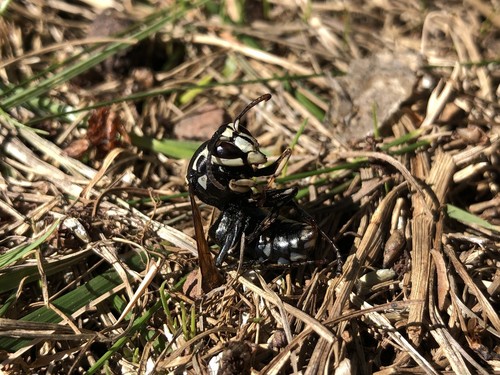
Bald-faced Hornet identified by the community
Real finds identified with Bug Identifier.

Other bugs you may enjoy
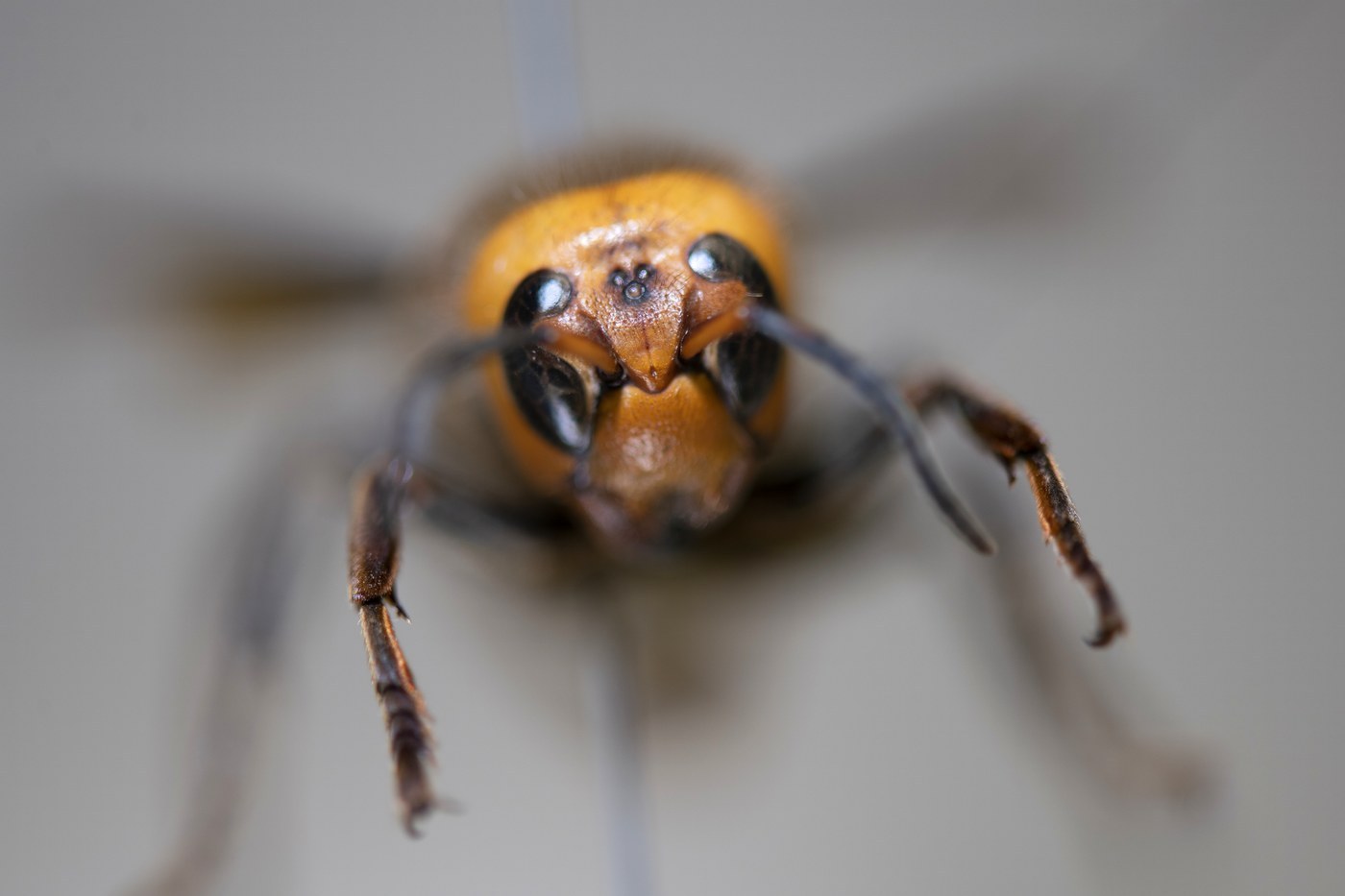
Asian Giant Hornet
Forested lowlands and mountains of East and South Asia; low tree hollows
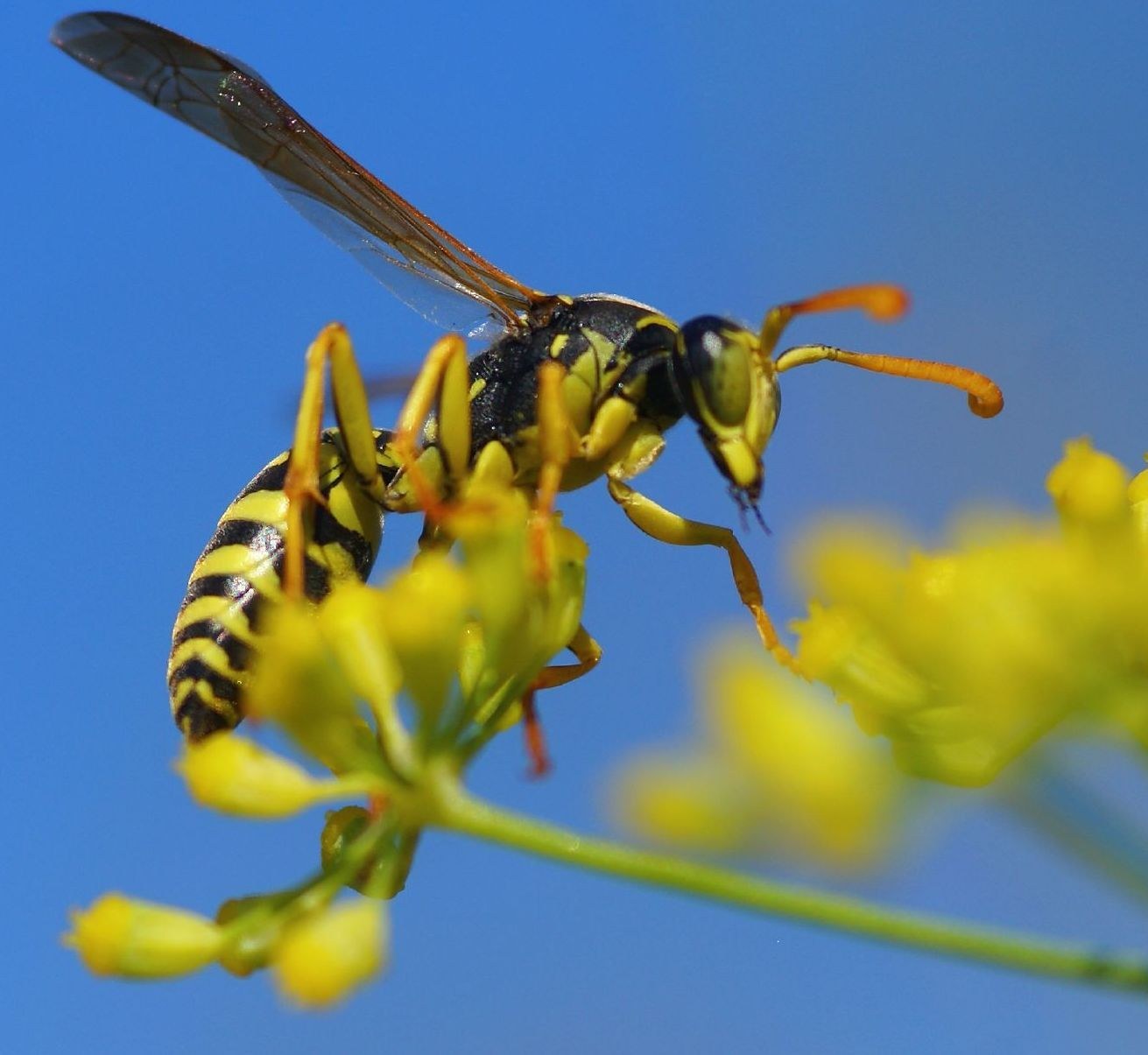
Yellowjacket
Underground nests, wall voids, gardens, picnic areas
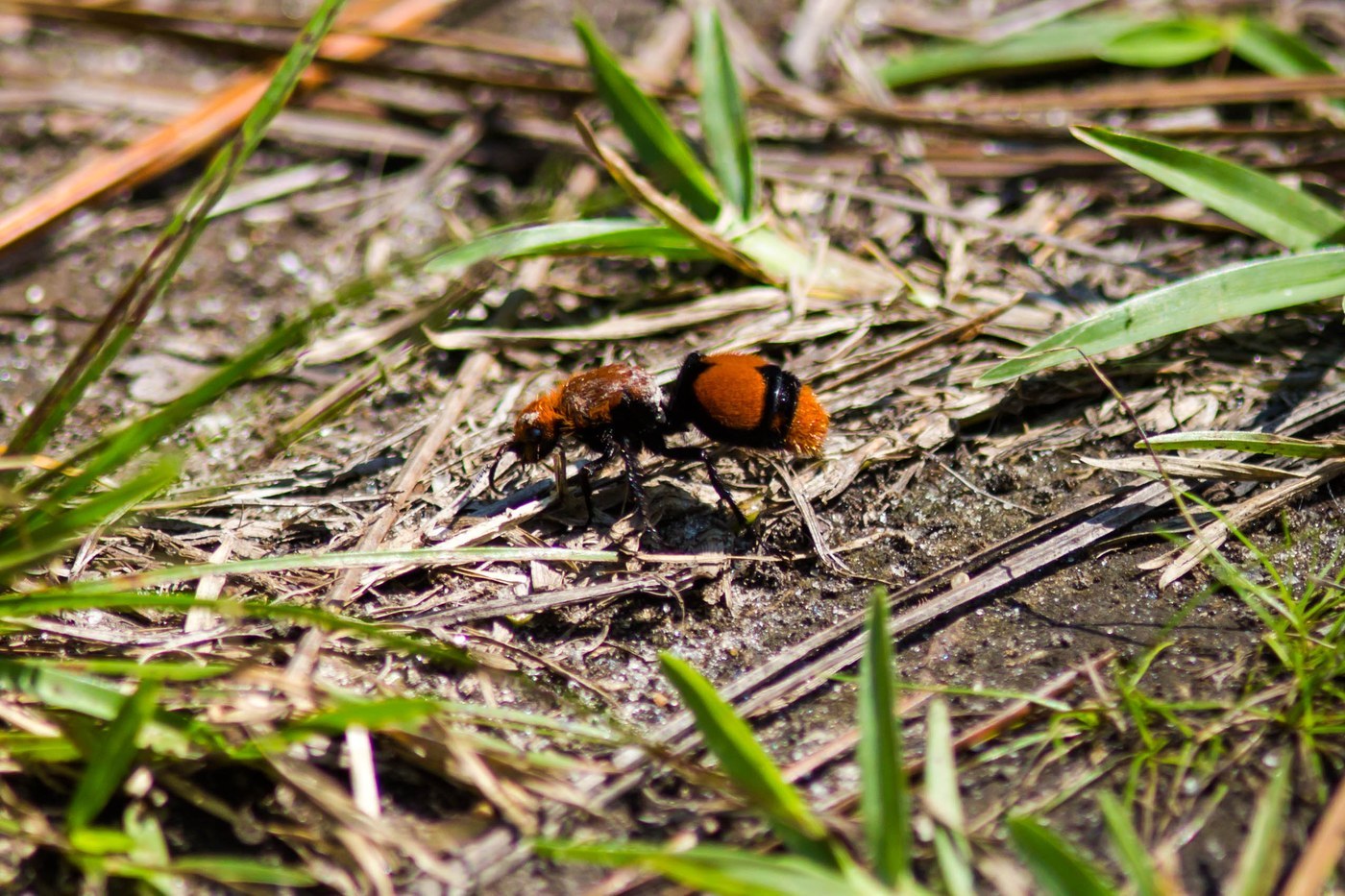
Velvet Ant
Sandy soils, open fields, dunes, roadsides in warm regions
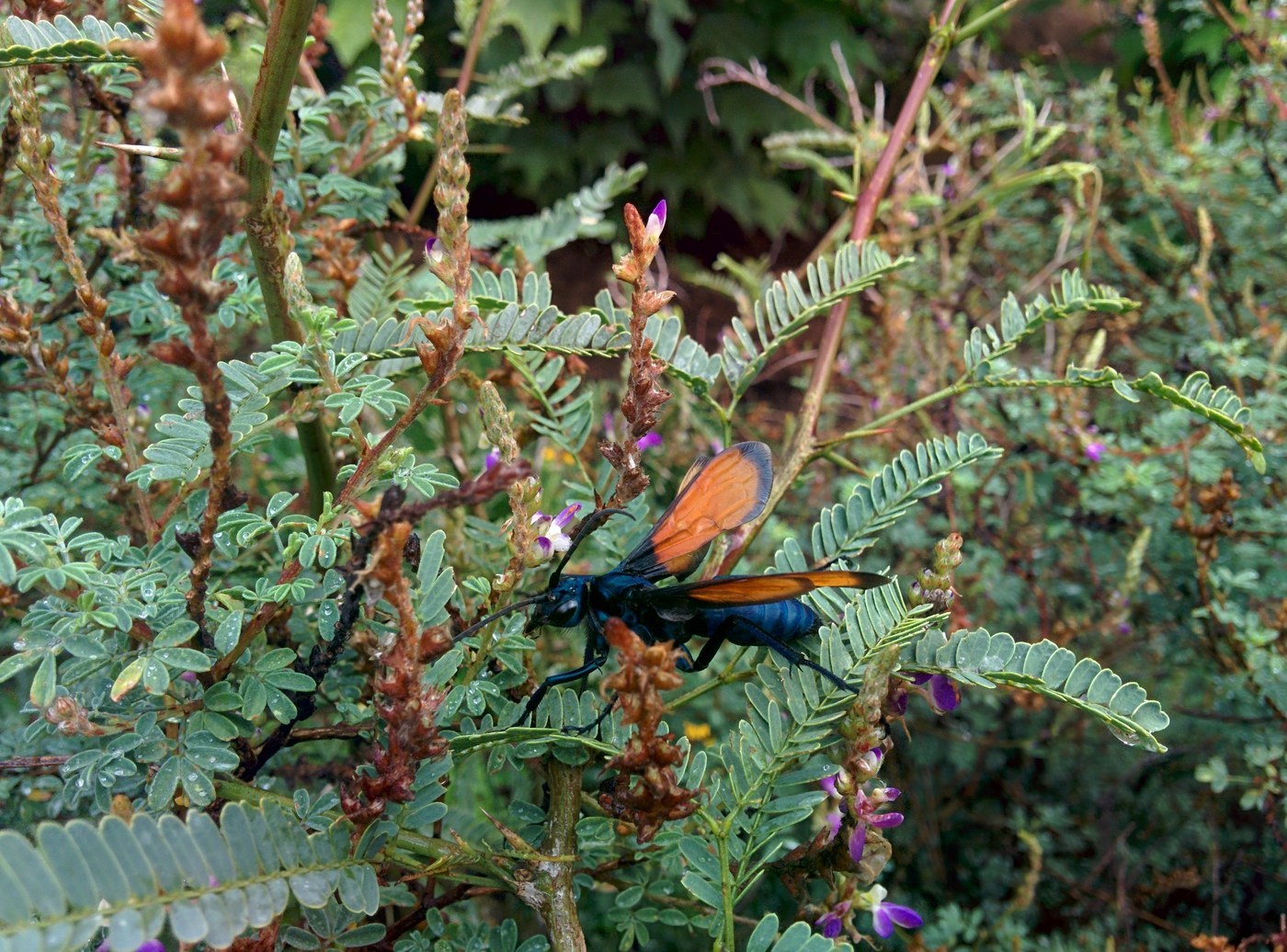
Tarantula Hawk
Deserts, arid scrublands, and dry grasslands
Tarantula Hawk Wasp
Deserts, grasslands, and scrub of the Americas
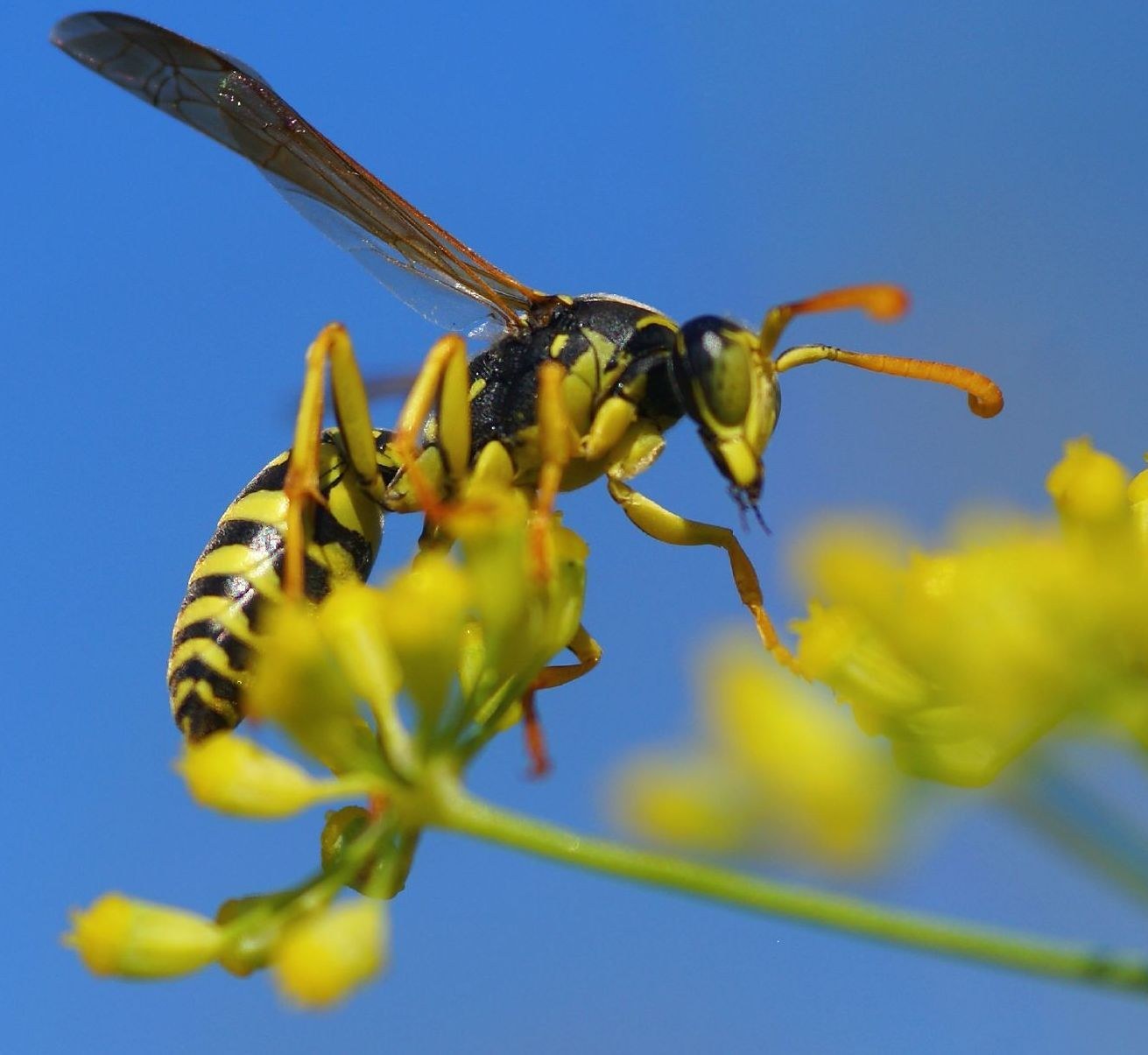
Wasp
Gardens, woodlands, eaves, and urban areas worldwide
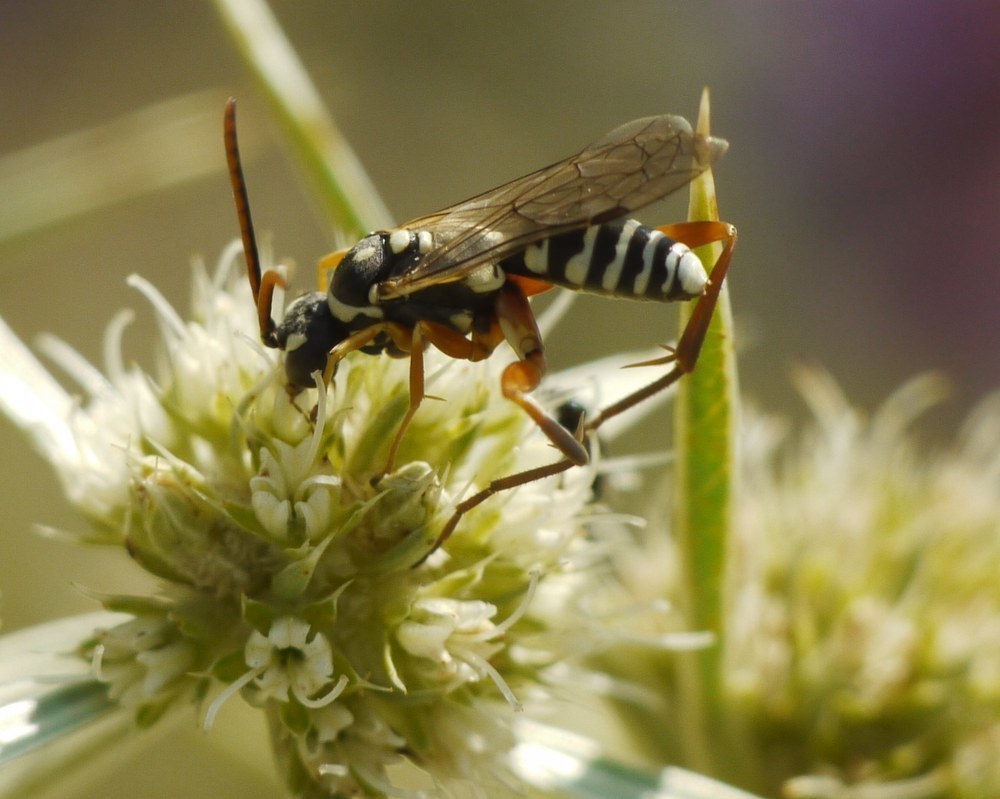
Spider Wasp
Gardens, grasslands, and sandy open areas worldwide
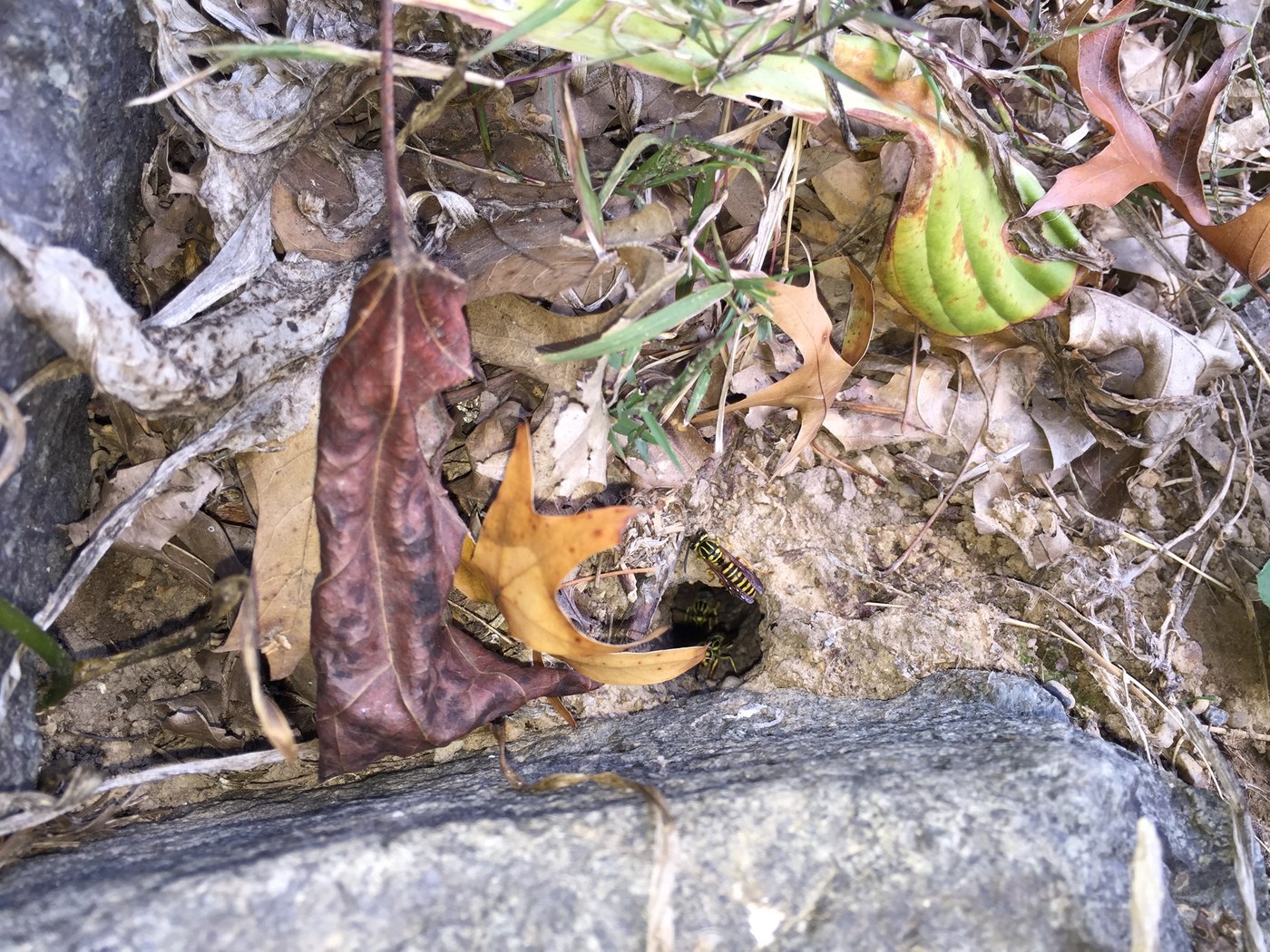
Yellow Jacket
Ground nests, wall voids, parks, and areas near food sources
Sawfly
Gardens, woodlands, and orchards on host foliage
Red Paper Wasp
Eaves, porch ceilings, sheds, open woodland edges, gardens
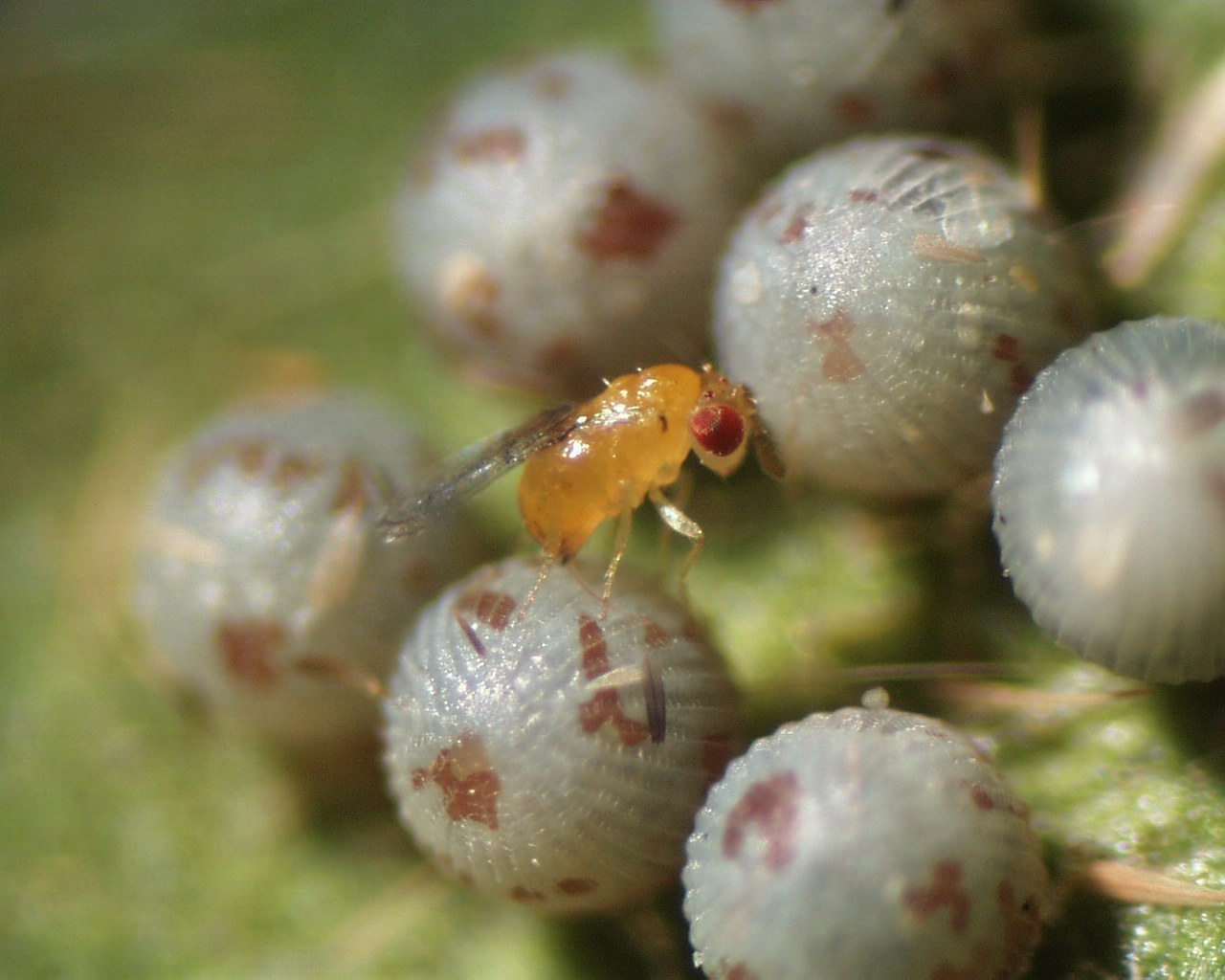
Trichogramma Wasp
Fields, gardens, and crops worldwide
Sand Wasp
Sandy soils, dunes, beaches, and bare open ground