Banded Garden Spider Identification Guide
A large, boldly striped orb weaver closely related to the black-and-yellow garden spider, often seen anchored in a web with a zigzag silk band.
Read the full Banded Garden Spider encyclopedia entry →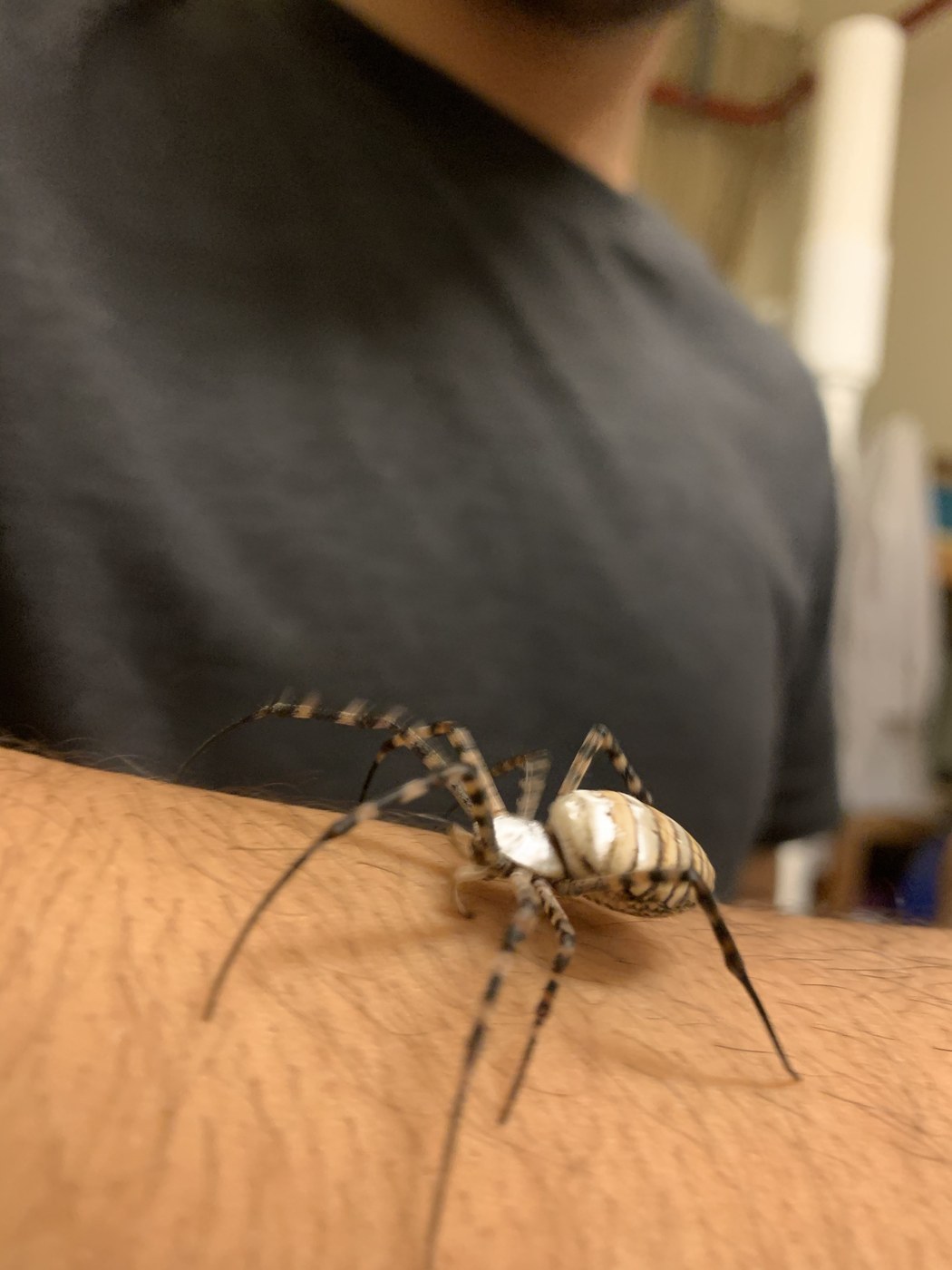
Key Visual Features
The banded garden spider (Argiope trifasciata) is a large, strikingly patterned orb weaver found in open sunny habitats.
- Size: Body length of about 0.5–1.1 inches (13–28 mm) for females; males are much smaller, often under a third of the female's size.
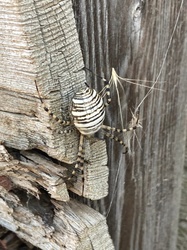
- Color: Silvery-white or pale cephalothorax with an elongated abdomen marked by multiple thin, alternating silver, yellow, and black horizontal bands running across its width.
- Body shape: Elongated oval abdomen, longer and narrower than the more rounded abdomen of many other orb weavers.
- Legs: Long and banded in black and yellow or black and orange, often held together in pairs (forming an X-shape) while resting in the web.
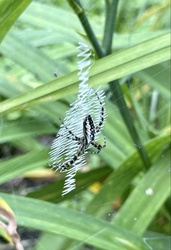
- Web feature: Frequently builds a web containing a zigzag band of dense silk (called a stabilimentum) running vertically through the center.
Where and When You'd See It
Banded garden spiders are found throughout much of North America, as well as many other regions worldwide, favoring open sunny habitats such as tall grass, meadows, gardens, and roadsides. They build large vertical orb webs low to the ground among grasses and shrubs and typically sit head-down in the center of the web during the day. They are most commonly observed in late summer and early fall, when females reach full size and their webs become large and conspicuous in open fields.
Similar-Looking Species
- Black-and-yellow garden spider: Very similar in size and web-building habits, but has bold solid yellow-and-black patches rather than the multiple thin horizontal bands of the banded garden spider.
- Marbled orbweaver: Rounder abdomen with a mottled marble pattern rather than crisp horizontal banding.
- Barn spider: Similar size but shows a mottled brown-gray pattern instead of clean bands, and typically builds webs near structures rather than open grassland.
- Silver garden spider: Similar silvery cephalothorax but with different abdominal banding details; often distinguished by subtle pattern and habitat differences.
Quick ID Checklist
- Long, narrow abdomen with multiple thin silver, yellow, and black horizontal bands
- Silvery-white cephalothorax
- Legs banded black and yellow/orange, often held in an X-shaped resting posture
- Large vertical web with a zigzag silk band through the center
- Found in open sunny grasslands, meadows, and gardens in late summer/fall
Frequently asked questions
How can I tell a banded garden spider from a black-and-yellow garden spider?
The banded garden spider has multiple thin horizontal bands of silver, yellow, and black across a narrower abdomen, while the black-and-yellow garden spider shows bold, solid patches of yellow and black on a more rounded abdomen.
What is the zigzag pattern sometimes seen in its web?
It's a dense band of silk called a stabilimentum, built into the web's center; its exact purpose is debated, but it's a helpful visual clue for spotting orb weaver webs of this genus.
Where are banded garden spiders typically found?
Look in open, sunny habitats with tall grass or low shrubs, such as meadows, gardens, and roadside vegetation, where they anchor large vertical webs close to the ground.
Why do males look so different from females?
Like many orb weavers, this species shows strong size difference between sexes, with males being much smaller and less colorfully marked than the large, boldly banded females.
Banded Garden Spider identified by the community
Recent Banded Garden Spider finds identified with Bug Identifier.