Bark Scorpion Identification Guide
A slender, pale tan scorpion with unusually thin pincers and a habit of clinging to vertical surfaces like tree bark and walls.
Read the full Bark Scorpion encyclopedia entry →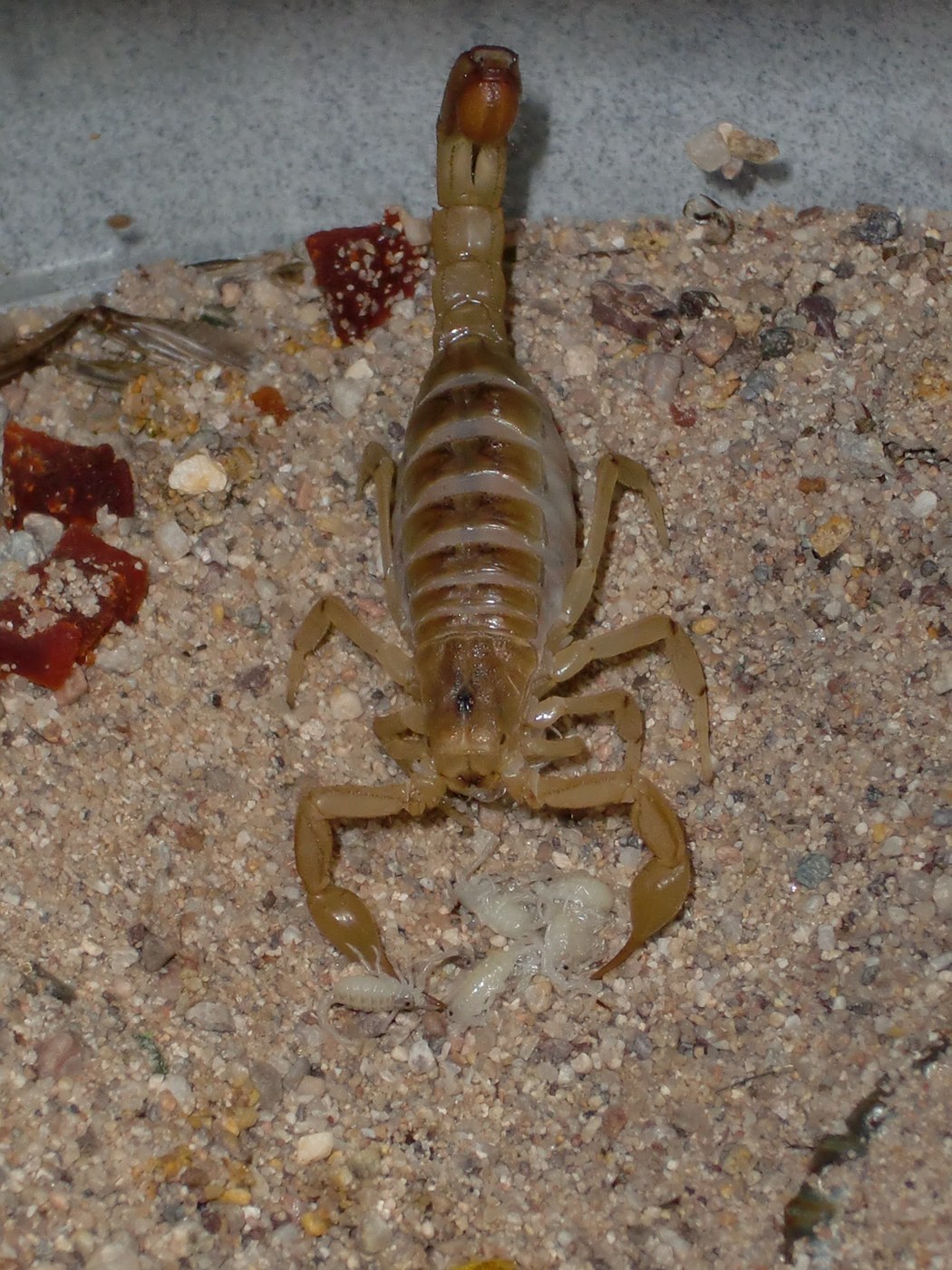
Key Visual Features
- Slender-bodied scorpion, typically 2-3 inches (5-7.5 cm) in total length, noticeably thinner and more delicate-looking than heavy-bodied scorpion species.
- Coloring is a fairly uniform pale tan to yellowish-brown across the body and legs, sometimes with faint darker striping along the back in some populations.
- Pincers (pedipalps) are notably long, thin, and slender rather than thick and rounded, a key difference from stockier scorpion species.
- The tail (metasoma) is long and thin relative to body size, tapering gradually to a narrow stinger segment at the tip.
- Legs are long and thin, well-suited to climbing, and the overall body plan is more elongated and less robust-looking than ground-dwelling desert scorpions.
- Under ultraviolet light, the exoskeleton fluoresces a pale blue-green, a trait shared with most scorpion species and useful for spotting them at night.
Where and When You'd See It
- Frequently found clinging to vertical surfaces — tree bark, rock crevices, walls, and the undersides of loose bark or rocks — rather than burrowing in open soil like many other scorpion species.
- Prefers rocky or wooded desert and semi-arid habitats, and is often found around structures, palm trees, and stacked debris near buildings.
- Primarily nocturnal, hiding under bark, rocks, or in crevices during the day and becoming active after dark.
- Frequently found higher off the ground than other scorpion species, including climbing walls, trees, and even ceilings in structures, reflecting its strong climbing ability.
Similar-Looking Bugs
- Heavier desert scorpion species have thick, rounded pincers and a stockier tail, in contrast to this species' notably thin pincers and slender build.
- The emperor scorpion is far larger, glossy black, and has oversized thick pincers, making size and pincer shape an easy way to rule it out.
- Wind scorpions (solifugids) lack a stinger-tipped tail entirely and instead have very large, forward-pointing jaws (chelicerae), making the tail structure the clearest distinguishing feature.
Quick ID Checklist
- Slender build, 2-3 inches long, pale tan to yellowish-brown color.
- Unusually thin, elongated pincers compared to most other scorpion species.
- Long, thin tail tapering to a narrow stinger segment.
- Strong climbing behavior — found on bark, walls, rocks, and ceilings rather than just on the ground.
- Nocturnal, sheltering under bark or rocks during the day in rocky or semi-arid habitat.
Frequently asked questions
What pincer feature helps identify a bark scorpion?
Its pincers are notably thin and slender rather than thick and rounded, which sets it apart from heavier-bodied scorpion species.
Why might I find this scorpion on a wall or ceiling instead of the ground?
It's an unusually strong climber compared to many other scorpion species and is frequently found on bark, rocks, walls, and even ceilings rather than staying at ground level.
How does this species compare in size to the emperor scorpion?
It's considerably smaller and much more slender, generally 2-3 inches long with thin pincers, versus the emperor scorpion's bulkier 5-8 inch frame and thick, rounded pincers.
Does this scorpion glow under UV light like other scorpions?
Yes, its exoskeleton fluoresces pale blue-green under ultraviolet light, a trait common to most scorpion species and useful for locating them after dark.
Bark Scorpion identified by the community
Recent Bark Scorpion finds identified with Bug Identifier.