
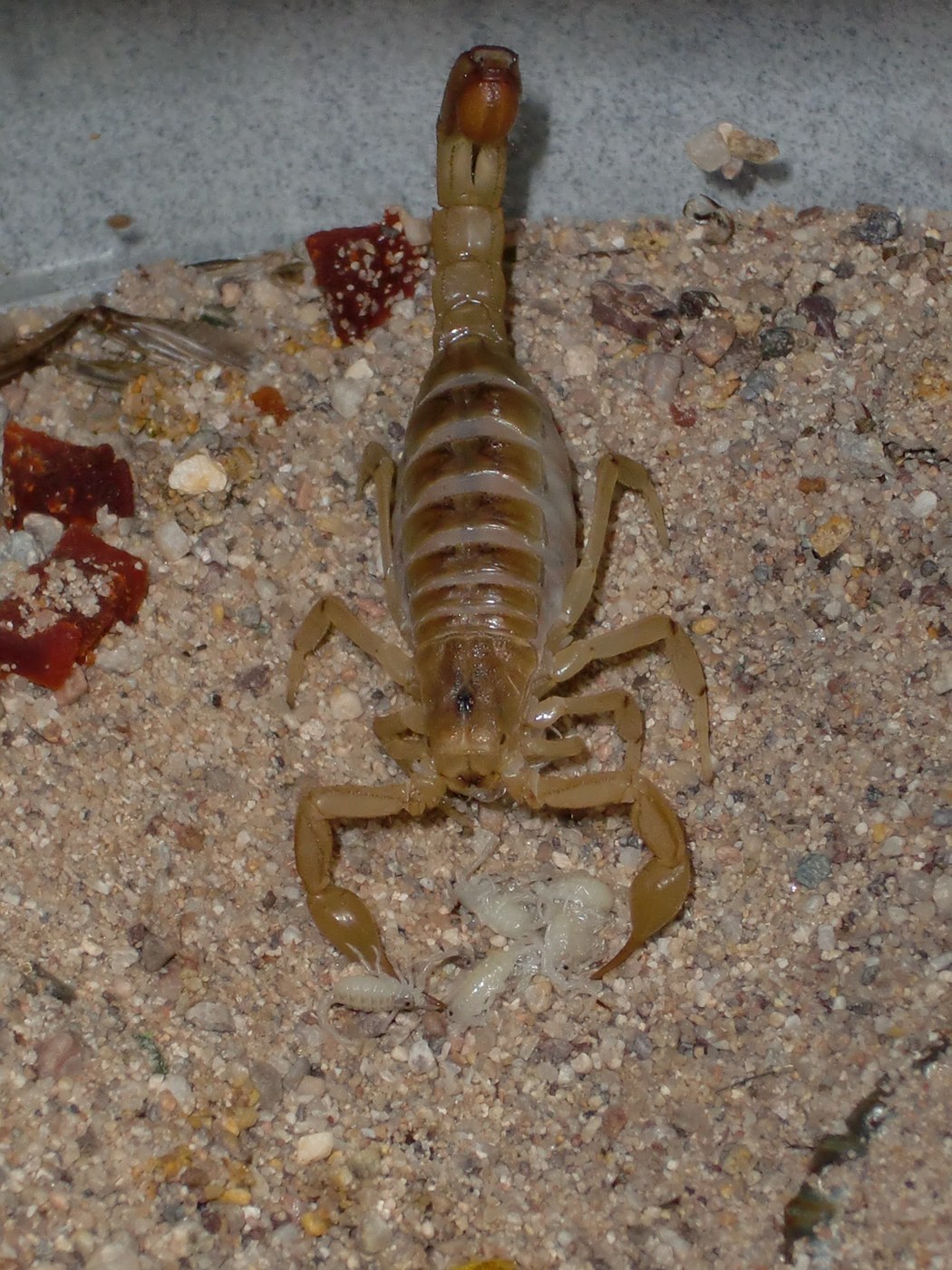
Bark Scorpion
Centruroides sculpturatus
A slender, pale tan scorpion best known for its unusual habit of climbing trees, walls, and rock faces rather than staying on the ground like most scorpions. Its thin build and long, narrow tail set it apart from the stockier, heavy-clawed scorpions found elsewhere.
- Size
- 5–8 cm (2–3 in) long
- Habitat
- Rocky desert outcrops, tree bark, and crevices of the Sonoran Desert region
- Danger
- Stings
Spotted a bug like this?
Identify any bug or insect from a photo, free.
Overview
The bark scorpion is native to the Sonoran Desert region of the southwestern United States and northern Mexico, including much of Arizona and parts of California, Nevada, New Mexico, and Utah. It is one of the more slender-bodied scorpion species found in North America.
Its name comes from its distinctive habit of climbing, often found clinging to tree bark, rock crevices, and building walls rather than remaining on the ground, a behavior less common among scorpions overall.
How to Identify
- Slender, uniformly pale yellowish-tan body without dark banding or blotches
- Thin, narrow pincers (pedipalps), unlike the heavy, oversized claws of species such as the emperor scorpion
- Long, thin tail relative to body size
- Fluoresces bright blue-green under ultraviolet or blacklight illumination, as most scorpions do
- Often found clinging upside down to bark, rock overhangs, or wall crevices rather than on open ground
Habitat & Range
This species is found throughout the Sonoran Desert and adjoining arid regions of Arizona, southeastern California, southern Nevada, New Mexico, and northern Mexico. It favors rocky outcrops, tree bark, palm fronds, and crevices in structures, and is capable of climbing smooth vertical surfaces.
Behavior & Diet
The bark scorpion is nocturnal, remaining hidden in crevices, under bark, or beneath rocks during the day and emerging at night to hunt. It is one of relatively few scorpion species that regularly climbs trees, walls, and rock faces, sometimes clinging to surfaces upside down. It preys on insects and other small arthropods, using its venom primarily to subdue prey rather than for defense, which it reserves for when it feels directly threatened.
Life Cycle
Like all scorpions, the bark scorpion is viviparous, giving birth to live young that climb onto the mother's back shortly after birth for protection during their first vulnerable molt. Juveniles undergo several molts over roughly one year as they grow toward adult size, and adults can live for multiple years in favorable desert conditions.
Frequently asked questions
What makes the bark scorpion different from other desert scorpions?
Its slender body and narrow pincers, along with an unusual habit of climbing trees, rocks, and walls rather than staying on the ground.
Where does the bark scorpion live?
It is native to the Sonoran Desert region, including Arizona and parts of California, Nevada, New Mexico, and northern Mexico, favoring rocky outcrops and tree bark.
Does the bark scorpion glow under blacklight?
Yes, like most scorpions its exoskeleton fluoresces a bright blue-green color under ultraviolet light, a common tool used for spotting scorpions at night.
What does the bark scorpion eat?
It is a nocturnal predator of insects and other small arthropods, which it hunts after dark.
Bark Scorpion guides
In-depth guides for identifying, understanding, and living alongside Bark Scorpion.
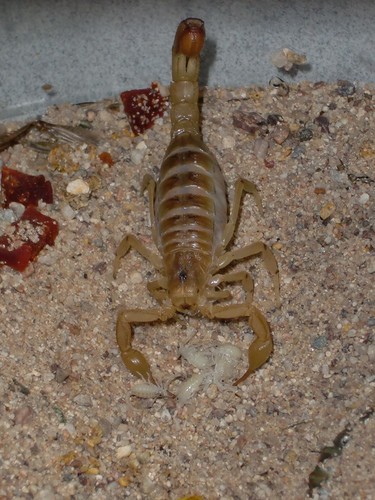
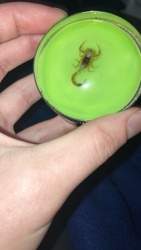
Bark Scorpion identified by the community
Real finds identified with Bug Identifier.

Other bugs you may enjoy
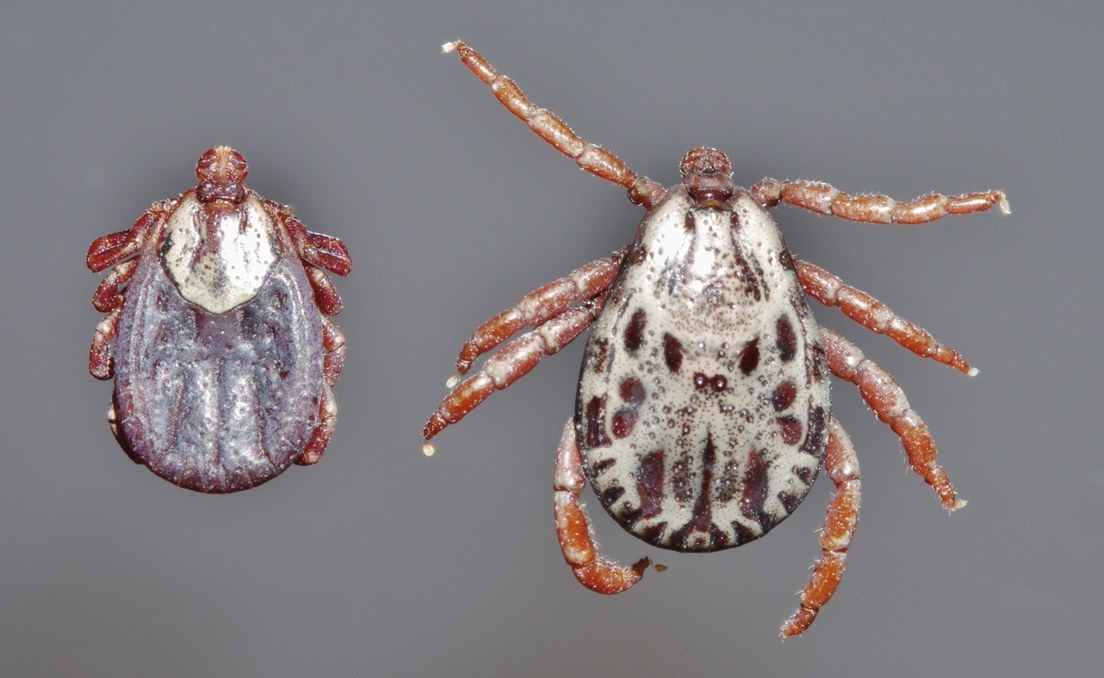
Wood Tick
Grassland, shrub-steppe, and open woodland of western North America
Yellow Scorpion
Arid scrubland, rocky slopes, and desert margins
Whip Spider
Tropical caves, rainforest leaf litter, and under bark
Water Mite
Ponds, lakes, streams, and other freshwater bodies
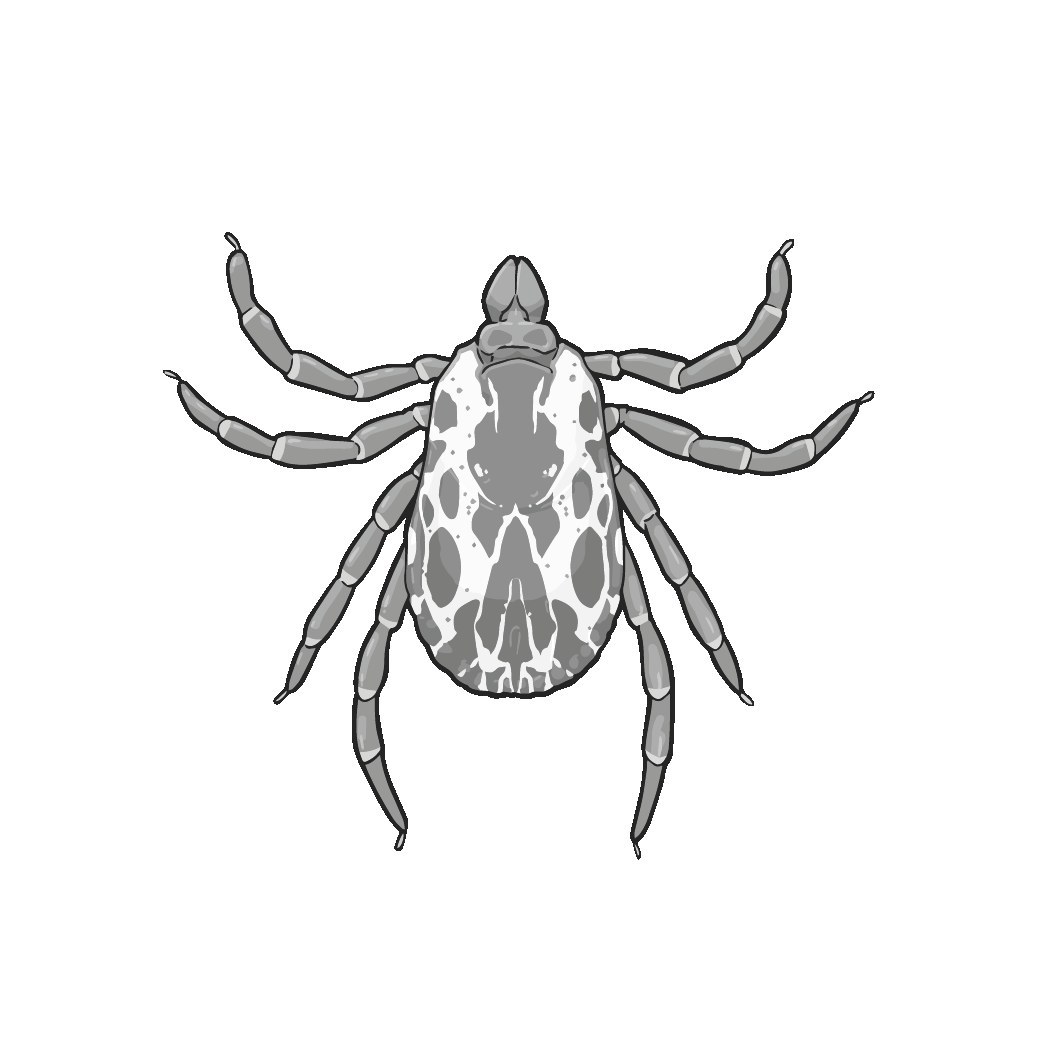
American Dog Tick
Grassy fields, trails, and low vegetation near woodlands
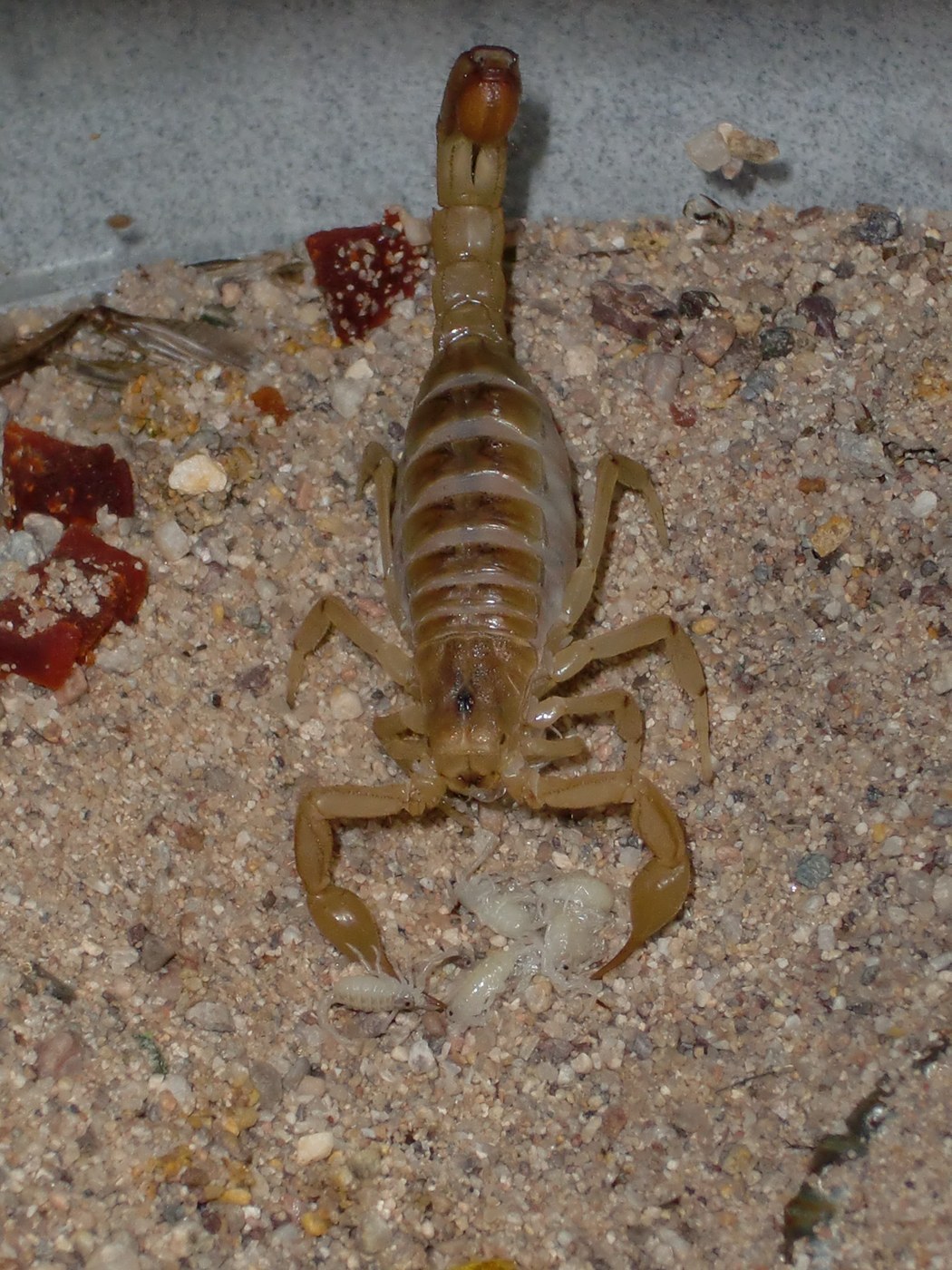
Arizona Bark Scorpion
Rocky desert terrain, tree bark, and structures in the Southwest
Tick
Tall grass, brush, woodland edges, and animal trails
Soil Mite
Soil, leaf litter, moss, and decaying organic matter worldwide
Rocky Mountain Wood Tick
Sagebrush shrublands, grasslands, and montane forest edges
Two-Spotted Spider Mite
Undersides of leaves on garden plants, crops, and houseplants
Spider Mite
Undersides of leaves on garden plants, houseplants, and field and orchard crops worldwide
Whip Scorpion
Tropical and subtropical caves, tree bark, and rock crevices worldwide