Barn Spider Identification Guide
A large, mottled brown orb weaver famous for rebuilding its large circular web nightly near barns, porches, and outdoor lights.
Read the full Barn Spider encyclopedia entry →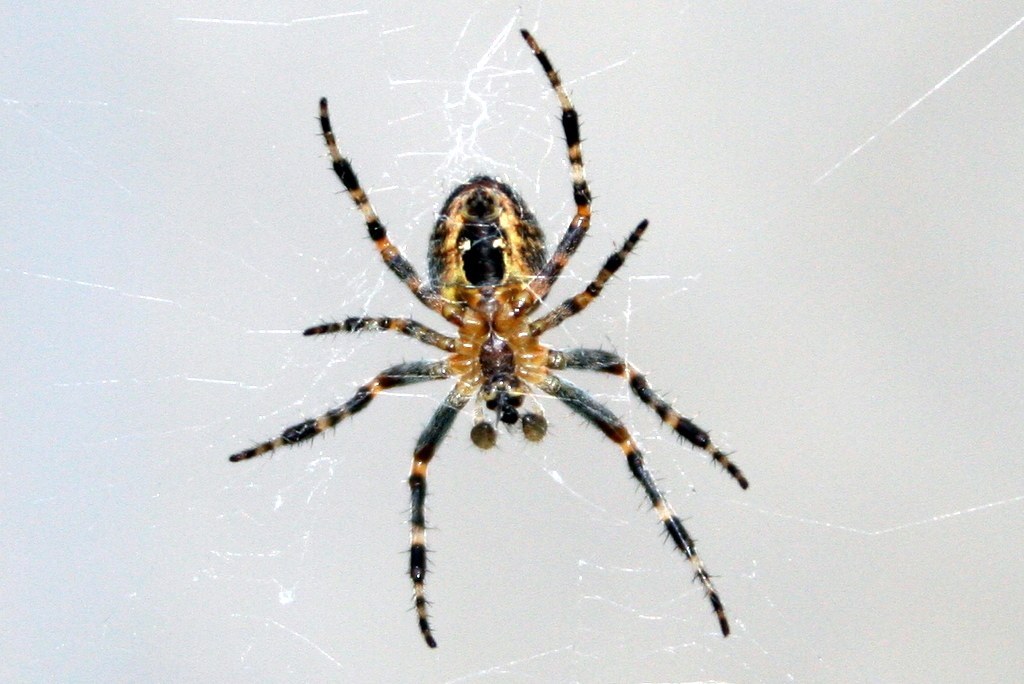
Key Visual Features
The barn spider (Araneus cavaticus) is a large, common orb-weaving spider recognized for its mottled coloring and impressive nightly webs.
- Size: Body length of about 0.5–0.75 inches (13–20 mm) for females, with males noticeably smaller.
- Color: Mottled brown, tan, gray, and yellowish patterns on the abdomen, often with darker markings forming a rough leaf-like or folium pattern down the back.
- Body shape: Large, rounded abdomen typical of orb weavers, tapering to a smaller cephalothorax and head region.
- Legs: Long, banded in light and dark brown, held in a rounded stance typical of web-building spiders at rest.
- Pattern: Coloring provides strong camouflage against tree bark and wood siding, making the spider hard to spot when motionless.
Where and When You'd See It
Barn spiders are common across North America, especially near barns, sheds, porches, eaves, and outdoor lighting where flying insects gather. They are nocturnal web builders, typically spinning a fresh, large circular orb web each evening and taking it down before dawn, then hiding in a nearby crack or crevice during the day. Webs are most noticeable in late summer and early fall, when the spiders reach full size and often become locally famous for their size (this species inspired the spider in the classic story "Charlotte's Web").
Similar-Looking Species
- Marbled orbweaver: Similar size and web-building habits, but typically shows brighter orange-and-purple marbling rather than the barn spider's browner, more muted mottling.
- Cross orbweaver: Also large and web-building, but has a distinct pale cross-shaped mark on the abdomen.
- Shamrock orbweaver: Rounder body with more uniform tan or green coloring, lacking the barn spider's mottled bark-like pattern.
- Furrow spider: Smaller with a more elongated abdomen and a distinct furrow-like groove down the back.
Quick ID Checklist
- Large, mottled brown-tan-gray abdomen resembling bark or wood grain
- Long banded legs typical of orb weavers
- Builds a large circular web nightly, often near barns, sheds, or porch lights
- Web is usually taken down by morning; spider hides in a crevice during the day
- Most visible and largest in late summer through early fall
Frequently asked questions
Why do barn spiders seem to disappear during the day?
They typically take down their large orb web before dawn and retreat into a nearby crack, crevice, or fold in wood or siding, re-emerging at dusk to spin a new web.
What time of year are barn spiders most noticeable?
They are most visible in late summer and early fall, when females have grown to their largest size and their nightly webs become especially large and conspicuous.
How can I tell a barn spider from a marbled orbweaver?
Barn spiders tend to show more muted brown, tan, and gray mottling resembling bark, while marbled orbweavers typically display brighter orange and purple marbled patterns.
Why are barn spiders often found near outdoor lights?
Outdoor lights attract flying insects at night, so barn spiders frequently build their webs nearby to take advantage of the increased prey activity.
Barn Spider identified by the community
Recent Barn Spider finds identified with Bug Identifier.