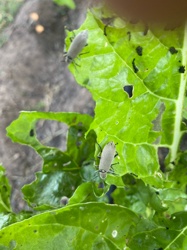
Blister Beetle Identification Guide
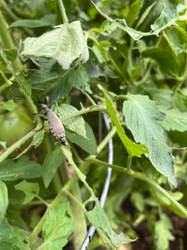
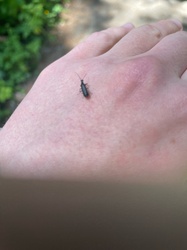
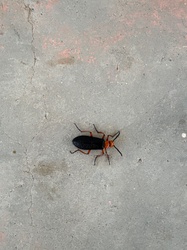
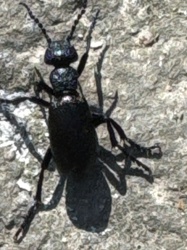
Recognize blister beetles by their soft, elongated bodies, narrow necks, and broad, leathery wing covers.
Read the full Blister Beetle encyclopedia entry →Key Visual Features
- Body shape: Elongated and cylindrical with a distinctly narrow, flexible neck connecting a small head to a wider thorax and abdomen, giving the beetle a somewhat "necked" silhouette.
- Size: Typically 1/2 to 1 inch long, depending on species.
- Color: Highly variable, including solid black, gray, brown, or striking patterns with yellow or orange stripes along the wing covers.
- Wings: Soft, leathery, and somewhat loose-fitting wing covers (elytra) that taper toward the rear and may appear slightly flared or overlapping at the tips.
- Head: Broad and rounded, wider than the narrow neck that joins it to the thorax.
- Legs and antennae: Long, slender legs and thread-like antennae of moderate length, often held forward while walking.
- Abdomen: Often extends slightly beyond the tips of the folded wing covers, giving a somewhat exposed look at the rear of the body.
Where and When You'd See One
Blister beetles are most often seen in fields, meadows, and gardens, especially on flowering plants where adults feed on blossoms and foliage. They are most active during the day in warm months, typically summer, and are frequently found in groups on flowers or low vegetation. Larvae have a very different life cycle, often developing in soil where they feed on the eggs of other insects such as grasshoppers.
Similar-Looking Creatures
- Longhorn beetles: Have much longer antennae, often exceeding body length, compared to the blister beetle's shorter antennae.
- Soldier beetles: Similar soft-bodied shape but generally smaller and lacking the blister beetle's distinctly narrow, flexible neck.
- Ground beetles: Harder-shelled, more streamlined bodies without the narrow neck or loose-fitting wing covers.
- Net-winged beetles: Flattened bodies with a more uniform width, missing the blister beetle's tapered, narrow-necked profile.
- Assassin bugs (nymphs): Occasionally similar in overall proportions from a distance, but true bugs have piercing mouthparts and lack the beetle's hardened wing covers.
Quick ID Checklist
- Elongated, soft body with a distinctly narrow, flexible neck.
- Broad, rounded head wider than the neck.
- Leathery, loose-fitting wing covers, often striped or solid-colored.
- Found on flowers and foliage in fields and gardens.
- Most active during warm daytime months, often seen in small groups.
Frequently asked questions
What is the most distinctive body feature of a blister beetle?
The narrow, flexible neck connecting the head to a wider thorax is the standout feature, giving the beetle a visibly necked, hourglass-like profile compared to other beetle families.
How do blister beetles differ from longhorn beetles?
Longhorn beetles have very long antennae, often longer than their entire body, while blister beetles have shorter, more modest antennae along with the characteristic narrow neck.
Where are blister beetles typically found?
They are commonly seen on flowers and foliage in fields, gardens, and meadows during warm months, often gathered in small groups while feeding on blossoms.
Do blister beetles all look the same color?
No, coloring varies widely by species, ranging from solid black or gray to bold yellow or orange stripes along the wing covers, so shape and the narrow neck are more reliable identification cues than color alone.
Blister Beetle identified by the community
Recent Blister Beetle finds identified with Bug Identifier.