Buck Moth Caterpillar Identification Guide
Identify the spiny, dark-bodied buck moth caterpillar by its branching spines, pale speckling, and oak-tree habitat.
Read the full Buck Moth Caterpillar encyclopedia entry →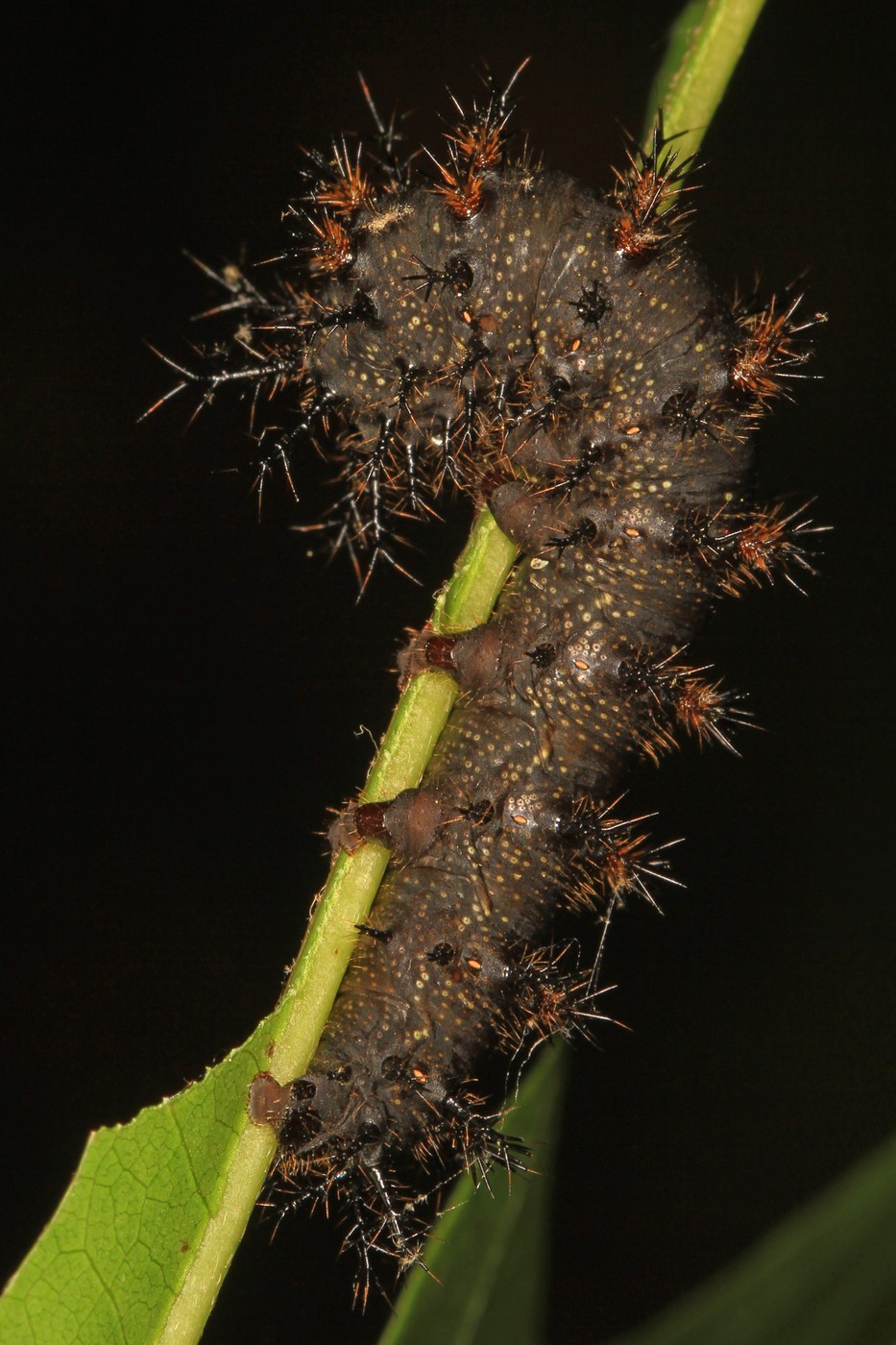
Key Visual Features
The buck moth caterpillar is the larval stage of Hemileuca maia, a day-flying moth in the family Saturniidae.
- Size: mature larvae reach about 2 inches long.
- Color: overall dark brown to black body, densely covered with fine white or pale speckles that give a frosted appearance.
- Spines: covered in branching, stiff spines arranged in rows along the body, most prominent along the back and sides.
- Body shape: cylindrical and somewhat robust, tapering slightly toward the rear.
- Head and legs: head capsule is dark and shiny; true legs near the front are small and dark, with fleshy prolegs along the midsection used for gripping branches.
Where and When You'd See It
- Found on and around oak trees, their primary host plant, often feeding in groups when young and dispersing as they mature.
- Larvae are most visible from spring into early summer, after hatching from egg masses laid on twigs the previous fall.
- Common in open woodlands, oak barrens, and residential areas with oak trees.
- Caterpillars often wander onto the ground or nearby structures when searching for a place to pupate.
Similar-Looking Bugs
- Io moth caterpillar: bright green with a pale side stripe, easily distinguished by color from the dark, speckled buck moth caterpillar.
- Saddleback caterpillar: has a distinct green "saddle" marking on a brown body, a very different pattern from the uniformly dark, speckled buck moth larva.
- Other spiny black caterpillars: the dense white speckling combined with branching spines and an oak-tree association helps set the buck moth caterpillar apart.
Behavior Notes
Early instar larvae feed in tight groups on a single branch, giving oak foliage a visibly skeletonized look in patches, while later instars spread out and feed more independently across the tree. When fully grown, larvae descend to the ground to pupate in the leaf litter or shallow soil beneath the host tree, which is often when they are most likely to be noticed crossing open ground.
Quick ID Checklist
- Dark brown to black body with fine white speckling
- Branching spines in rows along the body
- Up to about 2 inches long when mature
- Found feeding on oak leaves in spring to early summer
- Often seen in small groups when young
Frequently asked questions
What color is a buck moth caterpillar?
It is dark brown to black with a dense covering of fine white or pale speckles across the body.
What tree is the buck moth caterpillar usually found on?
Oak trees are its primary host, and it is commonly seen feeding on oak foliage.
How large does a buck moth caterpillar get?
Mature larvae reach about 2 inches in length.
When during the year are buck moth caterpillars active?
They are typically seen from spring into early summer after hatching from overwintered egg masses.
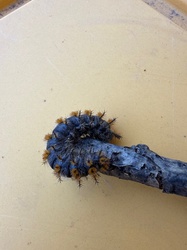
Buck Moth Caterpillar identified by the community
Recent Buck Moth Caterpillar finds identified with Bug Identifier.