Bumblebee Carpenter Bee Identification Guide
Tell a bumblebee-mimicking carpenter bee apart from a true bumblebee by its shiny, mostly hairless abdomen.
Read the full Bumblebee Carpenter Bee encyclopedia entry →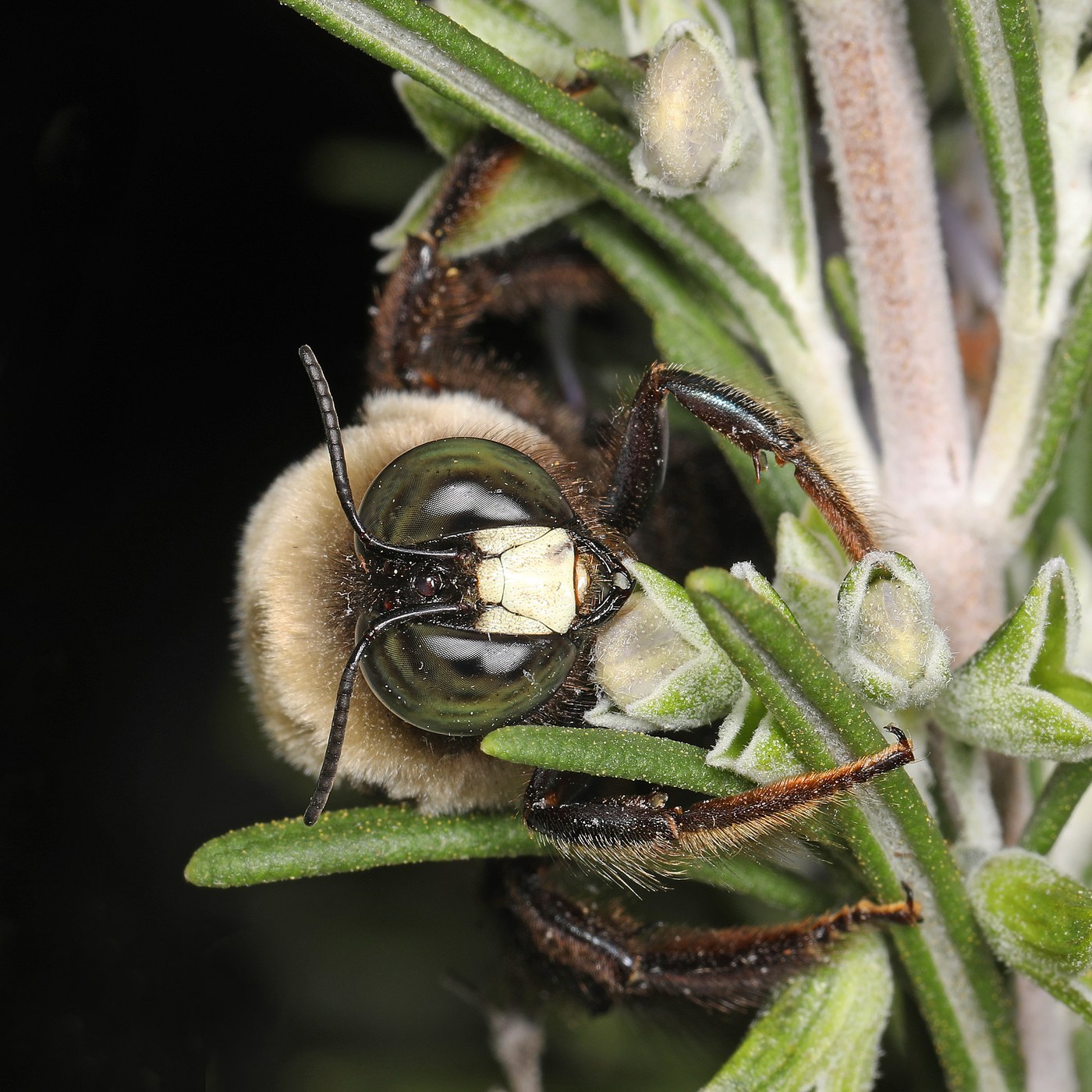
Key Visual Features
Large carpenter bees (Xylocopa species) are often mistaken for bumblebees because of their size and buzzing flight, but a close look reveals clear differences.
- Size: Large and robust, often 20-25mm long, similar in size to or slightly larger than a bumblebee.
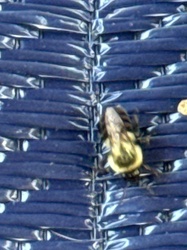
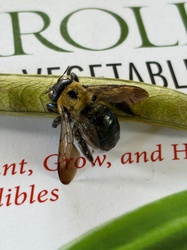
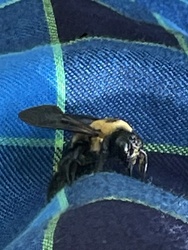
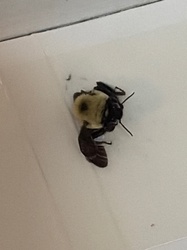
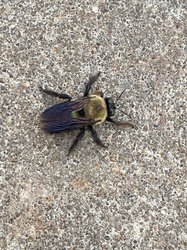
- Color: A fuzzy yellow or golden thorax combined with a smooth, shiny black abdomen that has very little hair.
- Body shape: Broad, rounded body with a noticeably glossy, almost metallic-looking abdomen when seen in good light.
- Wings: Two pairs of dark-tinted, translucent wings.
- Legs: Six legs, with females carrying pollen on hairs on their hind legs rather than a solid pollen basket.
- Head: Large head with strong mandibles used for excavating wood tunnels; males often show a pale or white patch on the face.
Where and When You'll See It
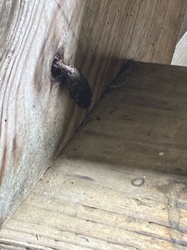
This bee is commonly seen hovering around wooden structures such as eaves, decks, fence posts, and dead tree limbs, where females bore round tunnels to nest. It is also a frequent visitor to garden flowers for nectar and pollen. Activity runs from spring through summer, with males often patrolling and hovering territorially near nesting wood while females forage on flowers.
Similar-Looking Bugs
- True bumblebees: Covered in dense hair over the entire body, including the abdomen, which shows distinct yellow, black, or orange banding rather than a bare shiny surface.
- Honey bees: Much smaller and slimmer, with a fuzzy but modestly sized body and consistent orange-brown and black banding.
- Other carpenter bee species: Vary somewhat in color pattern, but all share the telltale shiny, sparsely-haired abdomen distinguishing them from bumblebees.
Quick ID Checklist
- Large, robust body around 20-25mm
- Fuzzy thorax paired with a smooth, shiny, mostly bare black abdomen
- Seen hovering near bare or weathered wood surfaces
- Round entry holes bored into wood nearby
- Distinguished from bumblebees mainly by the hairless, glossy abdomen
Frequently asked questions
What's the easiest way to tell a carpenter bee from a bumblebee?
Look at the abdomen: carpenter bees have a smooth, shiny, mostly hairless black abdomen, while bumblebees are covered in dense hair with distinct color banding all over the body.
Why is it sometimes called a bumblebee carpenter bee?
Its large size, buzzing flight, and fuzzy yellow thorax closely resemble a bumblebee at a glance, even though its body structure and nesting habits are quite different.
Where do these bees typically nest?
Females bore round tunnels into bare or weathered wood, such as eaves, fence posts, and deck railings, rather than nesting in the ground like most bumblebees.
Are carpenter bees social like bumblebees?
No. Carpenter bees are largely solitary, with each female excavating and provisioning her own nest tunnel, unlike the colony-based social structure of bumblebees.
Bumblebee Carpenter Bee identified by the community
Recent Bumblebee Carpenter Bee finds identified with Bug Identifier.