Cabbage Looper Moth Identification Guide
A plain grayish-brown moth best known by the small silvery figure-eight mark near the center of each forewing.
Read the full Cabbage Looper Moth encyclopedia entry →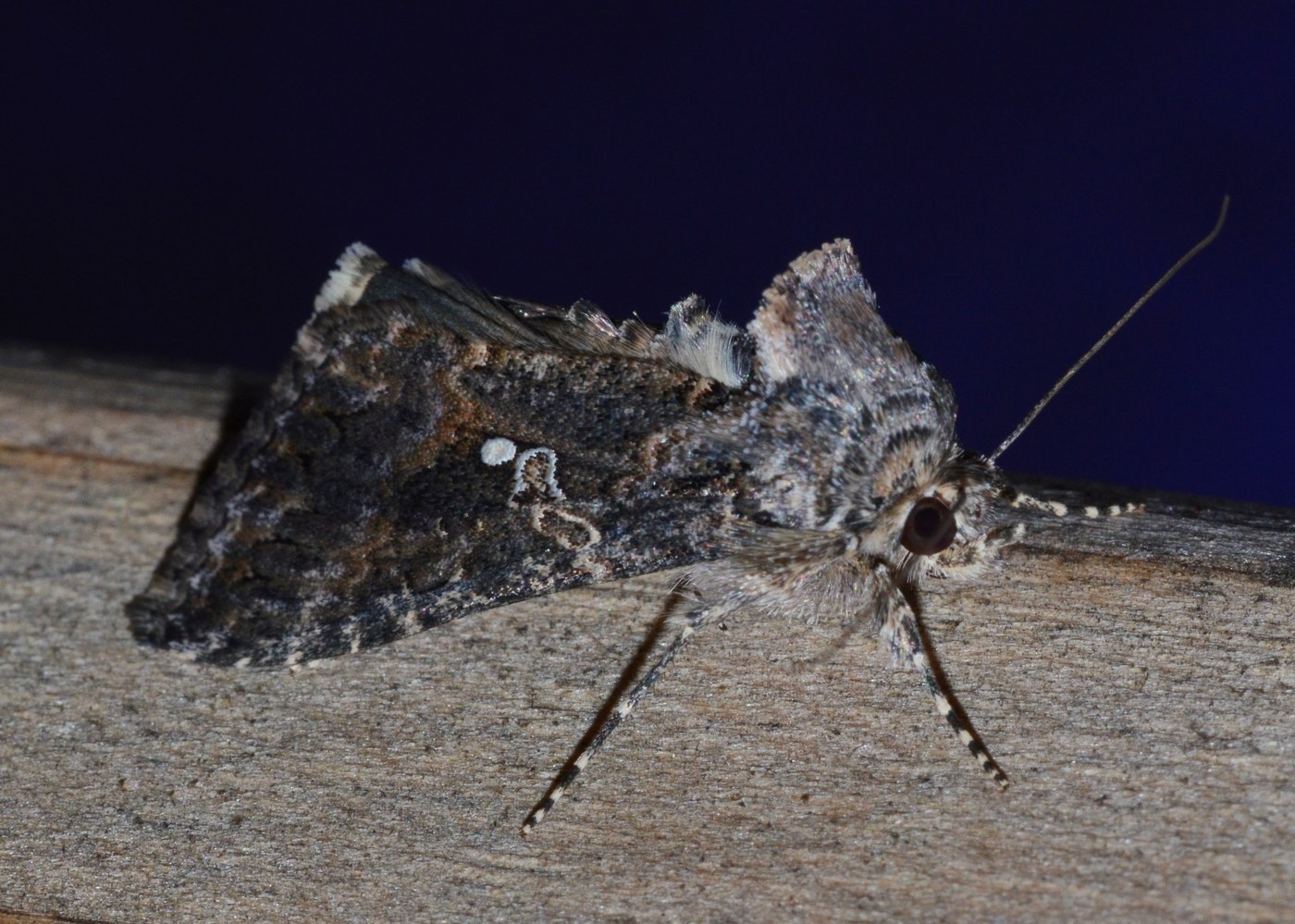
Key Visual Features
The cabbage looper moth is unassuming in color but has one clear diagnostic mark:
- Size: Small to medium, with a wingspan of about 3-4 cm (1.2-1.6 in).
- Color: Mottled grayish-brown to tan forewings with darker wavy lines and patches, giving a mottled, bark-like appearance.
- Signature mark: A small silvery or white figure-eight (or Y-shaped) spot near the center of each forewing — the single best field mark for this species.
- Hindwings: Plainer pale brown, usually hidden under the forewings at rest.
- Body shape: Slender body with wings held in a shallow tent or roof shape when resting.
- Antennae: Thin, thread-like antennae typical of owlet moths.
Where and When You're Likely to See It
This moth is common across gardens, farmland, and open fields wherever cole crops (cabbage, broccoli, kale) or other host plants grow. Adults are active at night and are frequently attracted to porch lights, bug zappers, and moth traps. They can be found from late spring through fall in temperate climates, with several overlapping generations possible in warmer regions. During the day, adults rest quietly on foliage, fences, or siding, relying on their mottled pattern for camouflage.
Similar-Looking Moths
- Other loopers and owlet moths: Many small brown owlet moths share a similar mottled pattern, but few have the distinct silvery figure-eight mark.
- Soybean looper moth: Very similar in size and color; distinguishing the two reliably in the field usually requires close inspection of the wing mark's exact shape.
- Armyworm and cutworm moths: Generally lack the silvery central mark and tend to have plainer, more uniform forewings.
Quick ID Checklist
- Mottled gray-brown forewings
- Small silvery figure-eight or Y-mark at wing center
- Wingspan around 1.2-1.6 inches
- Nocturnal, attracted to lights
- Tent-shaped wing posture at rest
Frequently asked questions
What is the easiest way to identify a cabbage looper moth?
Look for the small silvery figure-eight or Y-shaped spot near the middle of each forewing against an otherwise mottled brown background; it is the most reliable field mark.
Why is it called a 'looper' moth?
The name comes from the caterpillar stage, which arches its body into a loop as it crawls, though the adult moth itself does not loop.
When are adult cabbage looper moths most active?
They fly at night and are commonly drawn to outdoor lighting, while spending daylight hours resting motionless on nearby surfaces.
Do cabbage looper moths look different between males and females?
The sexes look very similar externally, with only subtle differences in antenna structure that are hard to see without close examination.
Cabbage Looper Moth identified by the community
Recent Cabbage Looper Moth finds identified with Bug Identifier.