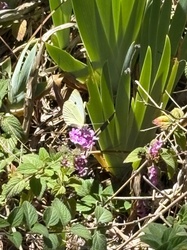
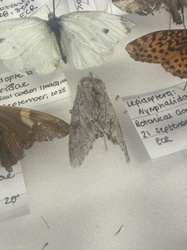
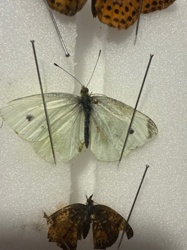
Cabbage White Butterfly Identification Guide
Identify a cabbage white by its pale wings, black-tipped forewings, and forewing spot count.
Read the full Cabbage White Butterfly encyclopedia entry →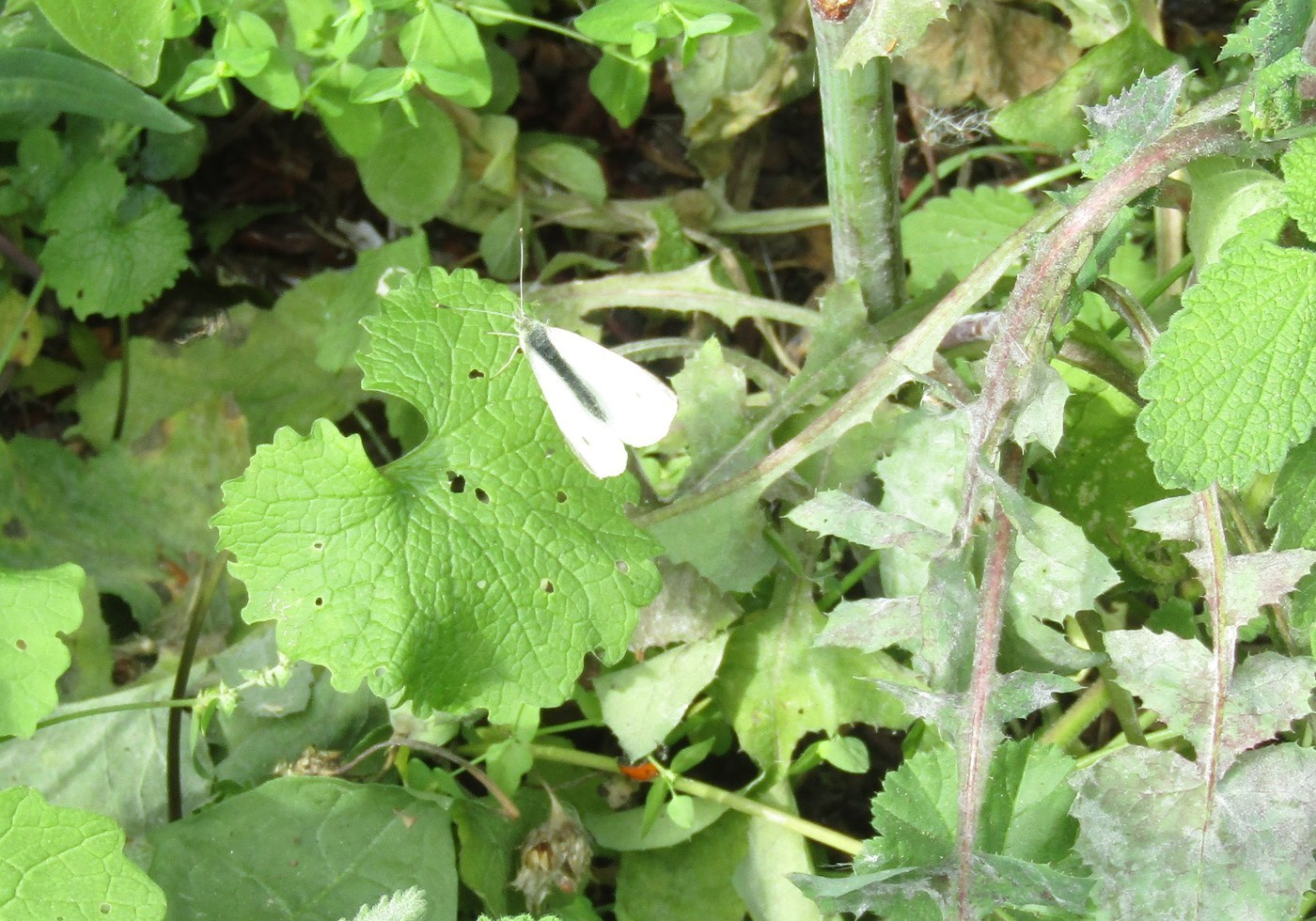
Key Visual Features
- Wingspan of about 1.5 to 2 inches, smaller and more delicate-looking than many garden butterflies
- Wings mostly white to pale cream in color, with a smooth, unmarked base coat
- Solid black tips on the forewings, forming a triangular patch near the wingtip
- Females show two black spots on each forewing, while males show only one
- Faint black wing veining that is much subtler than the bold pattern seen on many other butterflies
- Body covered in fine white to gray hairs, especially noticeable near the thorax
- Undersides of the hindwings are pale yellowish-green, a helpful clue when the butterfly is resting with wings closed
- Rounded wing shape overall, without the elongated or scalloped edges seen in some other butterfly families
Where and When You'll See Them
- Extremely common in gardens, fields, roadsides, and urban areas wherever cabbage-family plants and flowers grow
- Active during the day in warm months, a frequent visitor to garden flowers such as clover and other low-growing blooms
- Flies with a fluttery, somewhat erratic pattern, typically low to the ground and close to vegetation
- One of the most frequently seen butterflies in home gardens due to its close association with common cultivated plants
- Widespread across much of North America, Europe, and Asia, found in both rural and urban settings
Similar-Looking Bugs
- Checkered white butterfly shows a more mottled, checkered black-and-white pattern across both wings rather than solid black tips
- Clouded sulphur and other sulphur butterflies tend to be more uniformly yellow rather than white with black-tipped forewings
- Counting forewing spots (one versus two) helps separate male from female cabbage whites
Quick ID Checklist
- Mostly white wings with solid black forewing tips
- One (male) or two (female) black spots per forewing
- Small size, around 1.5 to 2 inches
- Pale yellow-green hindwing undersides
Frequently asked questions
How can I tell a male cabbage white from a female?
Count the black spots on the forewing - males have one, females have two.
Is the cabbage white a moth or a butterfly?
It's a true butterfly, active by day and equipped with clubbed antennae, unlike most moths.
Why is it so common in gardens?
Its larval host plants are common cultivated and wild mustard-family plants, which are widespread in gardens and fields.
How do I tell it apart from other white butterflies?
Look closely at the shape of the black forewing tip and the number of forewing spots, and check the pale yellow-green underside of the hindwing.
Cabbage White Butterfly identified by the community
Recent Cabbage White Butterfly finds identified with Bug Identifier.