Cecropia Moth Caterpillar Identification Guide
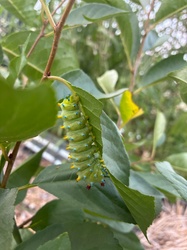
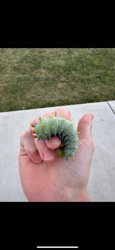
One of the largest native caterpillars, blue-green with rows of colorful knob-like tubercles along its back.
Read the full Cecropia Moth Caterpillar encyclopedia entry →Key Visual Features
The cecropia moth caterpillar is a heavyweight among native caterpillars, reaching up to 4.5 inches long in its final stage.
- Color: Blue-green to pale turquoise body
- Tubercles: Rows of large, rounded, knob-like tubercles line the back and sides — a pair of prominent blue or coral-colored tubercles behind the head, more coral/red tubercles further back, and rows of smaller yellow tubercles along the sides
- Texture: Each tubercle bears a small cluster of short, dark bristles at its tip
- Body shape: Thick, heavy-bodied, and noticeably plump compared to most other caterpillars
- Head: Small and dark, tucked beneath the first pair of large tubercles
- Legs: Three pairs of small true legs near the head plus several pairs of stout prolegs supporting the heavy body along its length
Where and When You'll See It
Cecropia moth caterpillars feed on a variety of trees and shrubs, including maple, cherry, birch, and apple. Because they hatch from eggs in late spring and grow through the summer, the largest and most recognizable caterpillars are typically seen from mid to late summer. They rest and feed along branches and the undersides of leaves, moving slowly and relying on camouflage rather than fleeing from disturbance. As one of the bulkier caterpillars in its range, a full-grown individual is hard to miss once spotted.
Similar-Looking Bugs
- Polyphemus moth caterpillar: Green with small red tubercles and silvery spots, but noticeably smaller and slimmer, without cecropia's large coral and yellow knobs
- Luna moth caterpillar: Pale green with only small yellow dots and low bumps, lacking cecropia's large, colorful tubercles
- Io moth caterpillar: Bright green with dense branching spine clusters rather than rounded, well-spaced knob-like tubercles
Quick ID Checklist
- Very large, thick-bodied caterpillar up to 4.5 inches
- Blue-green body color
- Prominent coral/blue tubercles near the head, yellow tubercles along the sides
- Rounded, knob-shaped tubercles rather than dense spine clusters
- Found on maple, cherry, birch, or apple trees in mid to late summer
Frequently asked questions
How big does a cecropia moth caterpillar get?
It can reach up to about 4.5 inches long, making it one of the largest native caterpillars encountered in its range.
What are the colorful bumps on a cecropia moth caterpillar?
They are rounded tubercles, including a pair of prominent coral or blue tubercles near the head and rows of smaller yellow tubercles along the sides, each tipped with short dark bristles.
What trees host cecropia moth caterpillars?
They commonly feed on maple, cherry, birch, and apple trees, among other deciduous species.
How is the cecropia caterpillar different from the polyphemus caterpillar?
Cecropia caterpillars are larger and heavier-bodied with prominent coral and yellow knob-like tubercles, while polyphemus caterpillars are slimmer with smaller red tubercles and silvery reflective spots.
Cecropia Moth Caterpillar identified by the community
Recent Cecropia Moth Caterpillar finds identified with Bug Identifier.