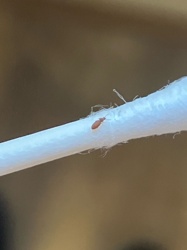
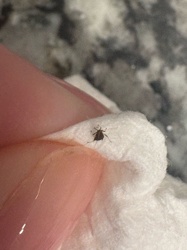
Chicken Mite Identification Guide
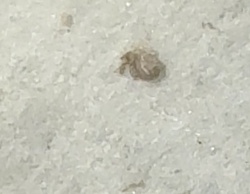
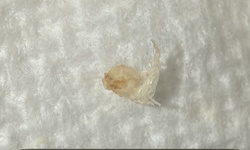
Identify the chicken mite by its small size and color that shifts from gray to deep red after feeding.
Read the full Chicken Mite encyclopedia entry →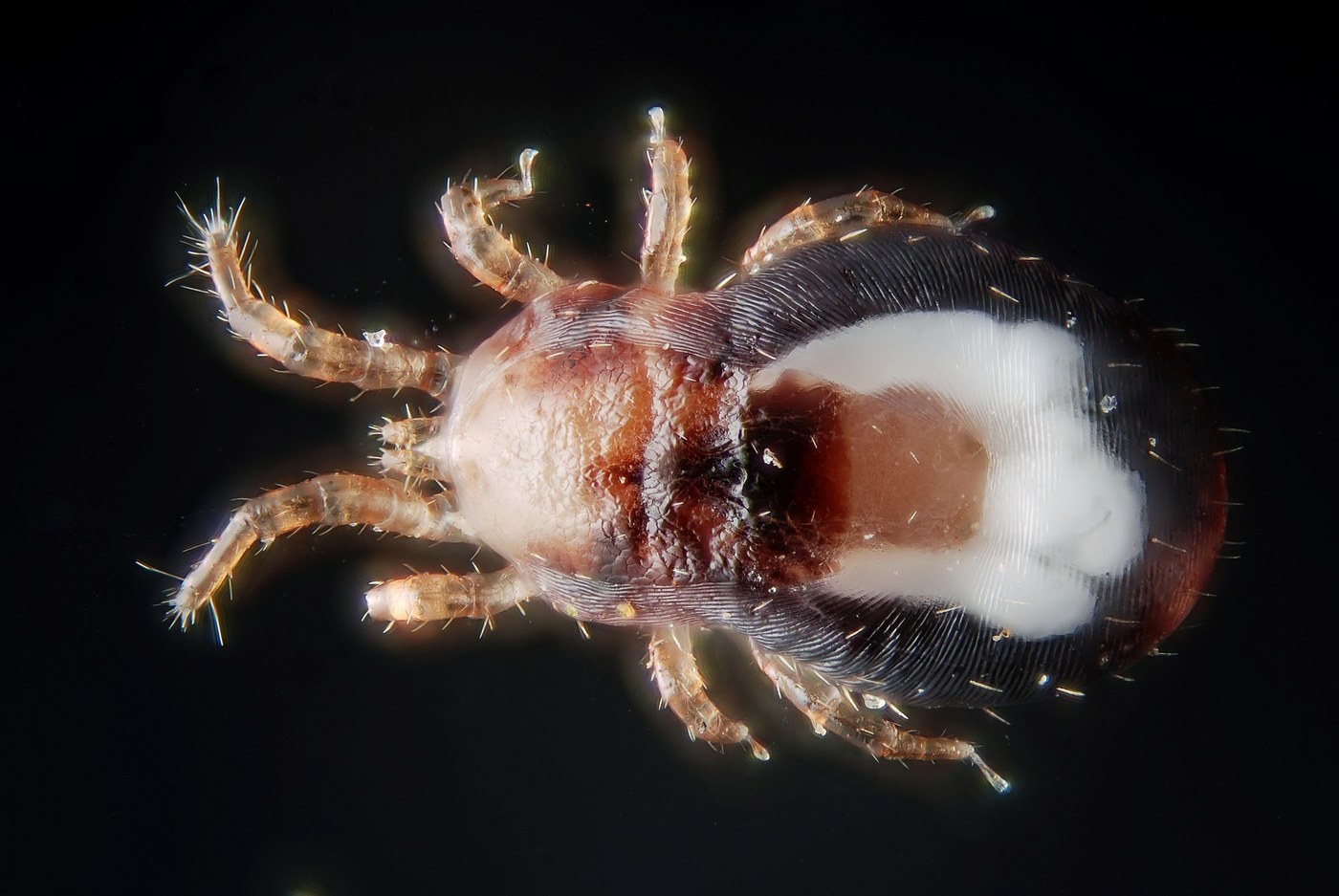
Key Visual Features
The chicken mite (Dermanyssus gallinae) is a small, free-living mite associated with poultry housing, and its color is one of its most notable identification traits.
- Size: Around 0.7 mm long when unfed, though it can appear larger after feeding.
- Color: Grayish-white to pale tan when unfed, shifting to a dark red or almost black color after feeding, due to the contents visible through its translucent body — this color change is a hallmark trait of the species.
- Body shape: Oval, flattened, and soft-bodied, typical of the free-living mite groups.
- Legs: Eight legs, relatively long and thin compared to the compact body.
- Wings/antennae: None; no wings or true antennae are present.
- Markings: Fine body hairs (setae) are visible under magnification, and the dramatic pale-to-red color shift is the most useful single identification cue.
Where and When You'd See Them
Chicken mites are associated with poultry housing, roosting sites, and nest boxes, where they hide in cracks, crevices, and bedding material during the day and emerge at night to move about. Populations build up quickly in warm weather and can be found year-round in heated structures, with peak activity in spring and summer. They are typically found on structures and equipment rather than out in open habitats.
Similar-Looking Bugs
- Bird mites are very similar in size and shape and inhabit comparable environments, but tend to stay closer to a nest structure and can be harder to distinguish without close examination of mouthpart structures.
- Soil mites are generally darker and more varied in texture, and are found in soil and leaf litter rather than poultry housing.
- Clover mites are reddish year-round rather than changing color with feeding, and are found on vegetation and building exteriors, not around nesting material.
- Follicle mites are microscopic and elongated, entirely different in shape from the oval chicken mite.
Quick ID Checklist
- Small, roughly 0.7 mm, oval, flattened body
- Color shifts from pale gray-tan when unfed to dark red or black after feeding
- Eight thin legs, no wings or antennae
- Found hiding in cracks and crevices of poultry housing during the day
- Most active and visible at night, moving from hiding spots to roosting areas
Frequently asked questions
Why does a chicken mite change color?
Its body is translucent, so it appears pale gray-tan when empty and shifts to a dark red or nearly black shade once it has fed, making the color change a useful identification clue.
Where do chicken mites hide during the day?
They tuck into cracks, crevices, and bedding material around roosting and nesting areas, emerging at night to move around more openly.
How big is a chicken mite?
It is quite small, typically around 0.7 mm in length when unfed.
How can I tell a chicken mite from a bird mite?
The two are similar in size, shape, and habitat, and reliable separation generally requires close examination of fine body and mouthpart details under magnification.
Chicken Mite identified by the community
Recent Chicken Mite finds identified with Bug Identifier.