Chinch Bug Identification Guide
Spot this tiny black-and-white lawn insect by its distinctive wing pattern and cluster feeding habit.
Read the full Chinch Bug encyclopedia entry →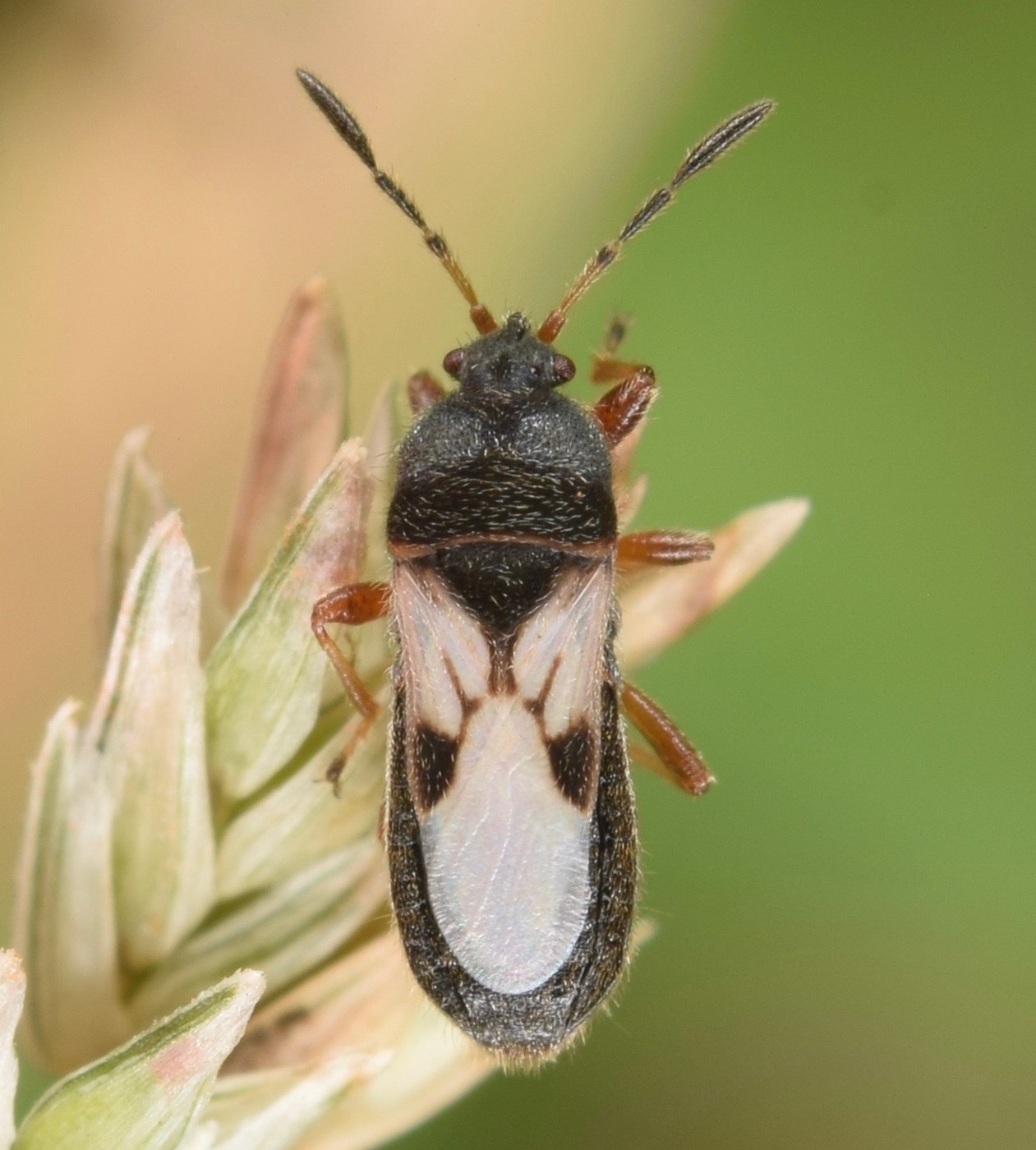
Key Visual Features
Chinch bugs are small true bugs closely associated with turfgrass, and their tiny size means close inspection is usually needed to confirm identification.
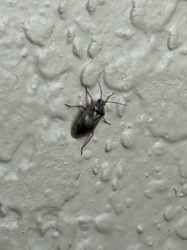
- Size: Adults are quite small, about 3 to 6 millimeters long.
- Body shape: Narrow and elongated, with a somewhat flattened profile.
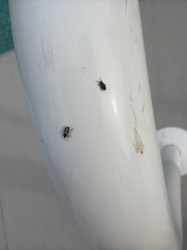
- Color: Adults are black with white wings that fold over the back; each wing typically shows a distinctive black triangular or diamond-shaped mark near the outer edge.
- Legs: Reddish-orange to orange-brown legs that contrast with the dark body.
- Nymphs: Immature chinch bugs look quite different — bright red-orange with a pale white or cream band across the back early on, gradually darkening toward black as they mature through several molts.
- Antennae: Short, thread-like antennae.
Where and When You'd See Them
Chinch bugs live in turfgrass and are most active during hot, dry weather from mid-summer into early fall, when populations build up quickly. They cluster at the base of grass blades near the soil surface, particularly in sunny, drought-stressed areas of lawns, and can often be found in the thatch layer between grass and soil. Because they favor heat and dryness, chinch bug activity tends to peak during the hottest, sunniest parts of the growing season.
Similar-Looking Bugs
- Big-eyed bugs: Beneficial predators that are sometimes confused with chinch bugs due to similar size and habitat, but big-eyed bugs have noticeably large, bulging eyes and a broader, flatter head.
- Aphids: Soft-bodied and pear-shaped rather than elongated and hard-bodied, and lack the distinct black-and-white wing pattern of adult chinch bugs.
- Fleas: Similar small dark size, but fleas have a laterally flattened (side-to-side) body built for jumping, unlike the flatter, top-to-bottom profile of a chinch bug.
- Clover mites: Reddish like chinch bug nymphs, but mites have eight legs and no wings at any life stage, while chinch bug nymphs have six legs and develop wings as adults.
Quick ID Checklist
- Small, 3–6 mm, narrow black body with white wings
- Black diamond-shaped mark on each folded wing
- Reddish-orange legs contrasting with the dark body
- Bright red-orange nymphs with a pale band across the back
- Found clustered at the base of grass blades in sunny, dry lawn areas
Frequently asked questions
How can I tell an adult chinch bug from a big-eyed bug?
Big-eyed bugs have noticeably large, bulging eyes and a broader head, while chinch bugs have smaller eyes and a distinctive black diamond mark on each white wing.
What do young chinch bugs look like?
Nymphs are bright red-orange with a pale cream or white band across the back, gradually darkening toward black as they mature into adults.
Where in a lawn are chinch bugs usually found?
Near the base of grass blades and in the thatch layer, especially in sunny, drought-stressed patches of turf.
When are chinch bugs most active?
They are most active during hot, dry weather from mid-summer into early fall.
Chinch Bug identified by the community
Recent Chinch Bug finds identified with Bug Identifier.