Cinnabar Moth Identification Guide
Spot this day-flying tiger moth by its bold black wings marked with crimson-red stripes and a red-and-black hindwing.
Read the full Cinnabar Moth encyclopedia entry →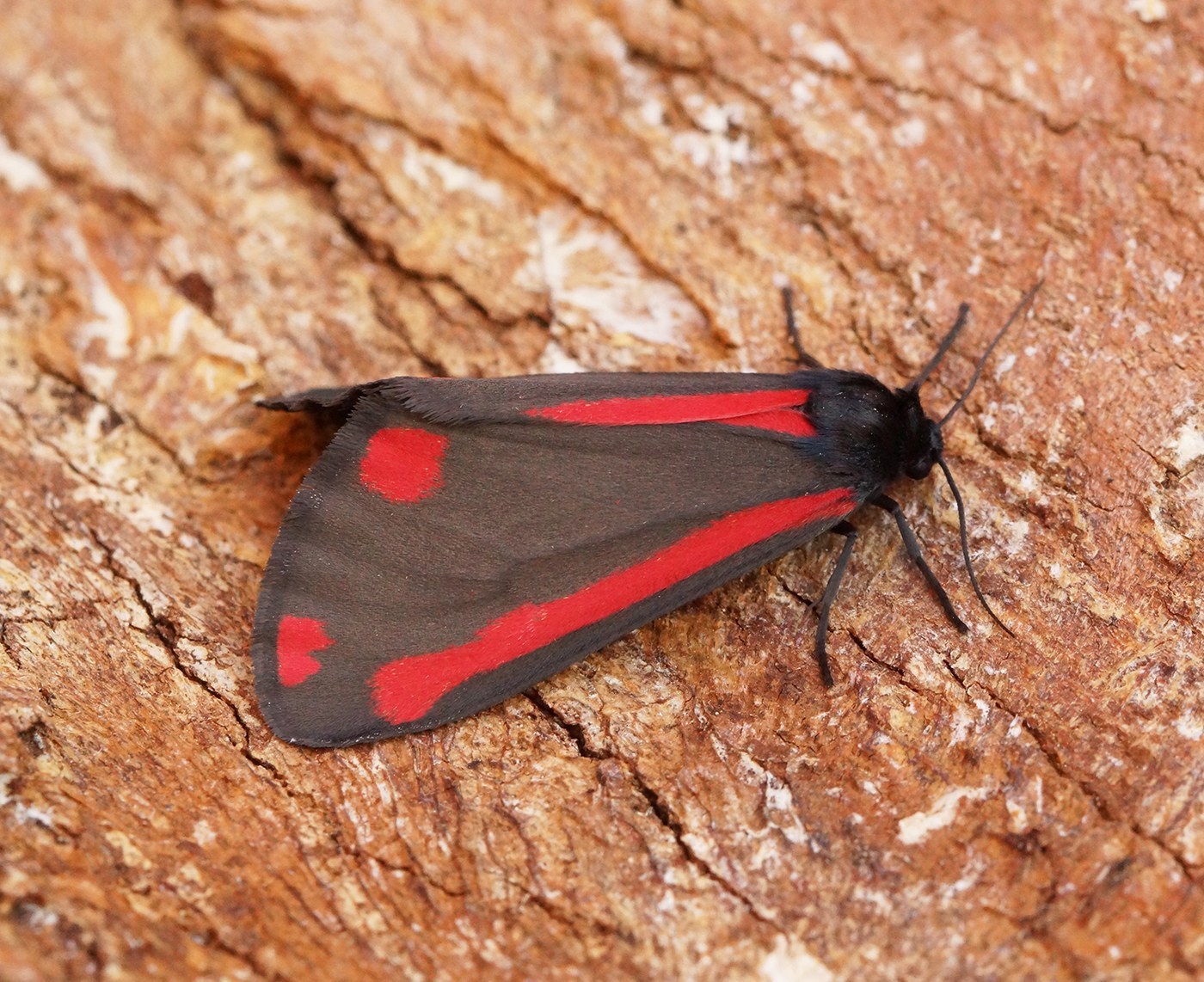
Key Visual Features
The cinnabar moth is a boldly colored, day-flying tiger moth that stands out clearly against green vegetation.
- Size: Wingspan of about 32-42mm, a modest size that still stands out visually thanks to its bright coloring.
- Color and pattern: Forewings are dark charcoal-gray to blackish, marked with two bold crimson-red stripes running along the leading edge and a red spot near the wingtip. Hindwings are mostly bright crimson-red with a narrow dark gray-black border, most visible when the moth is in flight or disturbed.
- Body shape: Slender, dark body with red markings running along its length.
- Wings: Held roof-like or flat depending on activity; the red-and-black pattern is visible even at rest.
- Legs and antennae: Antennae are thin and thread-like, held forward or close to the body while at rest on vegetation.
Where and When You'll See It
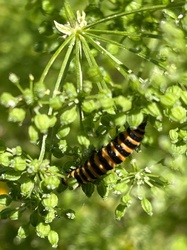
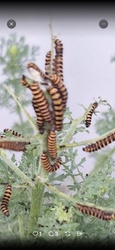
This species favors open grassland, meadows, roadside verges, coastal dunes, and waste ground with ragwort, its primary caterpillar host plant. It is native to Europe and has been introduced elsewhere, including parts of North America, Australia, and New Zealand. Adults fly from late spring to midsummer and are unusual among moths for being active during the day, flying low over vegetation in sunshine, though they can also be seen at dusk. They are easily disturbed from low vegetation while walking through open ground in daylight, fluttering up briefly before settling again nearby.
Similar-Looking Moths
The six-spot burnet moth is a common lookalike sharing the same open habitats, also black with red markings, but it has rounded red spots rather than stripes, and a more compact, rounder wing shape overall. The cinnabar moth is distinguished by its bold red-striped-and-spotted forewing pattern versus the burnet's rounder red spots arranged on a more triangular wing outline.
Quick ID Checklist
- Black moth with two red stripes and a red spot on the forewings
- Bright red hindwings with a narrow black border
- Flies by day over grassland and meadow habitat
- Slender dark body with red markings
- Often found near ragwort plants
Frequently asked questions
How can I tell a cinnabar moth from a six-spot burnet moth?
The cinnabar moth has red stripes on its forewings, while the six-spot burnet has rounded red spots on a more compact wing shape.
Is the cinnabar moth active during the day?
Yes, it is one of the few moths commonly seen flying in daylight, though it can also be active at dusk.
Where is the cinnabar moth typically found?
In open grassland, meadows, and waste ground, especially where ragwort grows.
What color are the hindwings of the cinnabar moth?
Bright crimson-red with a narrow dark gray-black border.
Cinnabar Moth identified by the community
Recent Cinnabar Moth finds identified with Bug Identifier.