Colorado Potato Beetle Identification Guide
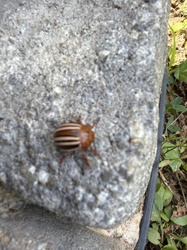
Identify this boldly striped beetle by its rounded, orange-and-black-striped shell often seen on potato and nightshade plants.
Read the full Colorado Potato Beetle encyclopedia entry →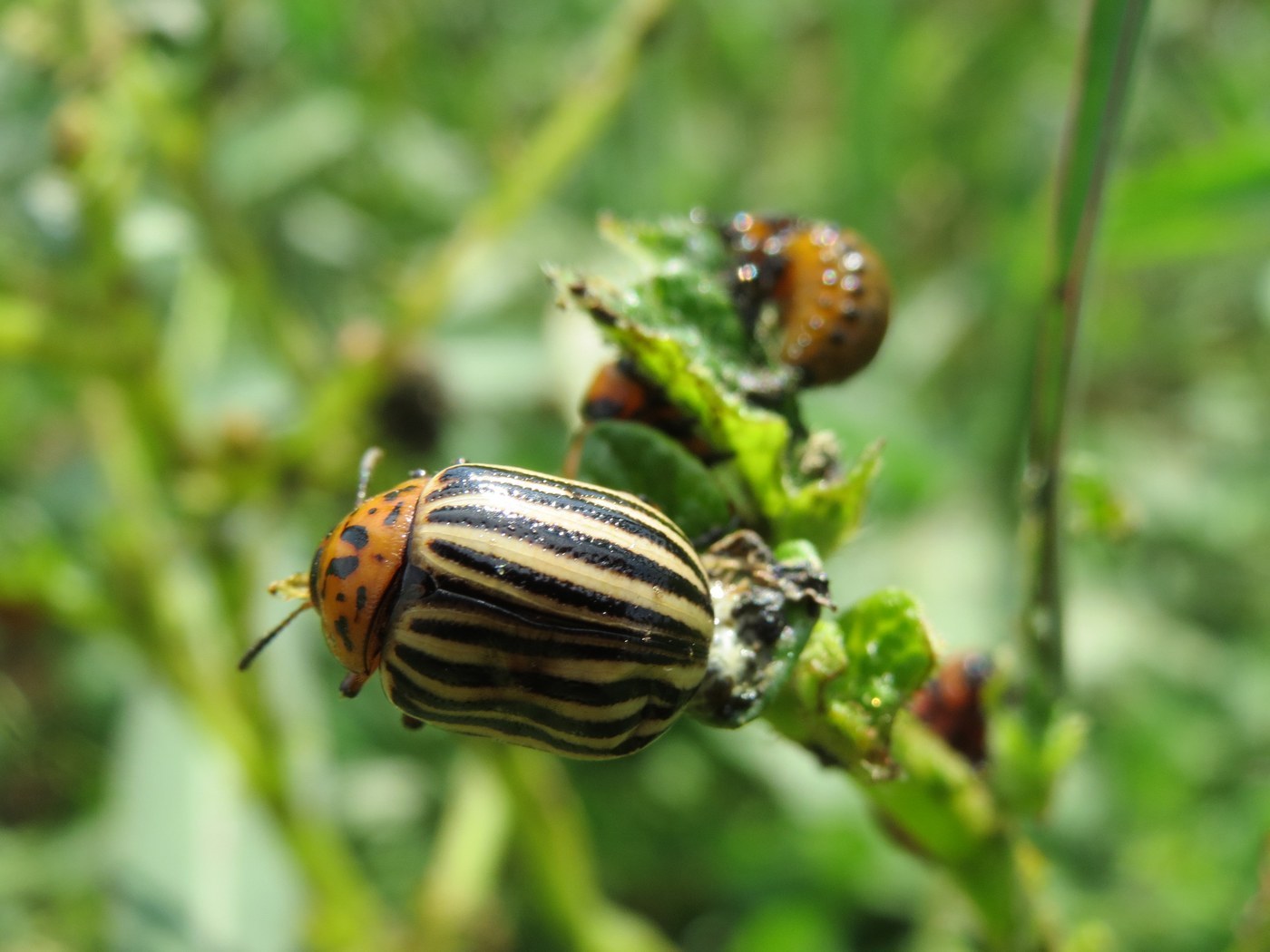
Key Visual Features
The Colorado potato beetle is one of the most easily recognized garden beetles thanks to its bold, high-contrast striping.
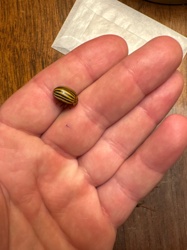
- Size: Adults measure about 1 to 1.2 centimeters long, with a rounded, domed body.
- Body shape: Oval and strongly convex, almost hemispherical, similar in general outline to a ladybird beetle but noticeably larger.
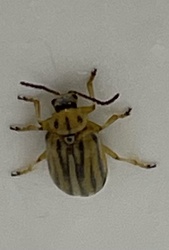
- Color and pattern: Bright yellow-orange wing covers marked with five bold black longitudinal stripes on each side (ten stripes total), making it one of the most distinctly patterned beetles in the garden. The head and pronotum (area behind the head) are orange with black spots.
- Legs and antennae: Short, dark legs and short, dark, segmented antennae.
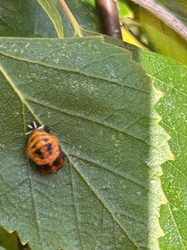
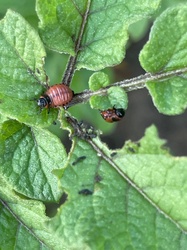
- Larvae: Plump, soft-bodied, reddish-orange grubs with two rows of black spots along each side, growing progressively larger through several molts before pupating in the soil.
- Eggs: Bright yellow-orange, oval eggs laid in tight clusters on the undersides of leaves.
Where and When You'd See Them
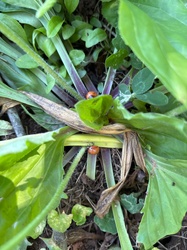
Colorado potato beetles are found wherever potato, eggplant, tomato, and other nightshade-family plants grow, becoming active as soon as these plants emerge in spring and continuing through the growing season into fall. Adults overwinter in soil and emerge in spring to feed and lay eggs on host plant leaves; a new generation of adults typically appears by mid-to-late summer. Look for them on the foliage of nightshade crops during the day, since they are active feeders in daylight rather than nocturnal.
Similar-Looking Bugs
- Ladybird beetles: Similar domed, oval shape but typically red or orange with black spots rather than bold black-and-orange longitudinal stripes.
- False potato beetle: Very similar striping but with narrower, less bold black stripes and a slightly different pattern on the head shield; found on similar host plants and easily confused at a glance.
- Cucumber beetles: Elongated rather than domed, with either spots or stripes running differently, and a narrower overall body shape.
- Squash beetles: Also domed and yellow-orange, but marked with rows of black spots rather than continuous longitudinal stripes.
Quick ID Checklist
- Rounded, domed oval body about 1–1.2 cm long
- Bright yellow-orange wing covers with five bold black stripes per side
- Orange head and thorax marked with black spots
- Reddish-orange, spotted larvae on the same host plants
- Found on potato, eggplant, and tomato foliage during the day
Frequently asked questions
What is the most distinctive marking on a Colorado potato beetle?
The five bold black longitudinal stripes on each bright yellow-orange wing cover, giving ten stripes total across its back.
What do Colorado potato beetle larvae look like?
Plump, soft-bodied, reddish-orange grubs with two rows of black spots along each side, quite different in appearance from the striped adults.
How can I tell a Colorado potato beetle from a ladybird beetle?
Colorado potato beetles have bold black-and-orange longitudinal stripes, while ladybird beetles typically show black spots on a red or orange background.
What plants are Colorado potato beetles usually found on?
Nightshade-family plants, especially potato, eggplant, and tomato foliage.
Colorado Potato Beetle identified by the community
Recent Colorado Potato Beetle finds identified with Bug Identifier.