
Colorado Potato Beetle
Leptinotarsa decemlineata
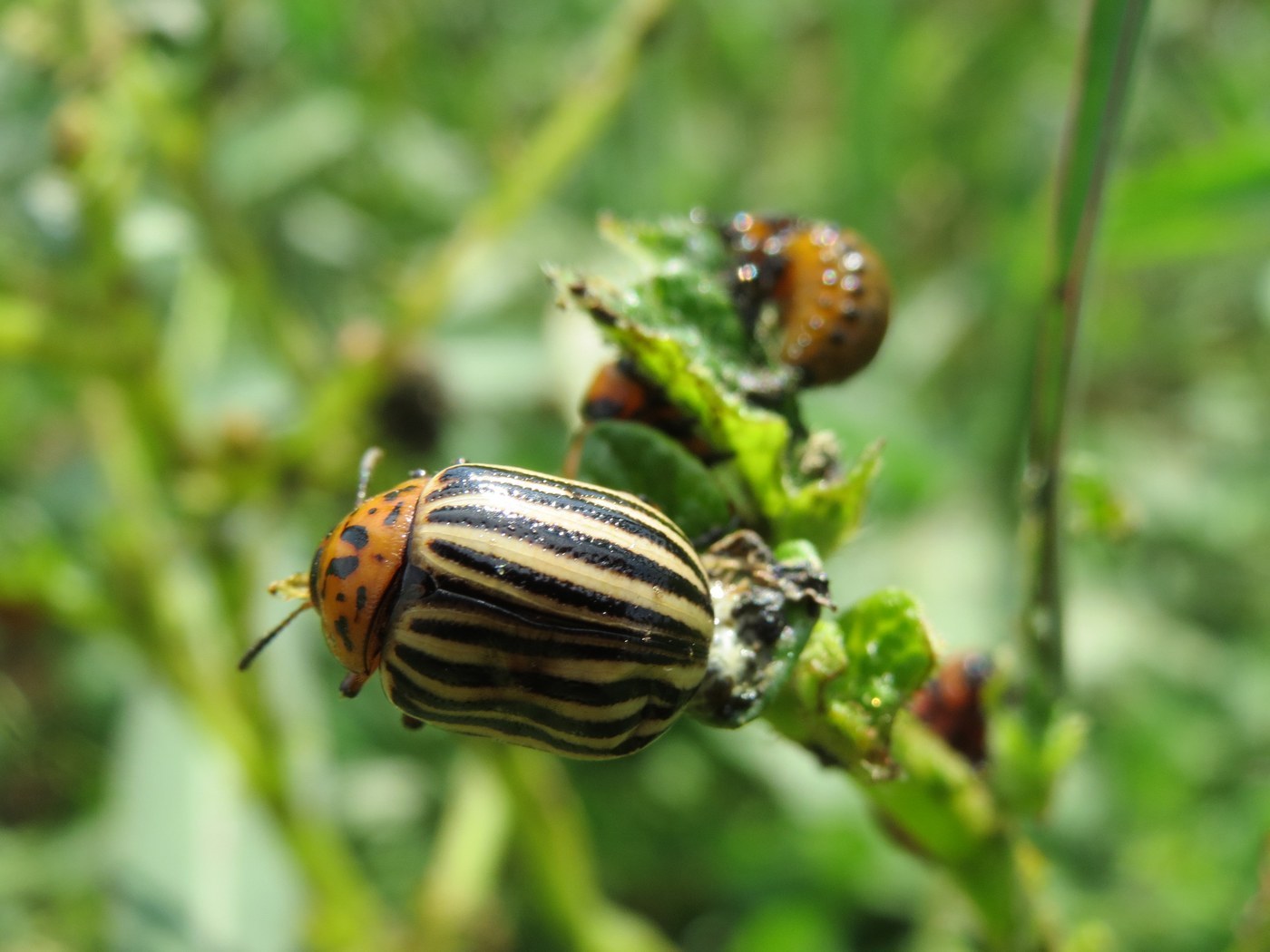
A rounded, boldly striped yellow-and-black beetle that is one of the most notorious defoliators of potato plants, easily spotted marching across leaves in gardens and fields.
- Size
- 6–11 mm
- Habitat
- Potato, tomato, and eggplant fields and gardens
- Danger
- Harmless
Spotted a bug like this?
Identify any bug or insect from a photo, free.
Overview
The Colorado potato beetle is a beetle in the family Chrysomelidae, the leaf beetles, and is one of the most widely recognized agricultural insects in North America and, following its accidental introduction, in Europe and Asia as well. Its name reflects both its striking coloration and its historical association with potato-growing regions of the western United States, where it first rose to prominence as a crop pest in the nineteenth century.
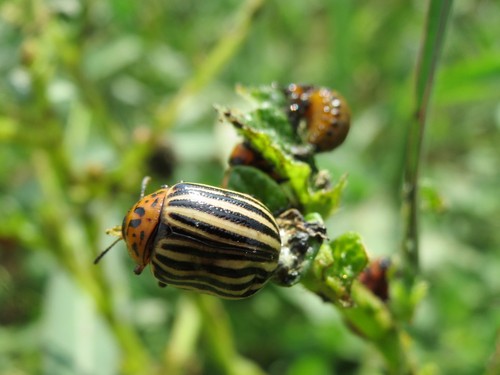
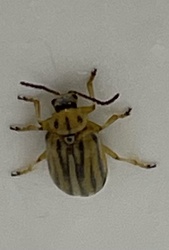
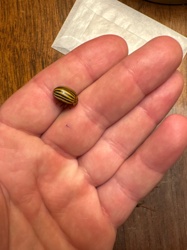
Adults are rounded, dome-shaped, and boldly patterned with alternating cream-yellow and black longitudinal stripes running the length of the hardened wing covers, making them one of the more visually distinctive beetles found on garden vegetables. The head and pronotum bear additional black spotting on an orange-yellow background.
Within the broader ecosystem, the Colorado potato beetle is a specialist herbivore of nightshade family plants and serves as prey for a range of predatory insects and birds, while also playing an outsized historical role in the development of modern insect pest management practices.
How to Identify
- Adults are oval and strongly convex, about 6–11 mm long, with hardened wing covers marked by five bold black stripes alternating with cream to pale yellow stripes on each side.
- Head and thorax are orange-yellow with irregular black spots or blotches, distinct from the striped wing covers.
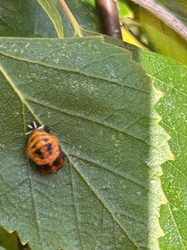
- Larvae are plump, humpbacked, and reddish-orange to brick red with two rows of black spots along each side, becoming darker as they mature.
- Eggs are bright yellow-orange, oval, and laid in tight clusters on the undersides of host plant leaves.
- Distinguished from similar striped beetles by its host plant association with potato and other nightshades and its distinctive ten-striped wing pattern (five stripes per side).
Habitat & Range
The Colorado potato beetle is native to the Rocky Mountain region of North America but has since spread across most of the continental United States, southern Canada, and much of Europe and Asia following accidental introductions. It is found wherever potatoes, tomatoes, eggplants, and other nightshade family crops are grown, in both agricultural fields and home gardens.
Adults and larvae are active from late spring through summer, feeding heavily on foliage during this period. Adults overwinter buried in soil near previous host plant locations, emerging in spring as temperatures warm to seek out newly planted potato and other nightshade crops.
Behavior & Diet
Both adult and larval Colorado potato beetles are voracious leaf feeders, consuming the foliage of potato, tomato, eggplant, and other solanaceous plants, sometimes stripping plants down to bare stems when populations are dense. Larvae in particular feed almost continuously during their development, contributing most of the defoliation caused by this species.
Adults are capable fliers and can disperse considerable distances to locate new host plants, though they often simply walk between adjacent plants within a field or garden. When disturbed, both adults and larvae may drop from the plant or feign death. The species is well known for having developed resistance to numerous control methods over its long history as an agricultural pest, making it a frequently studied model organism in applied entomology.
Life Cycle
The Colorado potato beetle undergoes complete metamorphosis with egg, larva, pupa, and adult stages. Females lay clusters of bright yellow-orange eggs on the undersides of host plant leaves, which hatch within one to two weeks.
Larvae pass through four instars over roughly two to three weeks, growing from small reddish grubs into plump, humpbacked larvae before dropping to the soil to pupate. Pupation occurs underground and lasts about one to two weeks before adults emerge. There are typically one to three generations per year depending on climate, and adults overwinter buried in soil, emerging the following spring to begin the cycle again.
Frequently asked questions
Why is it called a 'Colorado' potato beetle?
It gained its common name after becoming a notable pest of potato crops in the Colorado and broader Rocky Mountain region during the nineteenth century, though it has since spread across much of North America and beyond.
What do the larvae look like compared to the adults?
Larvae are plump, humpbacked, and brick-red to orange with two rows of black spots along each side, looking quite different from the striped, oval adult beetles.
What plants does it feed on?
It specializes on nightshade family plants, most notably potato, but also tomato, eggplant, and related wild and cultivated solanaceous species.
How many stripes does it have?
Its common alternate name refers to ten black stripes total, five running down each side of the wing covers, on a cream to yellow background.
Colorado Potato Beetle guides
In-depth guides for identifying, understanding, and living alongside Colorado Potato Beetle.
Colorado Potato Beetle identified by the community
Real finds identified with Bug Identifier.

Other bugs you may enjoy
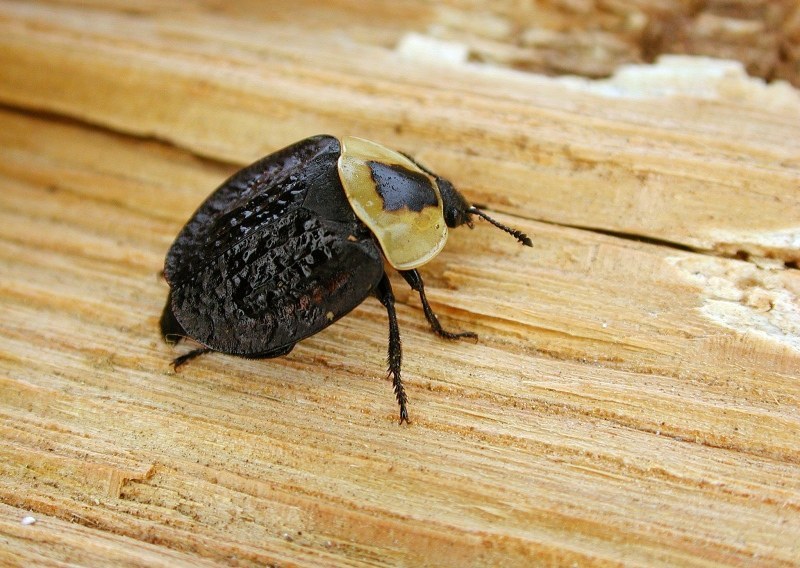
American Carrion Beetle
Forests, fields, and roadsides across North America, near decaying animal carcasses
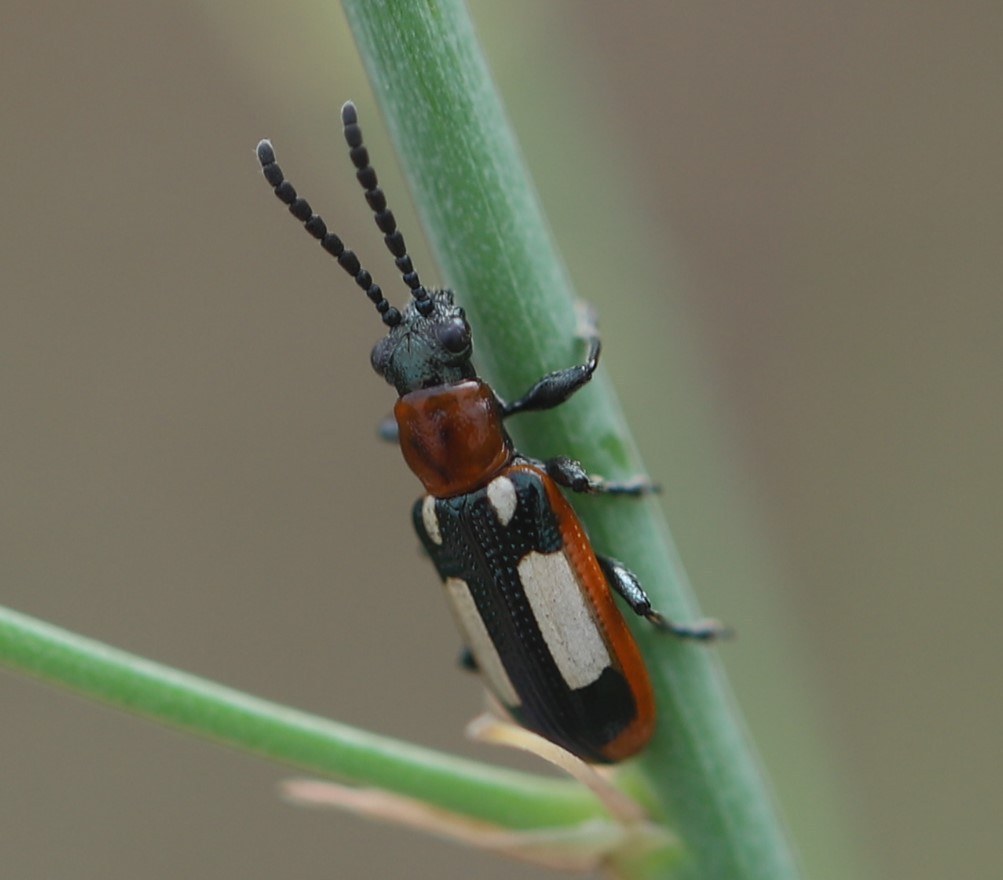
Asparagus Beetle
Asparagus patches, gardens, and farm fields
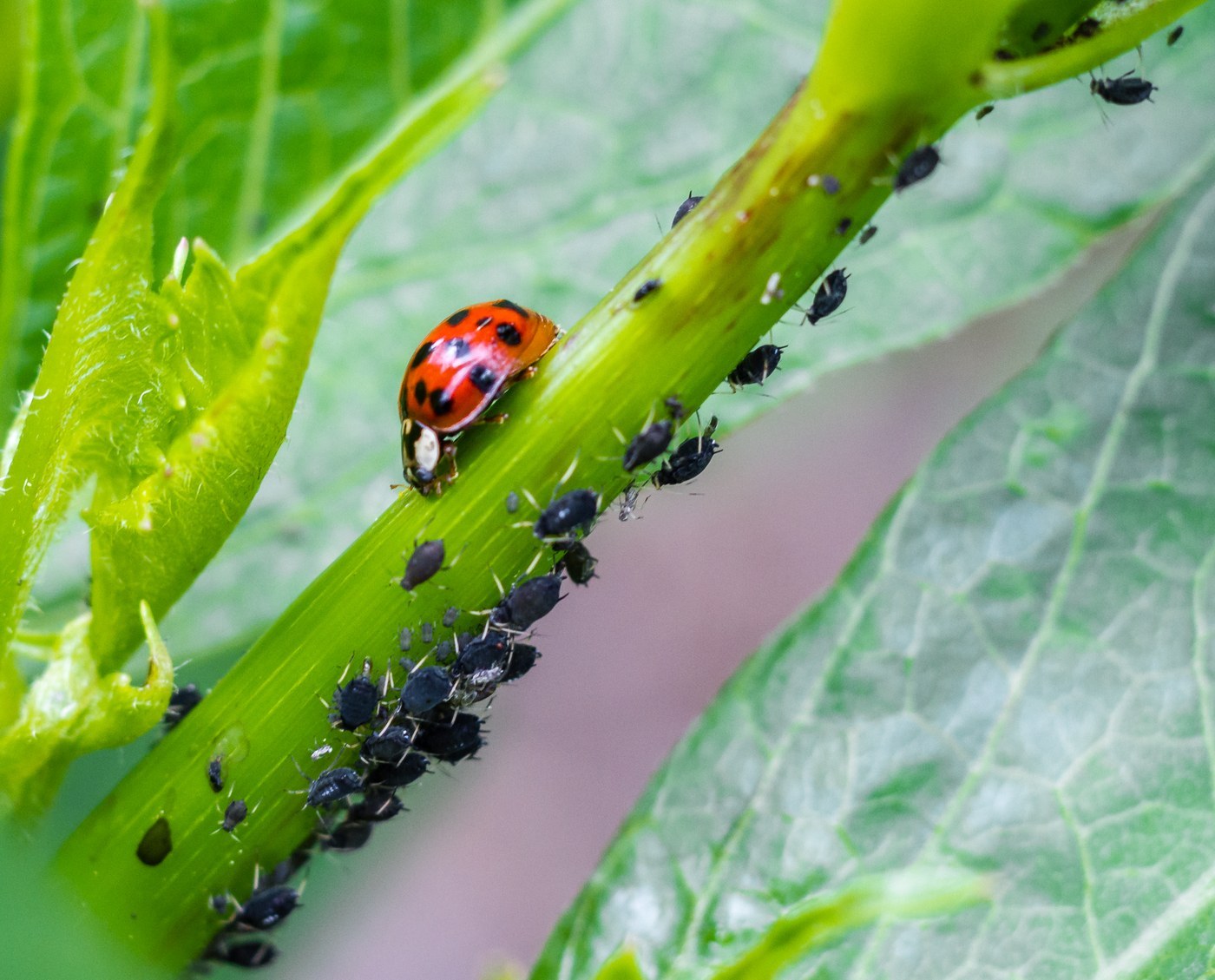
Asian Lady Beetle
Gardens, crop fields, woodlands, buildings
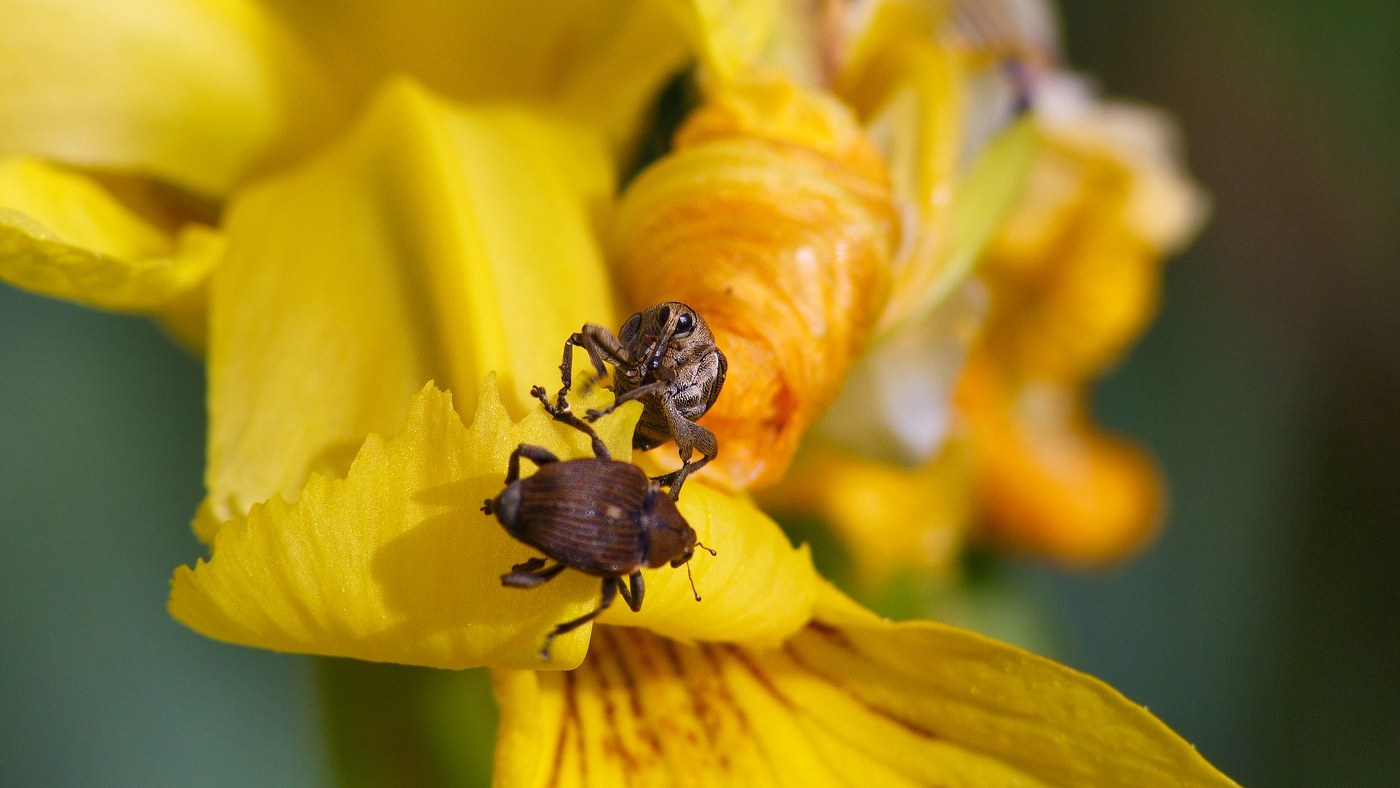
Acorn Weevil
Oak woodlands and forests, on and beneath oak trees
Wireworm
Soil of grasslands, gardens, and cultivated fields worldwide
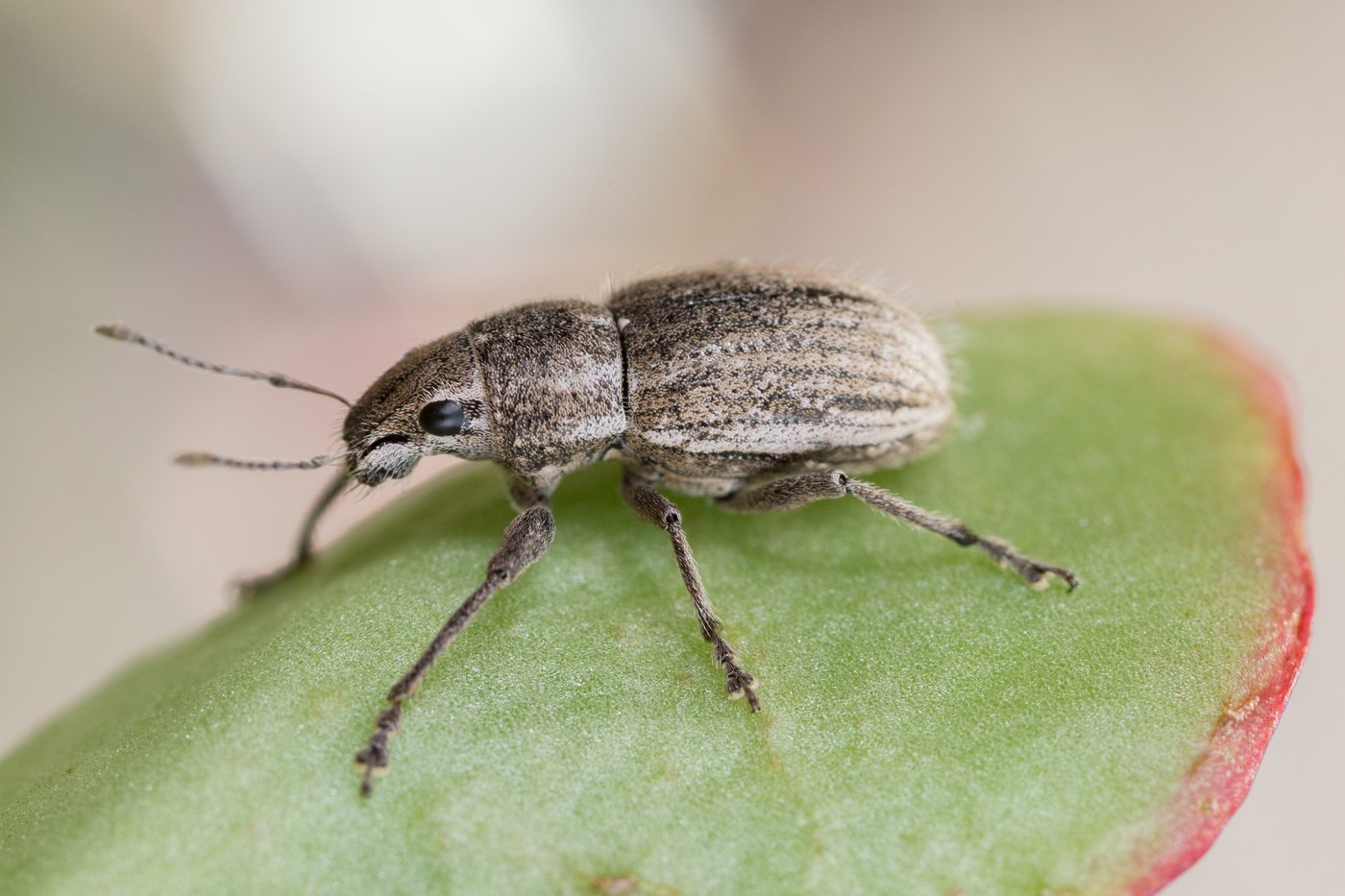
Whitefringed Beetle
Pastures, row crops, lawns, disturbed soils
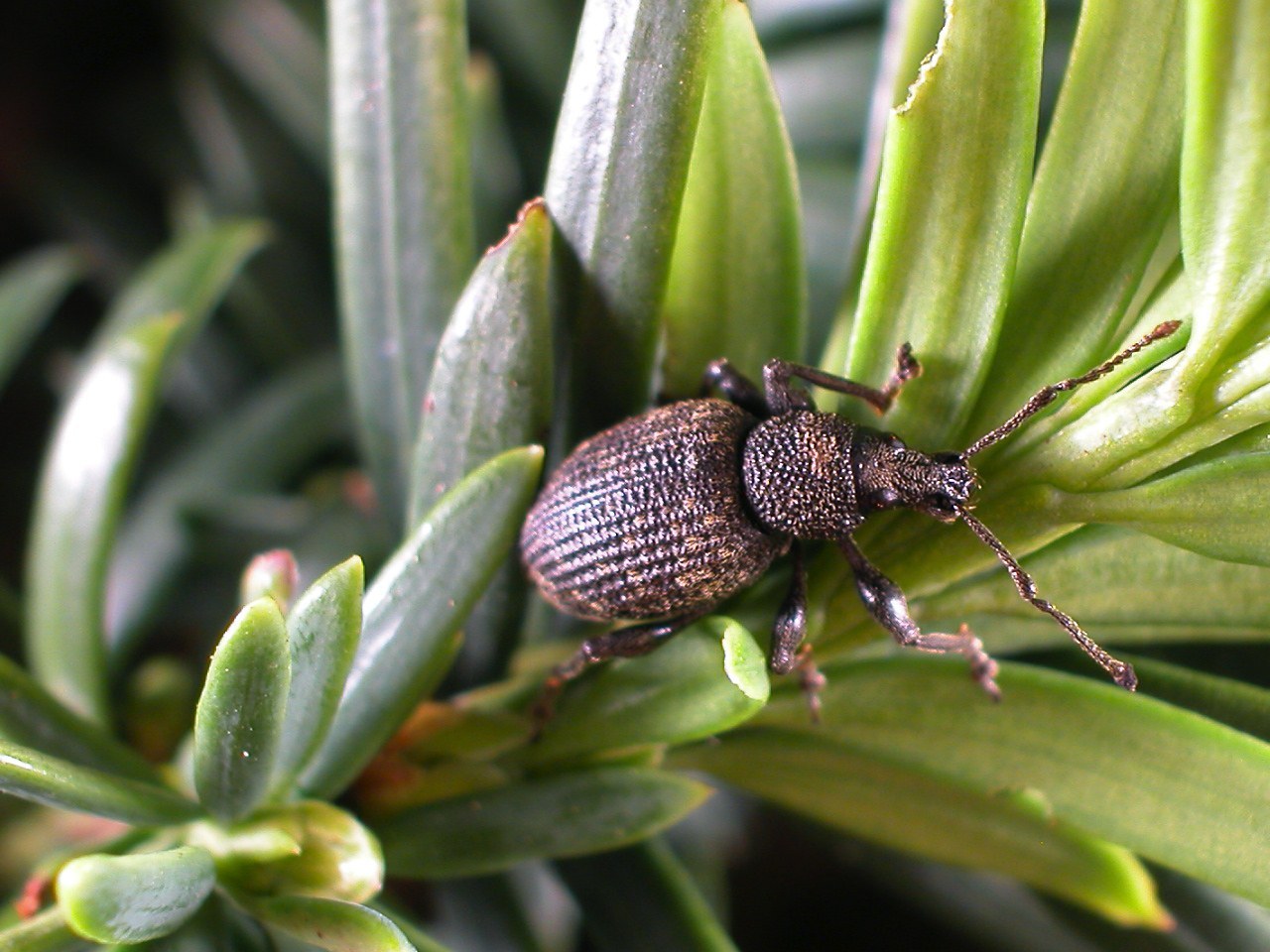
Vine Weevil
Gardens, nurseries, greenhouses, and container plantings
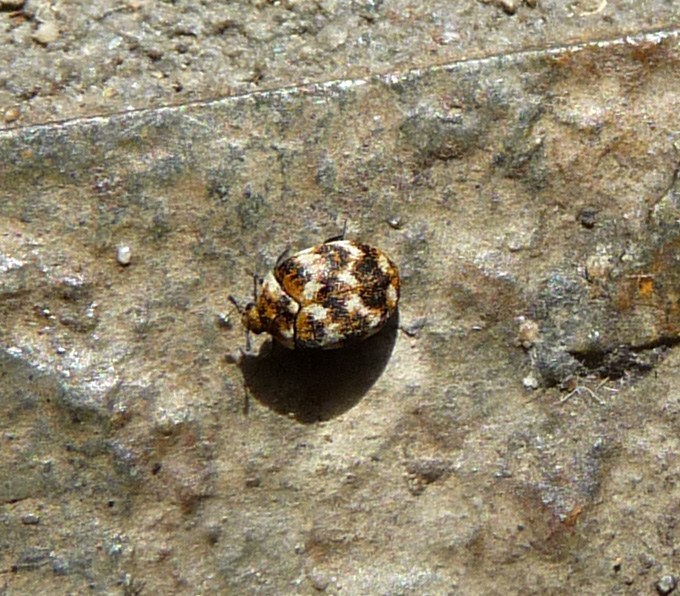
Varied Carpet Beetle
Homes, nests of birds and mammals, and flowers outdoors
Atlas Beetle
Tropical forests of Southeast Asia
Titan Beetle
Amazon rainforest of South America
Ten-lined June Beetle
Sandy soils, pine forests, and orchards of western North America
Squash Beetle
Vegetable gardens and fields growing squash, pumpkin, and other cucurbits