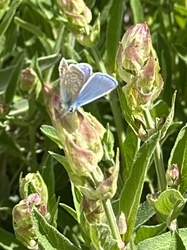
Common Blue Identification Guide
Identify Europe's most widespread blue butterfly by its bright wings and orange-spotted underside.
Read the full Common Blue encyclopedia entry →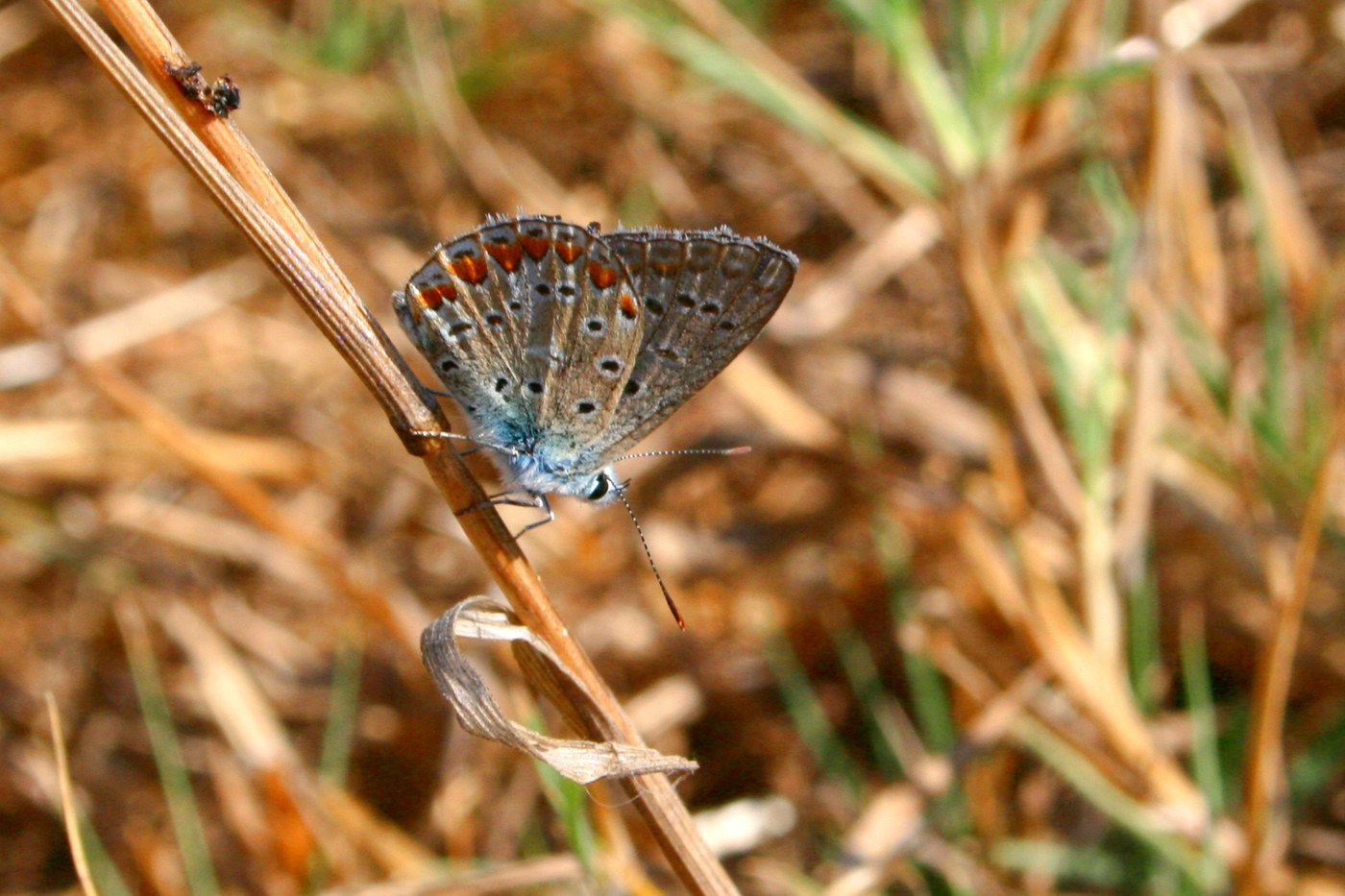
Key Visual Features
The Common Blue (Polyommatus icarus) is a small butterfly with a wingspan of about 1 to 1.5 inches, showing marked differences between sexes.
- Males: Dorsal wings are a bright, vivid blue with a narrow black border and a fine checkered black-and-white fringe.
- Females: Dorsal wings are mostly brown, often with a row of orange crescents (lunules) along the outer margins and variable blue dusting near the wing base.
- Underside: Grayish-brown in males, buff-brown in females, both marked with black spots ringed in white and a band of orange crescents near the wing margin.
- Body: Small and slender, colored to complement the wing pattern.
- Wing shape: Rounded wings without tails.
Where and When You'll See It
The Common Blue is widespread across Europe and temperate parts of Asia, found in grasslands, meadows, roadside verges, and gardens, especially where legumes such as bird's-foot trefoil grow. It is one of the most frequently encountered blue butterflies across its range. Adults fly low over grasses and low vegetation and are seen from spring through autumn, with multiple broods produced during the warmer months in much of its range.
Similar-Looking Species
- Adonis Blue: Brighter, more electric blue with black veins visible against the white wing fringe, a feature not as pronounced in the Common Blue.
- Chalkhill Blue: Paler, more silvery-blue coloring compared to the deeper blue of the Common Blue male.
- Other regional blues: Careful attention to fringe pattern, the exact extent of orange lunules, and underside spot arrangement is often needed to separate the Common Blue from close relatives.
Quick ID Checklist
- Small size with rounded, tailless wings
- Males bright blue above; females mostly brown with orange lunules
- Underside marked with white-ringed black spots and an orange crescent band
- Checkered fringe along the wing edges
- Common in grasslands and meadows across Europe and temperate Asia
Frequently asked questions
How can I tell a male from a female Common Blue?
Males have bright blue upper wings, while females are largely brown on top, often showing a row of orange crescents along the wing margins.
What is the easiest way to distinguish a Common Blue from an Adonis Blue?
The Adonis Blue tends to show a more electric blue color with visible black veins crossing the white wing fringe, a detail less pronounced in the Common Blue.
Where is the best habitat to find Common Blues?
Open grasslands, meadows, and roadside areas with legumes like bird's-foot trefoil are the most reliable places to encounter this species.
How many generations does the Common Blue have each year?
In much of its range it produces multiple broods from spring through autumn, though the exact number varies by region and climate.
Common Blue identified by the community
Recent Common Blue finds identified with Bug Identifier.