Common Buckeye Identification Guide
Identify the common buckeye by its striking multicolored eyespots on brown wings.
Read the full Common Buckeye encyclopedia entry →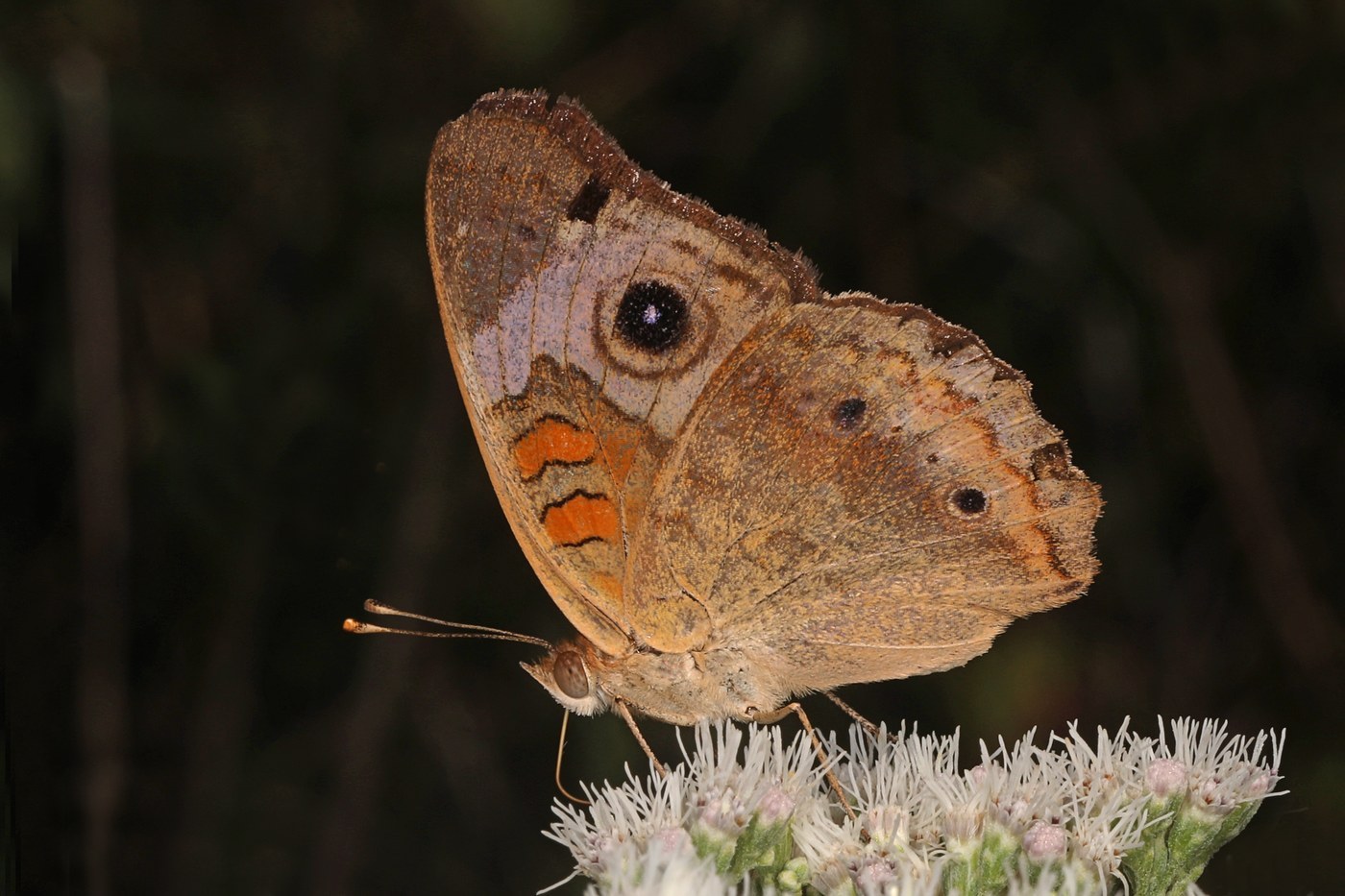
Key Visual Features
The common buckeye (Junonia coenia) stands out thanks to its bold, colorful eyespot pattern.
- Size: Wingspan of about 2 to 2 1/2 inches (5–6.5 cm).
- Color: Overall warm brown to tan base color across both wings.
- Body shape: Slender body typical of brush-footed butterflies.
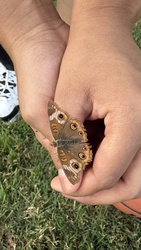
- Wings: Each forewing has one large eyespot and each hindwing has two eyespots (one large, one smaller), each eyespot ringed in black, yellow, and blue with a lilac or white center highlight. Two bright orange bars cross the forewing near the leading edge, and a pale, wavy band runs across both wings.
- Underside: The underside is more muted, often tan to rosy-brown, with faded versions of the eyespots — this coloring helps the butterfly blend in when its wings are closed.
- Antennae: Clubbed antennae typical of true butterflies.
Where and When You'll See One
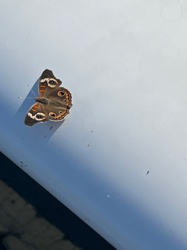
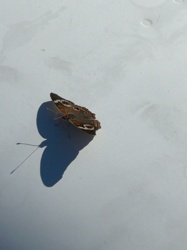
Common buckeyes favor open, sunny habitats: fields, meadows, roadsides, gardens, and disturbed ground with low vegetation. They are found across most of the United States, southern Canada, and into Mexico, and they often bask with wings spread flat on bare soil, gravel paths, or low plants, making their eyespots easy to see. Adults are active from spring through fall, with populations often increasing later in the season as they move northward in warmer months.
Similar-Looking Bugs
- Tropical buckeye and mangrove buckeye: Very similar overall pattern but found in more limited southern/coastal ranges; subtle differences in eyespot size and wing shading separate them, though range is often the best clue.
- Fritillaries: Also brown-orange, but fritillaries have small black spots and streaks rather than large, colorful ringed eyespots.
- Question mark or eastern comma: Both have ragged wing edges and ranges of orange-brown, but lack the buckeye's large, vivid multicolored eyespots.
Quick ID Checklist
- Large multicolored eyespots (black, yellow, blue, lilac) on both wings
- Brown-tan base color with a wavy pale band
- Two bright orange bars near the forewing's leading edge
- Frequently seen basking with wings spread on open ground
- Found in sunny fields, roadsides, and gardens
Frequently asked questions
What is the most distinctive feature of the common buckeye?
The large, colorful eyespots — ringed in black, yellow, and blue with a pale highlight — on both the forewings and hindwings are unmistakable and set it apart from most other brown butterflies.
Where is the common buckeye typically seen?
It favors open, sunny habitats such as fields, roadsides, and gardens, often basking with its wings spread flat on bare ground or low vegetation, which makes the eyespot pattern easy to observe.
How is the common buckeye different from a fritillary?
Fritillaries display rows of small black spots and streaks on an orange background, while the common buckeye has a small number of large, boldly ringed eyespots on a browner base color.
Does the common buckeye's appearance change with the seasons?
Individuals from later-season broods can appear slightly more reddish-brown compared to earlier broods, but the core eyespot pattern and orange forewing bars remain the reliable identifying features year-round.
Common Buckeye identified by the community
Recent Common Buckeye finds identified with Bug Identifier.