Common Wood-Nymph Identification Guide
A large brown grassland satyr with bold, yellow-patched eyespots on the forewing, common in fields across North America.
Read the full Common Wood-Nymph encyclopedia entry →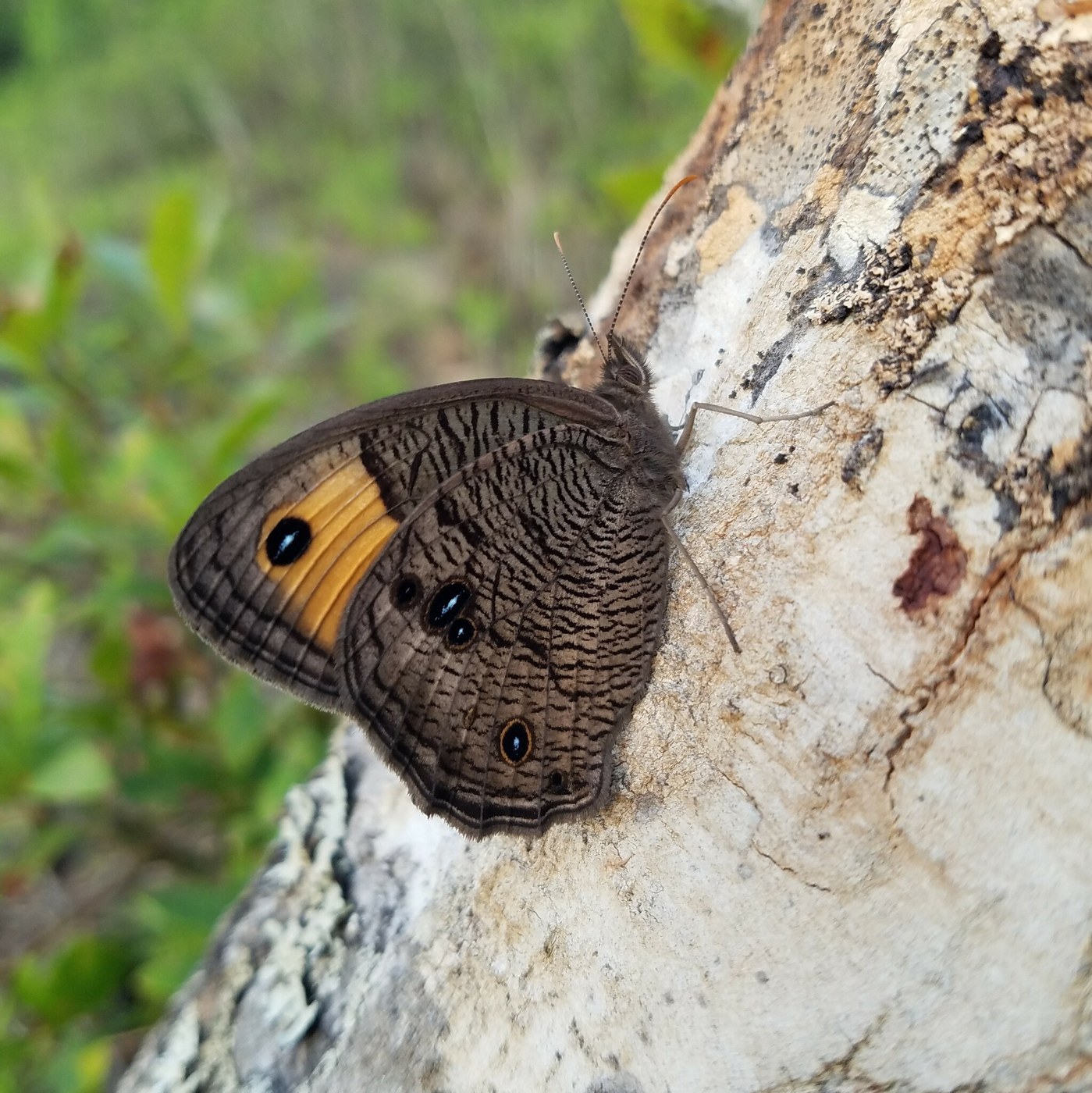
Key Visual Features
The Common Wood-Nymph (Cercyonis pegala) is a fairly large satyr, with a wingspan ranging from about 1.8 to 3 inches depending on the region, since this species is highly variable geographically.
- Upperside wings are dark brown to grayish-brown
- Forewing typically shows one or two prominent black eyespots set within a pale yellow to buff patch, the most eye-catching field mark of the species
- Hindwing may show small eyespots as well, though these are usually less prominent than the forewing spots
- Underside is brown with fine, dark striations and horizontal streaking, plus the eyespots repeated, sometimes with pale pupils
- The amount of yellow patching on the forewing varies considerably by subspecies and region, from bold and extensive to faint or nearly absent
Where and When to Look
Common Wood-Nymphs are found across most of the United States and southern Canada in open, grassy habitats: prairies, old fields, meadows, open woodland edges, and roadsides. They fly with a characteristic low, bouncing, erratic flight just above the grass tops, rarely straying far from ground level, and often perch on grass stems or bare soil with wings closed. There is a single generation per year in most areas, with adults on the wing from about June through September, peaking in mid-to-late summer.
Similar-Looking Species
- Little Wood-Satyr: notably smaller, with two eyespots per wing rather than the single large forewing eyespot patch typical of many Wood-Nymph populations, and it flies earlier in the season (spring)
- Northern Pearly-eye and Eyed Brown: both show a fuller row of smaller eyespots rather than one or two large, boldly patched spots, and prefer shadier or wetter habitats
- Other satyrs in general: size, the boldness of the yellow forewing patch, and open grassy habitat together help confirm a Common Wood-Nymph over its relatives
Quick ID Checklist
- Large dark brown satyr, wingspan up to 3 inches
- One or two bold eyespots set in a yellow patch on the forewing
- Low, bouncing flight just above grass level
- Perches on grass stems or bare ground with wings closed
- Found in open fields, prairies, and meadows in mid-to-late summer
Frequently asked questions
What is the most obvious field mark of the Common Wood-Nymph?
Look for one or two large black eyespots set within a pale yellow patch on the forewing; the size and extent of this yellow patch varies by region but the eyespots themselves are usually easy to see.
How does the Common Wood-Nymph fly compared to other butterflies?
It has a distinctive low, bouncing, somewhat erratic flight that stays close to the tops of grasses rather than flying high or in a straight line.
Why do Common Wood-Nymphs look different in different parts of the country?
The species is highly variable geographically, with populations differing in the extent of yellow patching and the number of visible eyespots on the wings.
When is the best time of year to see this butterfly?
Adults typically fly in a single generation from June through September, with numbers peaking in mid-to-late summer.
Common Wood-Nymph identified by the community
Recent Common Wood-Nymph finds identified with Bug Identifier.