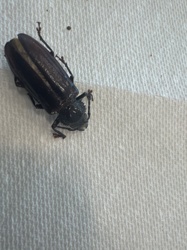
Cottonwood Borer Identification Guide
Spot this large black-and-white longhorn beetle patterned like a checkerboard on cottonwood trees.
Read the full Cottonwood Borer encyclopedia entry →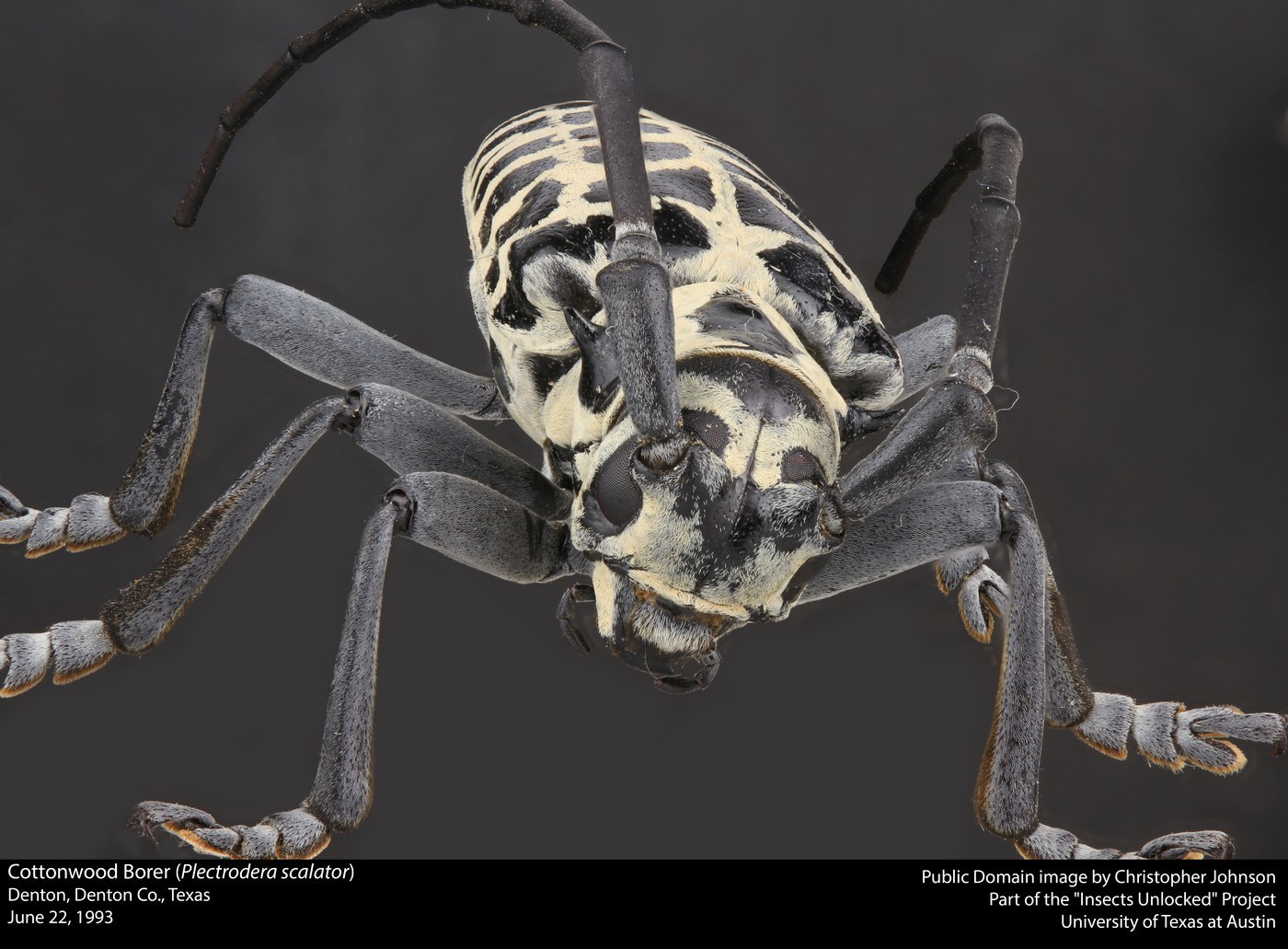
Key Visual Features
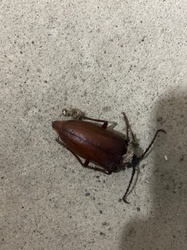
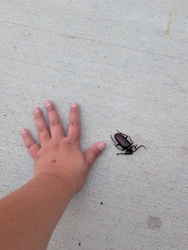
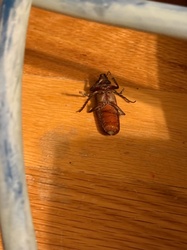
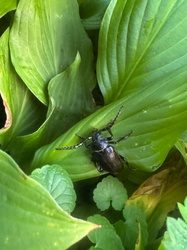
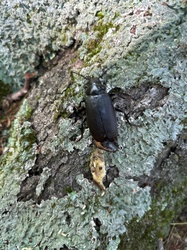
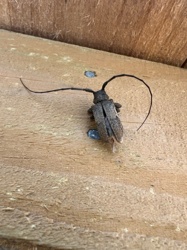
The cottonwood borer is a large, striking longhorn beetle, typically 2.5-3.8 cm (about 1-1.5 inches) long, easily recognized by its bold black-and-white or cream checkered pattern covering the body and wing covers. The pattern often forms irregular blocks or bands rather than a perfectly even checkerboard. Like other longhorn beetles, it has very long antennae, often nearly as long as or longer than the body, banded in alternating light and dark segments. The body is elongated and cylindrical, with a hard, textured shell, and the legs are long and sturdy.
Where and When You're Likely to See Them
This beetle is found throughout much of the central and eastern United States, wherever cottonwood, willow, and poplar trees grow, since larvae develop by tunneling in the roots and lower trunk of these trees. Adults are most active during the warmer months, typically summer, and can be seen resting on tree trunks, low branches, or on the ground near the base of host trees during the day. They are relatively slow-moving and often allow close observation.
Similar-Looking Bugs
The cottonwood borer's bold black-and-white pattern is fairly distinctive among longhorn beetles, but it can be confused with other large patterned longhorns, such as certain sawyer beetles, which tend to have more mottled gray or brown coloring rather than sharp black-and-white blocks. Some other longhorn species have spotted rather than blocky patterning, which helps distinguish them at a glance. The combination of large size, checkered black-and-white pattern, and association with cottonwood or willow trees is usually enough to confirm identification.
Quick ID Checklist
- Large longhorn beetle, 2.5-3.8 cm long
- Bold black-and-white or cream checkered/blocky pattern
- Long, banded antennae nearly as long as or longer than the body
- Found on or near cottonwood, willow, and poplar trees
- Active during summer, often resting on trunks or low branches
Frequently asked questions
What trees are cottonwood borers usually found on?
They are closely associated with cottonwood, willow, and poplar trees, since larvae develop in the roots and lower trunk of these host trees.
How long can a cottonwood borer's antennae get?
The antennae are typically nearly as long as, or longer than, the beetle's body, banded with alternating light and dark segments.
Is the black-and-white pattern the same on every individual?
The overall block-and-band pattern is consistent enough to be a reliable field mark, though the exact size and shape of the markings can vary slightly between individuals.
When during the year are cottonwood borers active?
Adults are most commonly seen during the summer months, when they can be found resting on host tree trunks or low branches during the day.
Cottonwood Borer identified by the community
Recent Cottonwood Borer finds identified with Bug Identifier.