
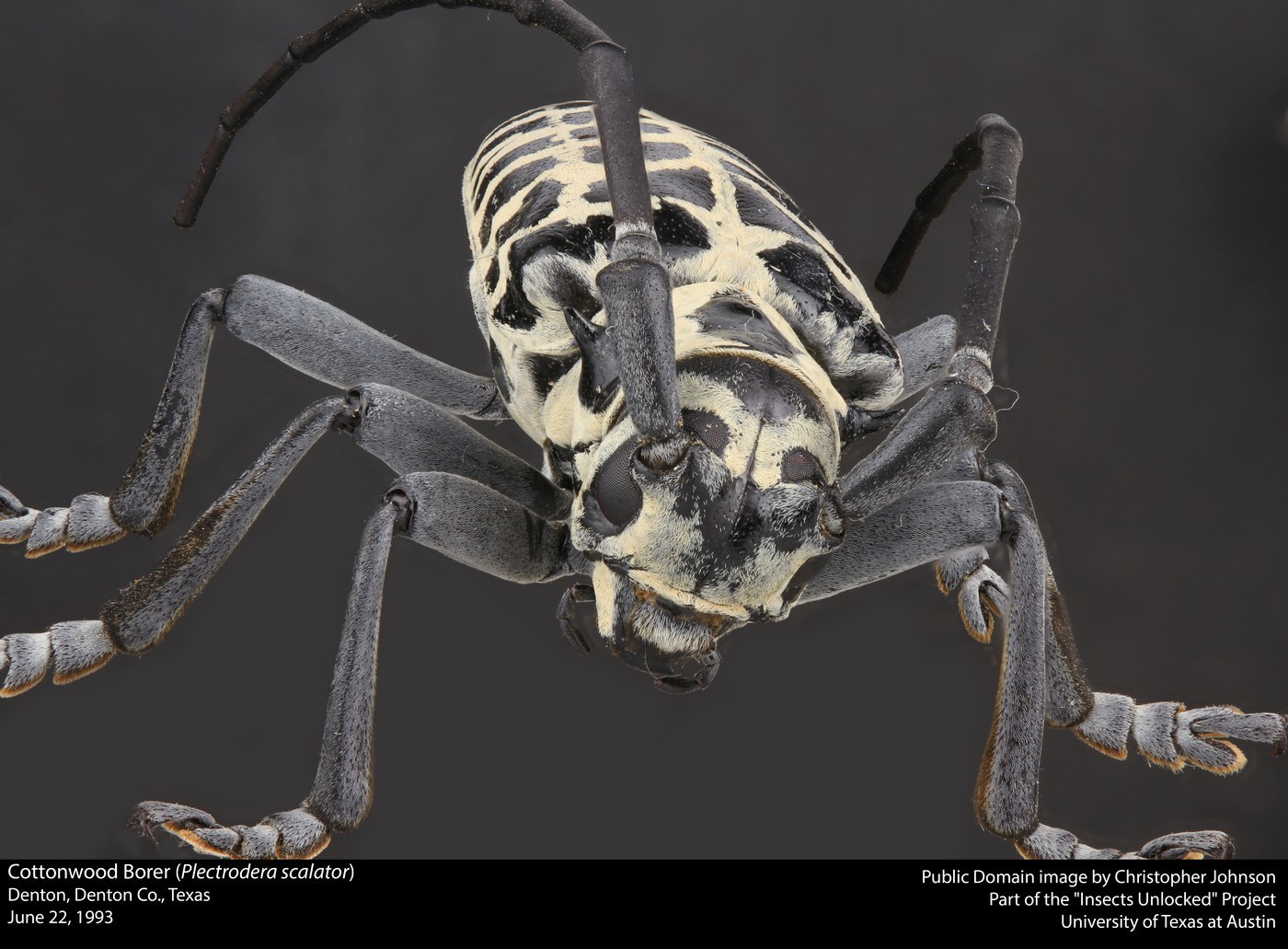
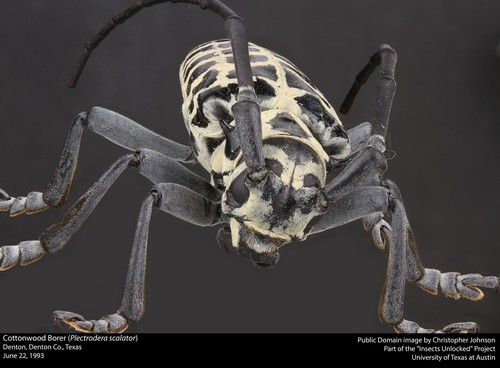
Cottonwood Borer
Plectrodera scalator
A large, boldly patterned longhorn beetle in black and chalky white checkerboard markings, often found clinging to the trunks of cottonwood and poplar trees near its larvae's root tunnels.
- Size
- 25–38 mm
- Habitat
- Riparian areas and stands of cottonwood, poplar, and willow trees
- Danger
- Harmless
Spotted a bug like this?
Identify any bug or insect from a photo, free.
Overview
The cottonwood borer is a large and visually striking member of the longhorn beetle family (Cerambycidae), named for its close association with cottonwood, poplar, and willow trees, in whose roots and lower trunk its larvae develop. Its size and dramatic black-and-white pattern make it one of the more recognizable longhorn beetles in North America.
Adults are most often encountered resting on the bark of host trees during the summer months, where their bold coloring provides some camouflage against dappled light and shadow on tree trunks. The species belongs to the subfamily Lamiinae, the flat-faced longhorns, a group characterized by a downward-angled head and often elaborate antennal length.
As a wood- and root-boring insect, the cottonwood borer contributes to the natural process of tree decline and decomposition, particularly in stressed or mature trees, and is part of the broader community of insects associated with riparian cottonwood forests.
How to Identify
- Adult: 25–38 mm, a large, robust longhorn beetle with a strongly mottled black-and-chalky-white checkerboard pattern across the elytra and pronotum.
- Antennae are long, banded black and white, and typically as long as or longer than the body.
- Legs are thick and marked with the same black-and-white pattern as the body.
- Lookalikes: its unique bold checkerboard coloring, large size, and consistent presence on cottonwood or poplar bark distinguish it from other longhorn beetles, which tend to be more uniformly colored or striped.
Habitat & Range
Found across much of the central and southern United States, particularly in riparian zones, floodplains, and windbreaks where cottonwood, poplar, and willow trees grow. Adults are active during the warmer months, typically mid to late summer, and are usually seen resting or walking on the lower trunk and exposed roots of host trees.
Behavior & Diet
Larvae tunnel into the roots and lower trunk of cottonwood and related trees, feeding on the wood tissue as they develop, which can weaken heavily infested trees over time. Adults feed lightly on twig bark and petioles but spend much of their time resting on tree trunks or seeking mates. As root and wood borers, they are part of the natural insect community that contributes to the decline and eventual decomposition of aging or stressed cottonwoods.
Life Cycle
Females chew small pits into the bark near the base of the tree or exposed roots and lay eggs individually within them. Larvae hatch and bore into the root and lower trunk tissue, feeding and developing over one to two years depending on climate. Mature larvae pupate within the wood, and adults chew their way out and emerge during summer. The species generally completes one generation every one to two years.
Frequently asked questions
What trees does the cottonwood borer attack?
It primarily develops in the roots and lower trunk of cottonwood, poplar, and willow trees.
How can I recognize it?
Look for a large longhorn beetle with a bold black-and-white checkerboard pattern and long banded antennae resting on tree bark.
Is it the same as an Asian longhorned beetle?
No, the Asian longhorned beetle has a glossy black body with white spots and attacks a wider range of hardwood trees, while the cottonwood borer has a mottled checkerboard pattern and favors cottonwood and poplar.
When are adults most commonly seen?
Adults are most active during the warmer summer months, typically resting on tree trunks near the base.
Cottonwood Borer guides
In-depth guides for identifying, understanding, and living alongside Cottonwood Borer.
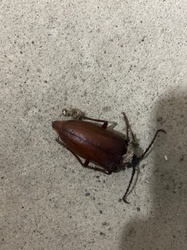
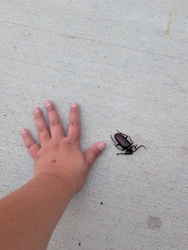
Cottonwood Borer identified by the community
Real finds identified with Bug Identifier.
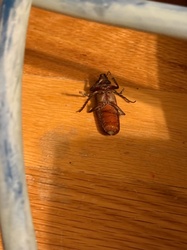
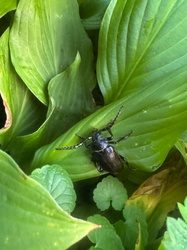
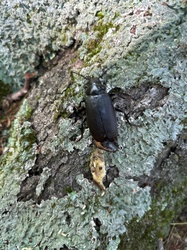
Other bugs you may enjoy
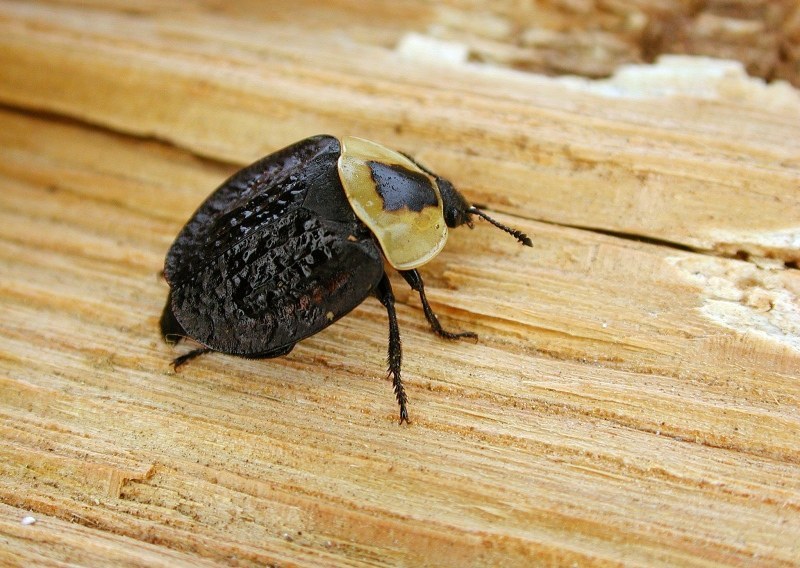
American Carrion Beetle
Forests, fields, and roadsides across North America, near decaying animal carcasses
Asparagus Beetle
Asparagus patches, gardens, and farm fields
Asian Lady Beetle
Gardens, crop fields, woodlands, buildings
Acorn Weevil
Oak woodlands and forests, on and beneath oak trees
Wireworm
Soil of grasslands, gardens, and cultivated fields worldwide
Whitefringed Beetle
Pastures, row crops, lawns, disturbed soils
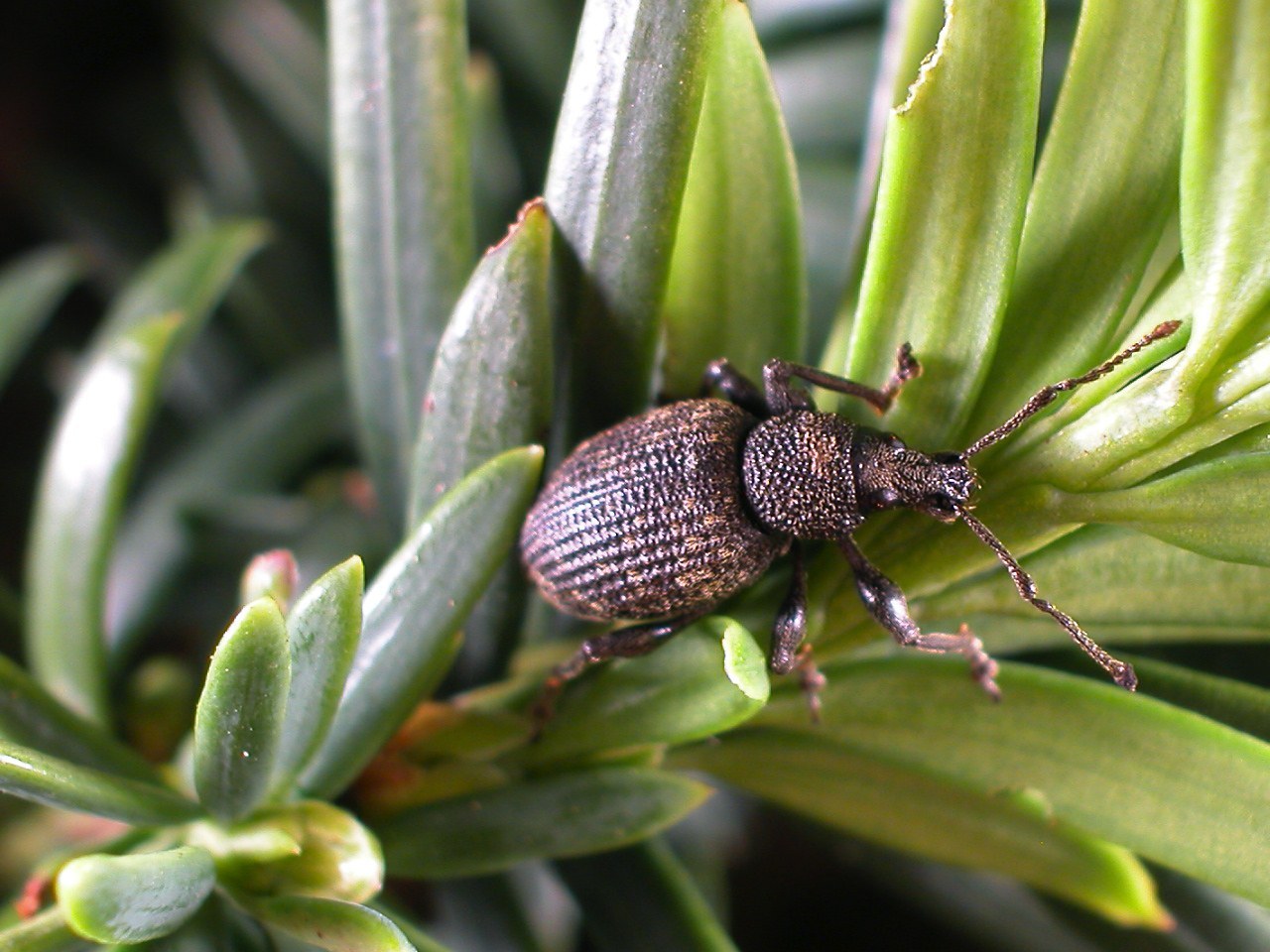
Vine Weevil
Gardens, nurseries, greenhouses, and container plantings
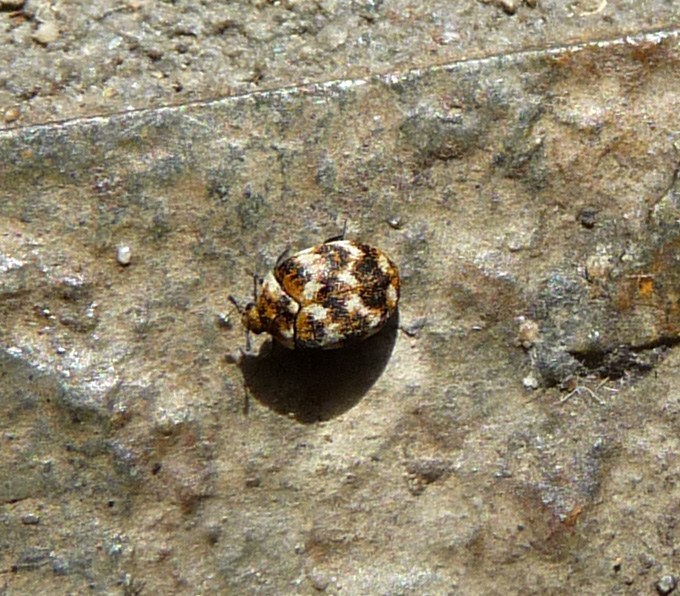
Varied Carpet Beetle
Homes, nests of birds and mammals, and flowers outdoors
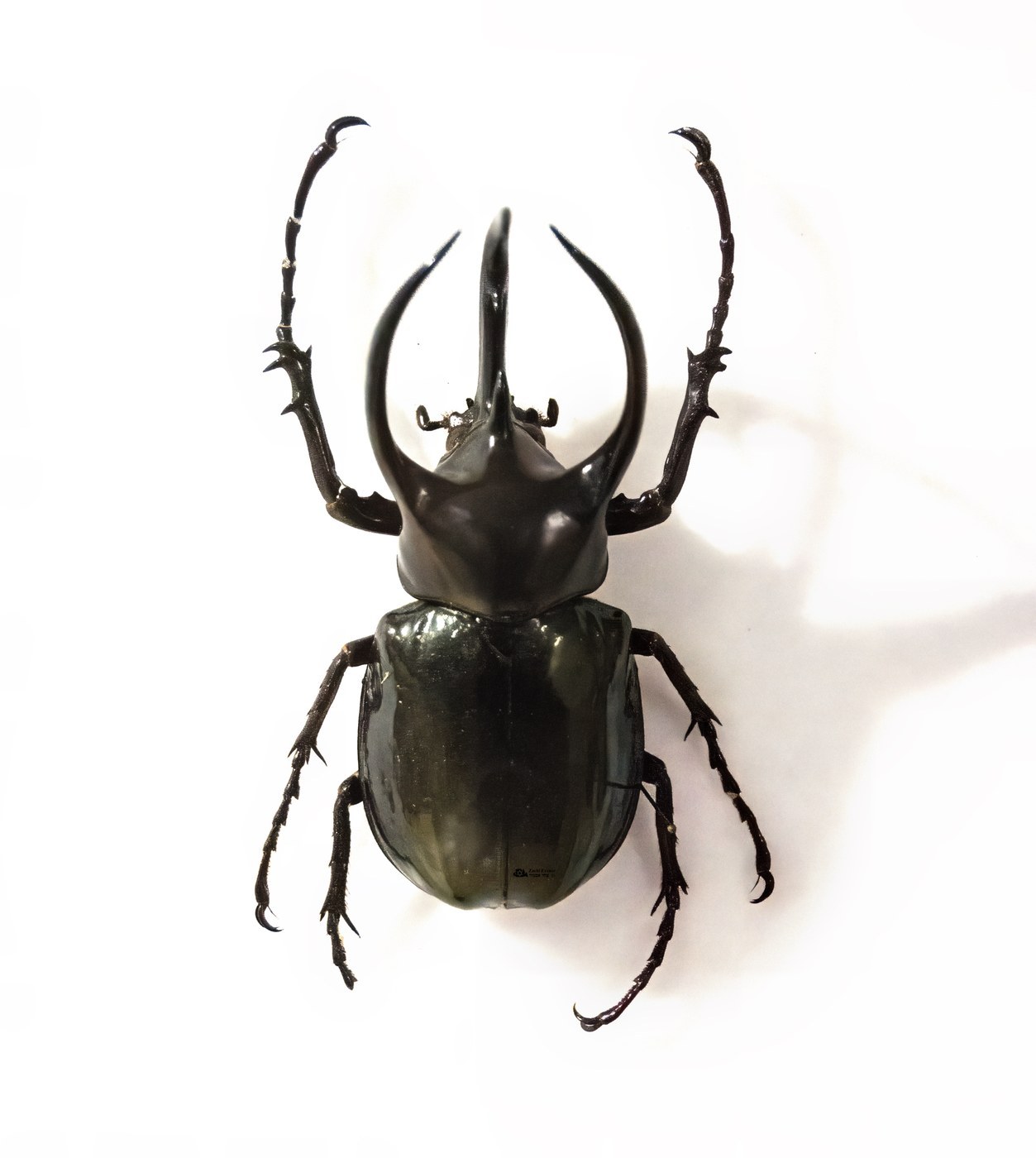
Atlas Beetle
Tropical forests of Southeast Asia
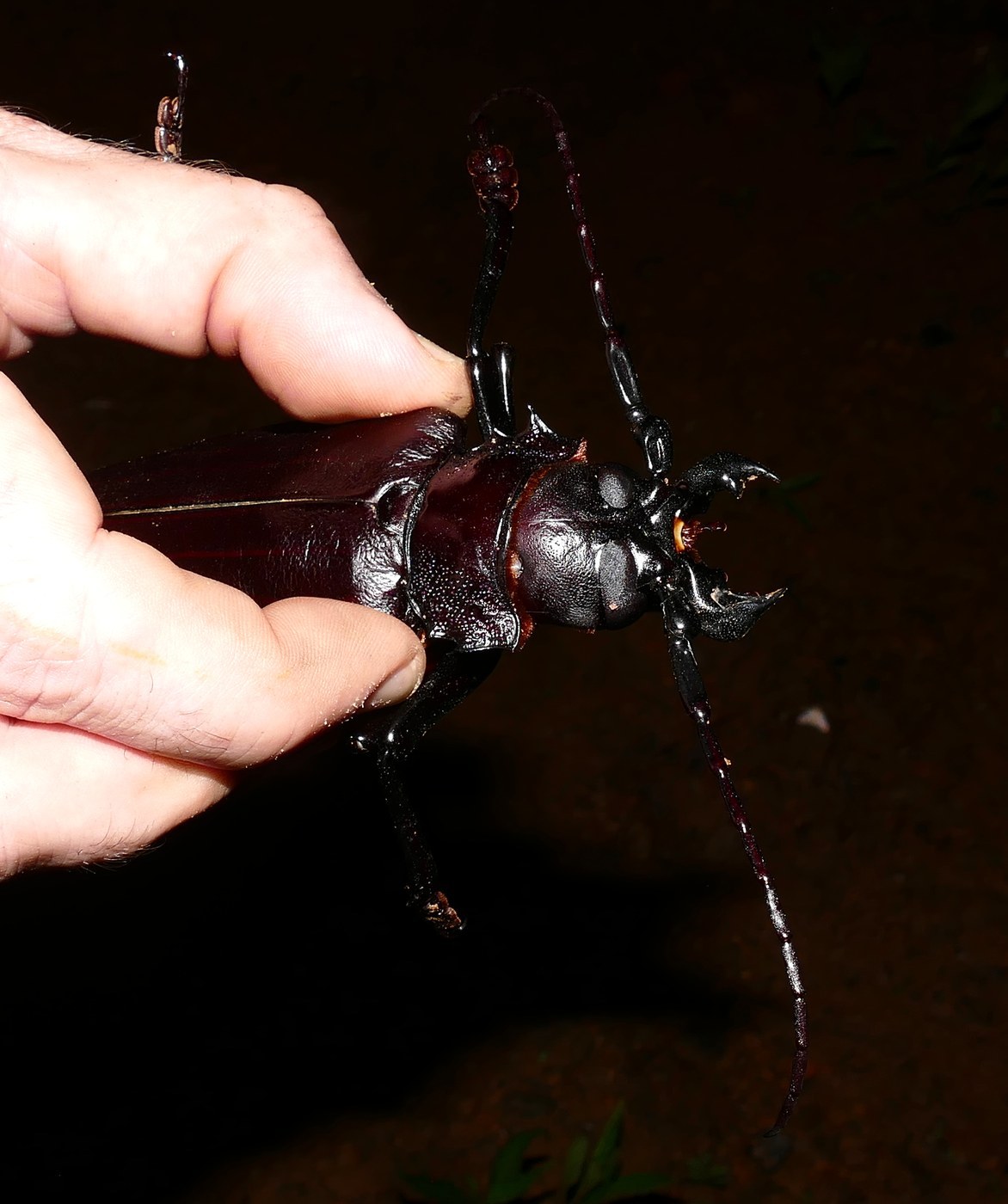
Titan Beetle
Amazon rainforest of South America
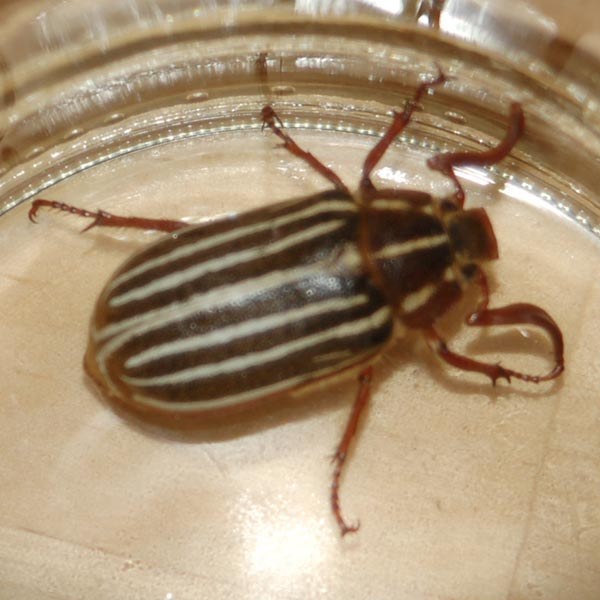
Ten-lined June Beetle
Sandy soils, pine forests, and orchards of western North America
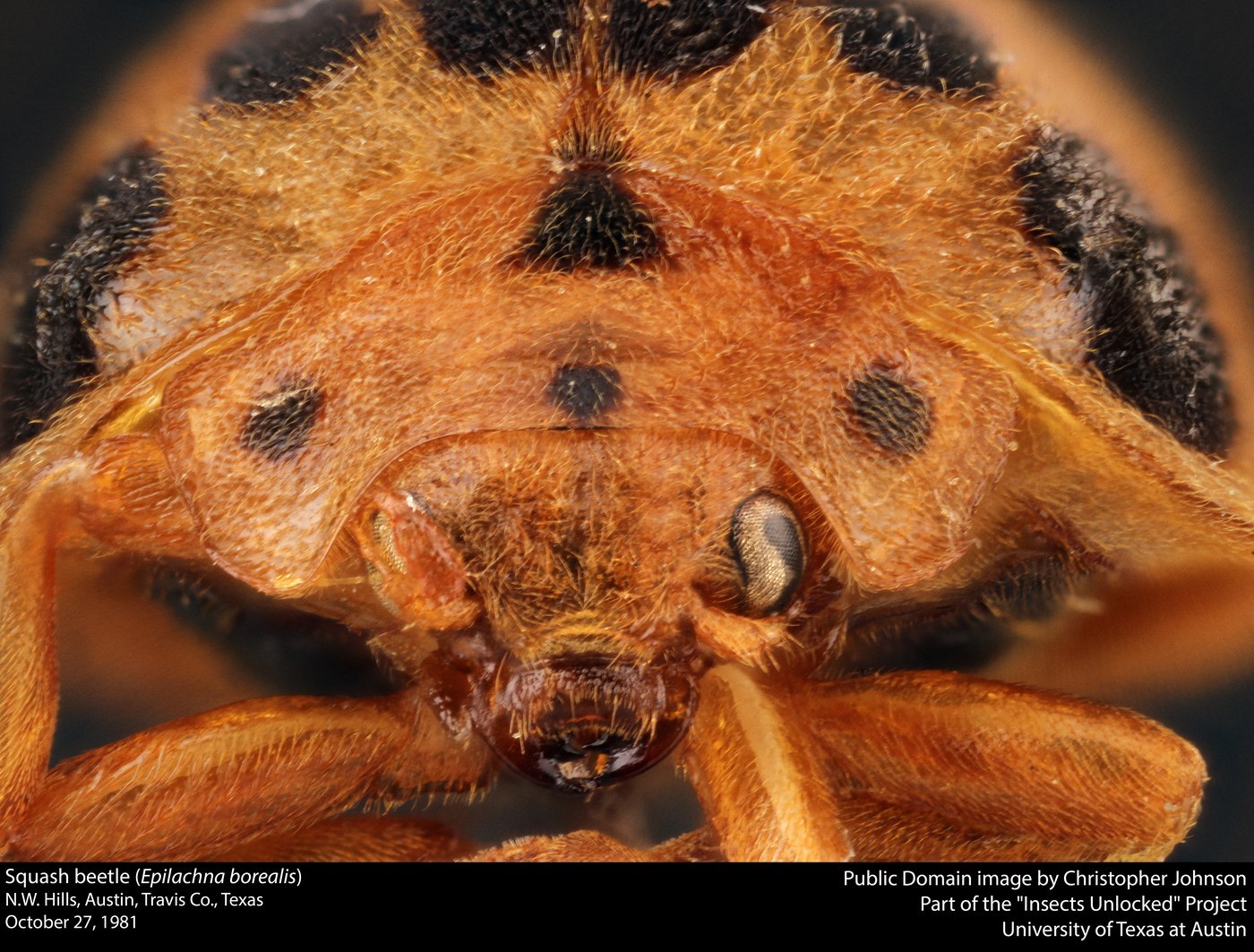
Squash Beetle
Vegetable gardens and fields growing squash, pumpkin, and other cucurbits