Creeping Water Bug Identification Guide
A small, oval-bodied aquatic predator with stout grabbing front legs that crawls rather than swims through submerged plants.
Read the full Creeping Water Bug encyclopedia entry →Key Visual Features
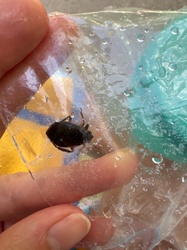
- Small, oval, flattened body typically 0.2-0.6 inches (5-15 mm) long
- Brownish, olive, or tan coloring, sometimes with fine mottled patterning
- Stout, robust front legs modified for grasping prey, thicker than the front legs of a water boatman
- Middle and hind legs adapted for both crawling and swimming, though less oar-like than a boatman's
- Flattened, compact profile that lets it move easily through dense vegetation and debris
- Short, piercing beak used to feed on captured prey
- No long tail breathing tube, unlike some other predatory water bugs
Where and When You'll See It
Creeping water bugs are found crawling through submerged vegetation, leaf litter, and debris along the bottoms of ponds, streams, and slow-moving water. Unlike more active swimmers, they tend to move deliberately across surfaces rather than darting through open water, staying close to cover where they can ambush small prey. They are active from spring through fall in temperate regions and are most commonly encountered by disturbing submerged plants or debris during a pond or stream survey. Because they rely on cover rather than open-water speed, they are often overlooked unless someone specifically sifts through submerged leaf packs or overturns debris on the bottom. Some individuals also periodically surface briefly to renew their air supply before returning to the cover of vegetation below.
Similar-Looking Bugs
- Water boatman: has small, scoop-shaped front legs for scraping algae rather than the creeping water bug's stout grasping front legs, and swims actively rather than crawling.
- Backswimmer: swims upside down in open water rather than crawling among vegetation, and has a more streamlined, keeled back.
- Toe-biter (giant water bug): much larger overall, with more pronounced raptorial front legs and short breathing tubes at the tip of the abdomen.
- Diving beetle: has a harder, more domed, glossy shell and long thread-like antennae, compared to the creeping water bug's flatter, duller body.
Quick ID Checklist
- Small, oval, flattened body under an inch long
- Stout, grasping front legs
- Crawls through submerged vegetation rather than actively swimming in open water
- Brownish to olive mottled coloring
- Found among plant debris and leaf litter on pond or stream bottoms
Frequently asked questions
How is a creeping water bug different from a water boatman?
The creeping water bug has stout, robust front legs built for grasping prey and tends to crawl through vegetation, whereas the water boatman has small scoop-shaped front legs for scraping algae and swims actively through open water.
Where would I find a creeping water bug?
Look among submerged plants, leaf litter, and debris on the bottom of ponds, slow streams, or other still to slow-moving fresh water.
Does the creeping water bug swim like other water bugs?
It can swim, but it more typically moves by crawling deliberately across submerged surfaces and vegetation rather than swimming actively through open water.
What color is a creeping water bug?
Most are brownish, olive, or tan, sometimes with subtle mottled patterning that helps them blend in with mud and plant debris.
Creeping Water Bug identified by the community
Recent Creeping Water Bug finds identified with Bug Identifier.