
Creeping Water Bug
Naucoridae spp.
Broad, oval, and flattened like a tiny shield, the creeping water bug crawls methodically through submerged vegetation rather than swimming freely, using its stout, raptorial front legs to seize prey.
- Size
- 10-15 mm
- Habitat
- Vegetated shallows of ponds, marshes, and slow streams
- Danger
- Bites
Spotted a bug like this?
Identify any bug or insect from a photo, free.
Overview
The creeping water bug belongs to the family Naucoridae, a group of true bugs adapted to life underwater but distinguished from more open-water swimmers, such as backswimmers, by their habit of crawling among plants and debris rather than actively swimming in open water. Their broad, flattened, saucer-like body shape gives some species the alternate name 'saucer bug.'
These bugs are ambush predators equipped with short, thickened front legs modified for grasping prey, similar in function to the raptorial legs of a mantis. They feed on other aquatic invertebrates, using their piercing beak to inject digestive fluids and withdraw liquefied tissue.
As true bugs, creeping water bugs breathe using a supply of air held under their wings and along their body surface, periodically surfacing to replenish it, and they undergo incomplete metamorphosis without a pupal stage. They are important predators within the dense vegetation of ponds and slow streams where they live.
How to Identify
- Broad, oval, flattened body 10-15 mm long, typically olive-brown to yellowish with mottled patterning
- Short, stout, raptorial front legs adapted for grasping prey, distinct from the paddle-like hind legs of backswimmers
- Middle and hind legs somewhat flattened and fringed for swimming, though the bug spends much time crawling
- Lacks the elongated breathing tube of some other aquatic bugs; carries an air supply beneath the wings instead
- Convex, shield-like back when viewed from above, giving rise to the name 'saucer bug'
- Distinguished from backswimmers by crawling posture (right side up rather than upside down) and from water boatmen by its raptorial rather than oar-like front legs
Habitat & Range
Creeping water bugs inhabit densely vegetated shallows of ponds, marshes, ditches, and slow-moving streams across much of the world, sheltering among submerged plants, algae, and debris. They favor still or slow water with abundant cover and are active from spring through autumn in temperate regions, overwintering as adults in mud or debris at the bottom of their habitat.
Behavior & Diet
Creeping water bugs are ambush predators that crawl slowly through submerged vegetation and debris, using their short, grasping front legs to seize other invertebrates that come within reach. Once prey is captured, the bug pierces it with its beak and injects digestive fluid before drawing out the liquefied contents, a feeding strategy shared with many predatory true bugs. Unlike backswimmers, which swim upside down in open water, creeping water bugs typically remain right-side up and close to cover, relying on ambush rather than active pursuit. They periodically rise to the surface to renew the air supply carried beneath their wings, which allows them to remain submerged while hunting.
Life Cycle
Females lay eggs on submerged vegetation or debris. Nymphs hatch resembling small, wingless versions of the adults and pass through several nymphal instars in the incomplete metamorphosis typical of true bugs, with no pupal stage, gradually developing wing pads as they mature. Depending on climate, there may be one or more generations per year, and adults typically overwinter in mud or debris at the bottom of ponds and slow streams, becoming active again as water warms in spring.
Frequently asked questions
How is a creeping water bug different from a backswimmer?
It crawls right-side up through vegetation using short grasping front legs, while backswimmers swim upside down in open water using long oar-like hind legs.
What do creeping water bugs eat?
They prey on other small aquatic invertebrates, seizing them with their raptorial front legs and piercing them with their beak to feed.
How does a creeping water bug breathe underwater?
It carries a supply of air trapped beneath its wings and along its body, returning to the surface periodically to replenish it.
Where would I find a creeping water bug?
Look among dense submerged vegetation and debris in the shallows of ponds, marshes, and slow-moving streams.
Creeping Water Bug guides
In-depth guides for identifying, understanding, and living alongside Creeping Water Bug.
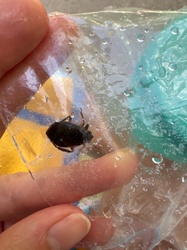
Creeping Water Bug identified by the community
Real finds identified with Bug Identifier.
Other bugs you may enjoy
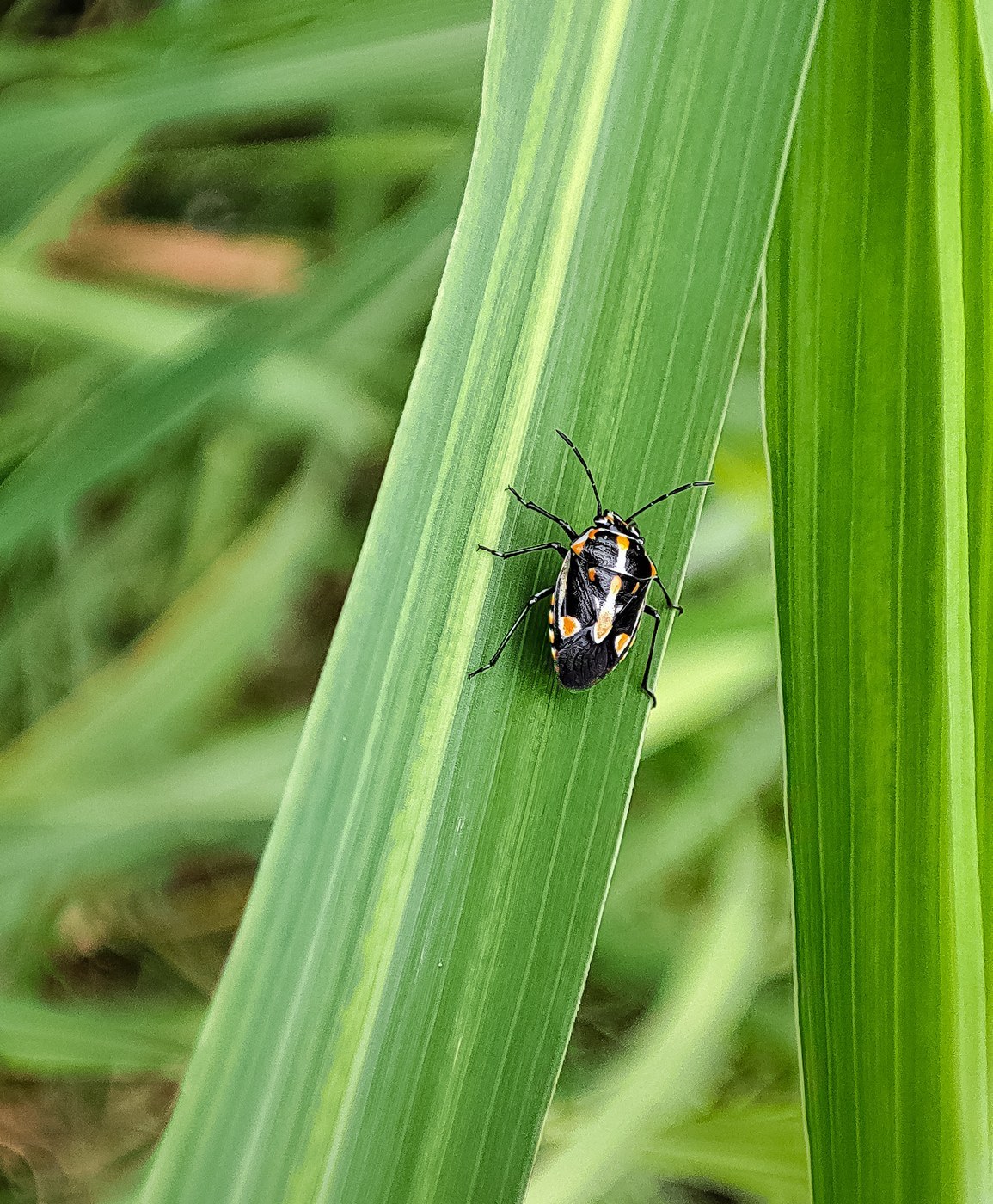
Bagrada Bug
Arid gardens, crucifer fields, desert-adjacent croplands
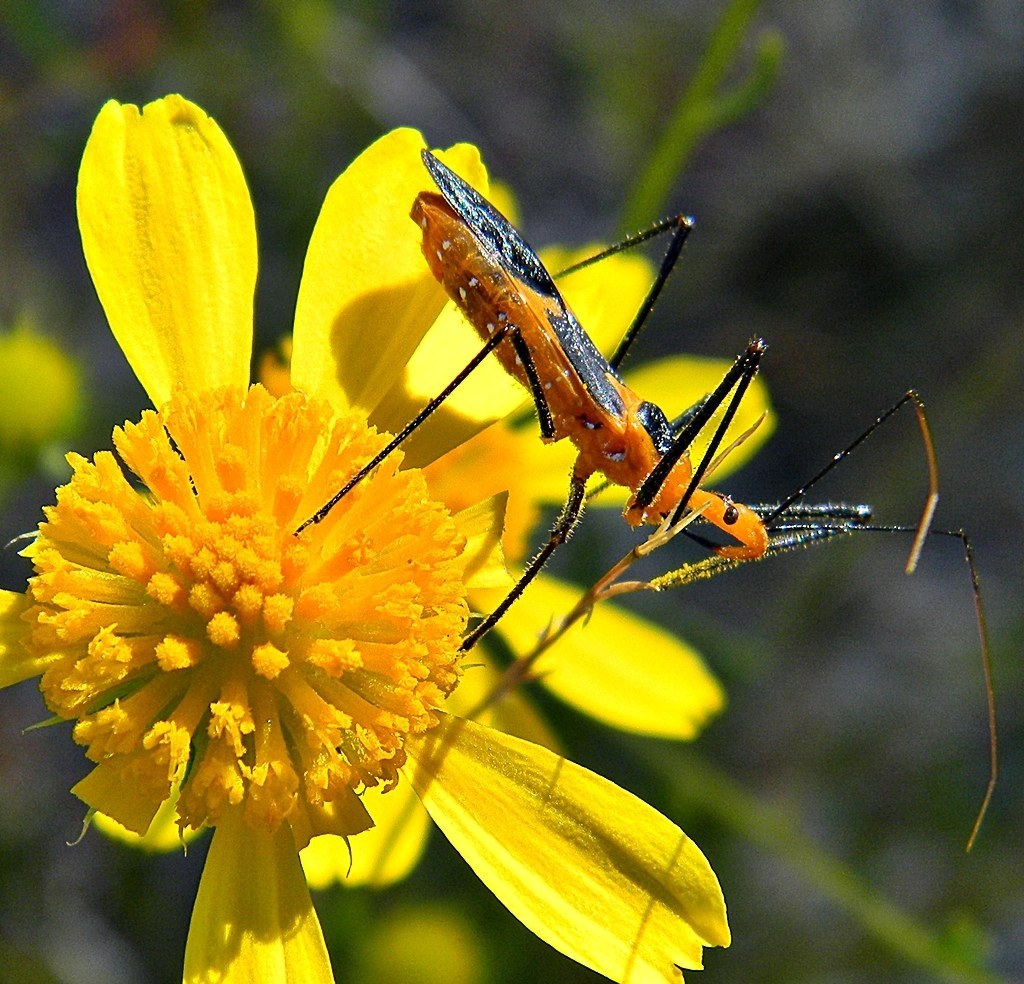
Assassin Bug
Gardens, meadows, and vegetation worldwide
Water Boatman Bug
Ponds, lakes, and slow-moving freshwater
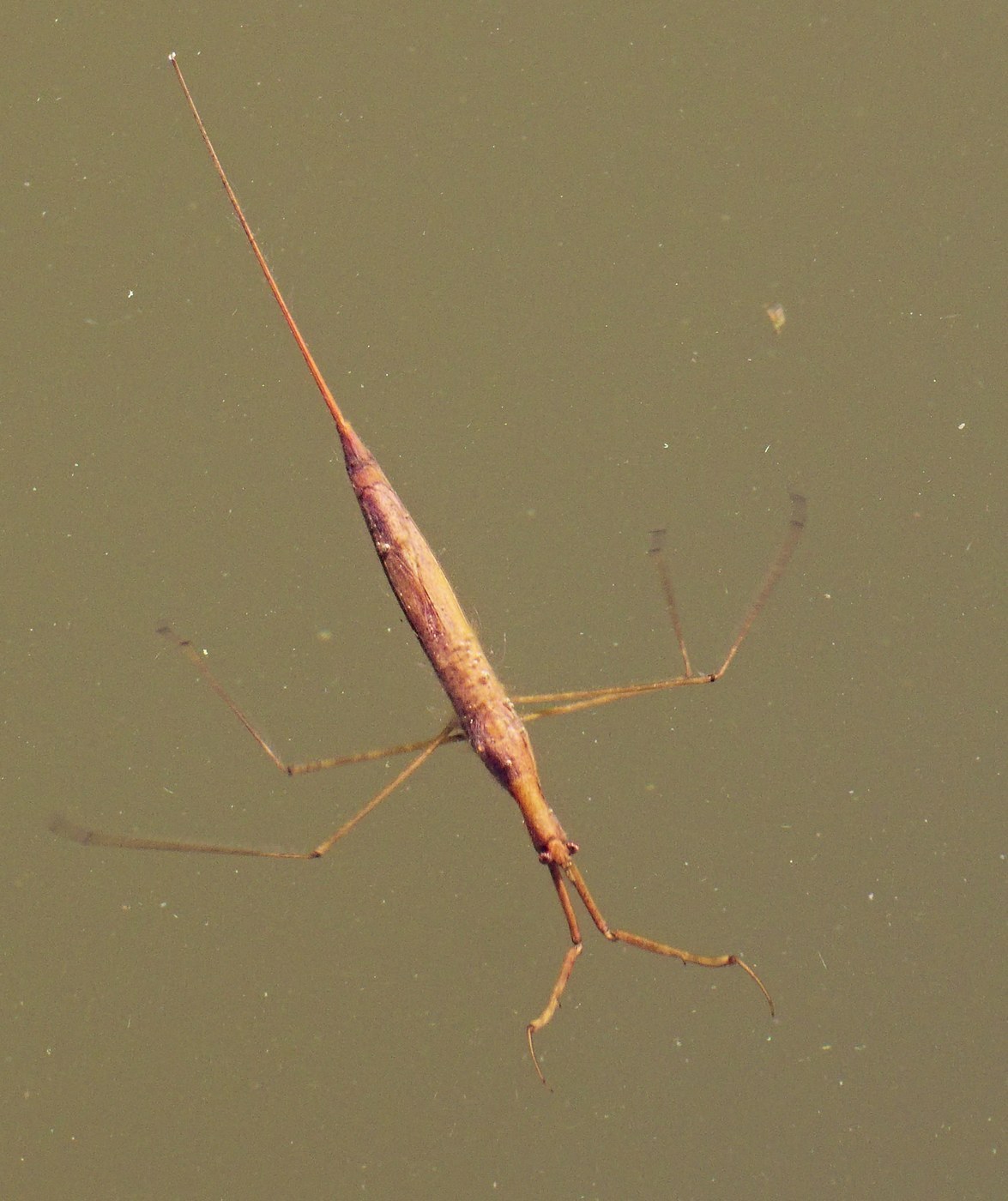
Water Stick Insect
Still and slow-moving water with dense submerged vegetation
Rough Stink Bug
Tree bark, woodlands, orchards, and shrubby vegetation
Stink Bug
Gardens, crop fields, and woodlands across temperate and subtropical regions
Squash Bug
Vegetable gardens and farm fields growing squash, pumpkin, and other cucurbits
Aphid
On stems, leaves, and buds of a very wide range of host plants
Woolly Aphid
Bark crevices, root collars, and twigs of apple, elm, and alder trees
Whitefly
Greenhouses, gardens, and undersides of leaves on host plants
Water Measurer
Quiet edges of ponds, marshes, and slow streams
Two-Spotted Stink Bug
Gardens and fields with potato and nightshade-family plants