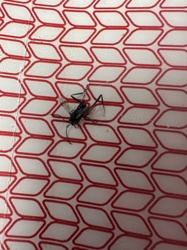
Cricket Identification Guide
Identify a cricket by its long antennae, jumping hind legs, and flat wings folded over its back.
Read the full Cricket encyclopedia entry →Key Visual Features
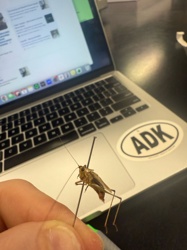
Crickets (family Gryllidae) have a rounded head, a robust cylindrical-to-slightly-flattened body, and very long, thread-like antennae that typically extend well beyond the length of the body—often the single easiest field mark to spot. Coloring is usually brown, tan, or black, sometimes with darker mottling. The hind legs are enlarged and muscular, built for powerful jumping. Wings, when present, lie flattened over the back rather than tented, and in males the forewings bear a raised, rasp-like structure used to produce the familiar chirping song by rubbing the wings together. Females can be distinguished by a long, needle-like or spear-shaped ovipositor projecting from the rear of the abdomen.
Where and When You'll See It
Crickets are common in grassy fields, gardens, meadows, and around building foundations, and they readily turn up in basements, garages, and under logs, stones, or mulch. They are largely nocturnal, and their rhythmic chirping is one of the most familiar night sounds of summer and early fall, with each species producing a slightly different pitch and rhythm that can help narrow down an identification even in the dark. During the day they tend to hide in cracks, burrows, or dense vegetation, emerging as temperatures cool in the evening and becoming most active on warm, humid nights.
Similar-Looking Bugs
- Grasshoppers: Have short antennae (shorter than the body), are active during the day, and have a more angular head shape.
- Katydids: Share the long antennae but have wings shaped and veined like leaves, are usually green, and live up in shrubs and trees rather than on the ground.
- Camel crickets: Wingless, humpbacked, and silent, with an arched back that gives them a distinctive "hunchback" profile compared to the flatter-backed true cricket.
- Mole crickets: Have shovel-like enlarged front legs adapted for digging, quite different from a true cricket's front legs.
Quick ID Checklist
- Antennae longer than the entire body
- Robust, cylindrical body, usually brown, tan, or black
- Large hind legs built for jumping
- Wings folded flat over the back (in winged species)
- Active and calling mainly at night, often heard before seen
Frequently asked questions
How can I tell a cricket from a grasshopper?
Crickets have antennae longer than their body and are mostly active at night, while grasshoppers have short antennae and are active during the day.
Why do only some crickets chirp?
Chirping is produced by males rubbing specialized structures on their forewings together; females lack this structure and stay silent.
What is that long spike on the back of some crickets?
That is the ovipositor, a slender egg-laying structure found only on females, used to identify their sex rather than any weapon.
Where do crickets typically hide during the day?
They shelter in cracks, burrows, dense grass, or under logs and stones, becoming active mainly after dusk.
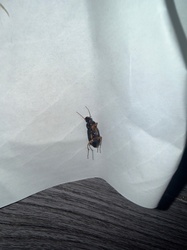
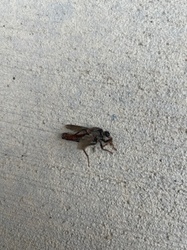
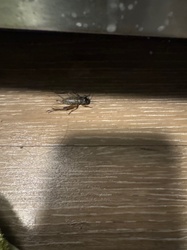
Cricket identified by the community
Recent Cricket finds identified with Bug Identifier.