Darkling Beetle Identification Guide
Identify darkling beetles by their dark, matte bodies, rounded wing covers, and slow ground-walking habits.
Read the full Darkling Beetle encyclopedia entry →Key Visual Features
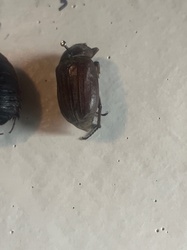
- Body shape: Oval to elongated with a somewhat rounded, convex back; body proportions vary by species from stocky to slender.
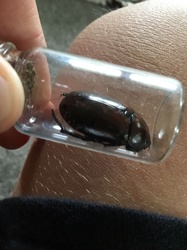
- Color: Typically solid black, dark brown, or grayish, usually with a matte or dull finish rather than a glossy sheen.
- Wings: Hardened wing covers (elytra) that are often fused shut in ground-dwelling species, meaning some darkling beetles cannot fly; the elytra may show fine ridges, grooves, or bumpy texture.
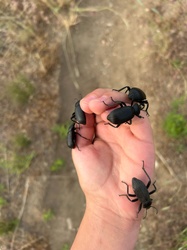
- Legs: Long, sturdy legs suited for walking and, in some species, standing with the rear end elevated as a defensive posture.
- Antennae: Moderate-length, thread-like to slightly clubbed antennae.
- Head: Relatively small and often angled downward, partly tucked beneath the front of the thorax.
Where and When You'd See One
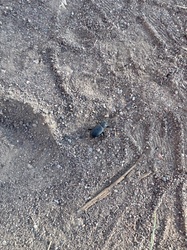
Darkling beetles are found in a wide range of dry habitats, including deserts, grasslands, leaf litter, under logs or rocks, and around stored grain or organic debris. Many species are most active at night or during dawn and dusk, especially in warmer months, though some can be seen slowly walking across open ground during the day. They tend to favor dry, sheltered spots and are commonly encountered in arid or semi-arid regions.
Similar-Looking Creatures
- Ground beetles: Often more glossy, faster-moving, and equipped with longer legs built for running rather than the slower, more deliberate walk of darkling beetles.
- Ground/carrion beetles: Can appear similarly dark but often have more textured or ridged elytra and different antennae shapes.
- Click beetles: Narrower and capable of flipping themselves upright with a snapping motion, unlike the stouter darkling beetle.
- Stink beetles (a type of darkling beetle): Overlap with the broader darkling beetle group but are sometimes noted for a distinctive head-down, rear-up standing posture when disturbed.
Quick ID Checklist
- Oval to elongated body with a dull, matte black, brown, or gray finish.
- Hardened wing covers, sometimes fused shut in ground-dwelling species.
- Slow, deliberate walking gait on sturdy legs.
- Found in dry habitats like deserts, leaf litter, or under logs and rocks.
- Most active at night, dawn, or dusk, especially in warm seasons.
Frequently asked questions
How can I tell a darkling beetle from a similar-looking ground beetle?
Darkling beetles typically have a duller, matte finish and move more slowly and deliberately, while ground beetles are often glossier and move quickly, using longer legs built for running.
Why might a darkling beetle not fly away when approached?
Many ground-dwelling darkling beetle species have wing covers that are fused shut, meaning they have lost the ability to fly and instead rely on walking to move around.
What kind of posture might indicate a darkling beetle?
Some darkling beetles react to disturbance by lowering their head and raising the rear of their abdomen, a distinctive stance that can help with identification alongside their overall dark, matte coloring.
Where are darkling beetles most commonly found?
They favor dry environments such as deserts, grasslands, leaf litter, and sheltered spots under rocks or logs, and are frequently active at night or during cooler parts of the day.
Darkling Beetle identified by the community
Recent Darkling Beetle finds identified with Bug Identifier.