Differential Grasshopper Identification Guide
Identify this large field grasshopper by the bold black herringbone pattern on its hind legs.
Read the full Differential Grasshopper encyclopedia entry →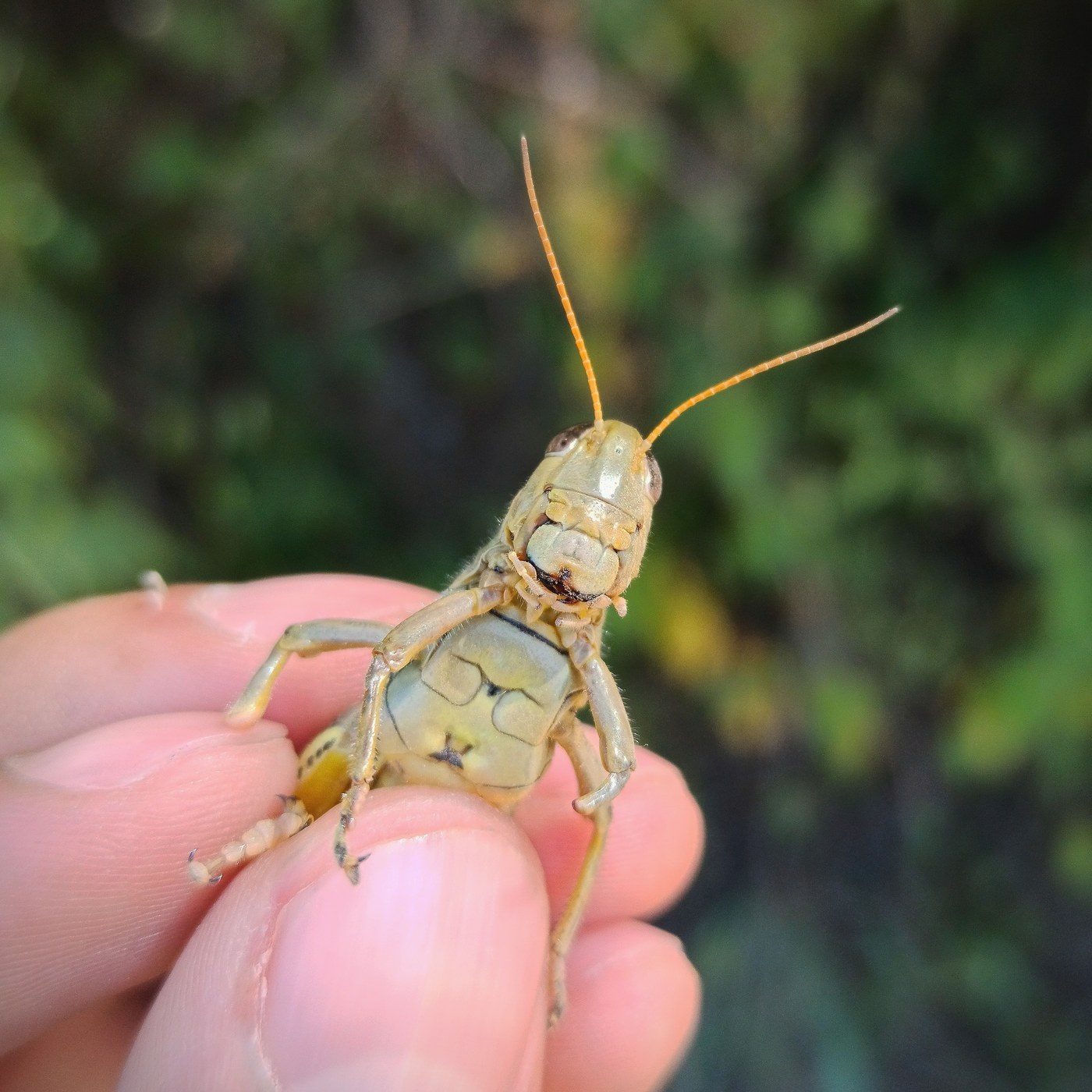
Key Visual Features
The differential grasshopper (Melanoplus differentialis) is one of the larger field grasshoppers in North America, with adults measuring roughly 1 to 1.8 inches long.
- Color: Olive-yellow to yellowish-brown body, often appearing brighter yellow on the underside and legs.
- Body shape: Robust and thick-bodied compared to many other field grasshoppers.
- Hind legs: The most distinctive feature is a bold black herringbone or chevron pattern running along the outer face of the enlarged hind femur (thigh), set against a yellow background.
- Wings: Long wings that extend past the tip of the abdomen, allowing capable flight.
- Head and antennae: Short, thickened antennae and a relatively blunt, rounded head profile.
- Size difference: Females are noticeably bulkier than males, with a heavier abdomen, though both sexes show the same yellow-and-black leg pattern.
Where and When You'll See It
Differential grasshoppers are common across central and eastern North America, favoring weedy fields, crop edges, roadsides, ditches, and riverbanks. They are most abundant and easiest to observe from mid-summer through fall, often seen basking on bare ground or low vegetation during the day, sometimes gathering in large aggregations in weedy areas where food plants are abundant.
Similar-Looking Species
- Red-legged grasshopper: Smaller overall, with reddish tibiae (lower leg segments) rather than the differential's yellow legs, and lacks the bold black chevron pattern on the femur.
- American grasshopper: Larger and more elongated, with speckled wings and a pale stripe down the back, but without the herringbone leg pattern.
- Two-striped grasshopper: Distinguished by a pair of pale cream stripes running down the back from behind the eyes to the wingtips, a feature the differential grasshopper lacks.
Quick ID Checklist
- Large, robust body, olive-yellow to yellow-brown
- Bold black herringbone/chevron pattern on the outer hind femur
- Long wings extending past the abdomen tip
- Found in weedy fields, crop margins, and roadsides
- Most visible mid-summer through fall across central and eastern North America
Frequently asked questions
What is the key feature that identifies a differential grasshopper?
Look for the bold black herringbone or chevron pattern on the outer face of its enlarged yellow hind legs — this pattern is the most reliable identifying mark.
How big does a differential grasshopper get?
Adults typically range from about 1 to 1.8 inches long, making them one of the larger common field grasshoppers.
How is it different from the red-legged grasshopper?
The red-legged grasshopper is smaller with reddish lower leg segments and lacks the differential grasshopper's black chevron pattern on the thigh.
Where do differential grasshoppers live?
They're common in weedy fields, crop edges, roadsides, and ditches across central and eastern North America, especially from mid-summer through fall.
Differential Grasshopper identified by the community
Recent Differential Grasshopper finds identified with Bug Identifier.