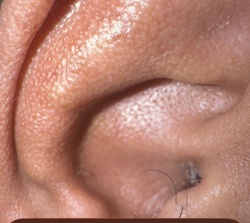
Ear Mite Identification Guide
An identification overview of the tiny, pale ear mite and the magnified traits used to recognize it.
Read the full Ear Mite encyclopedia entry →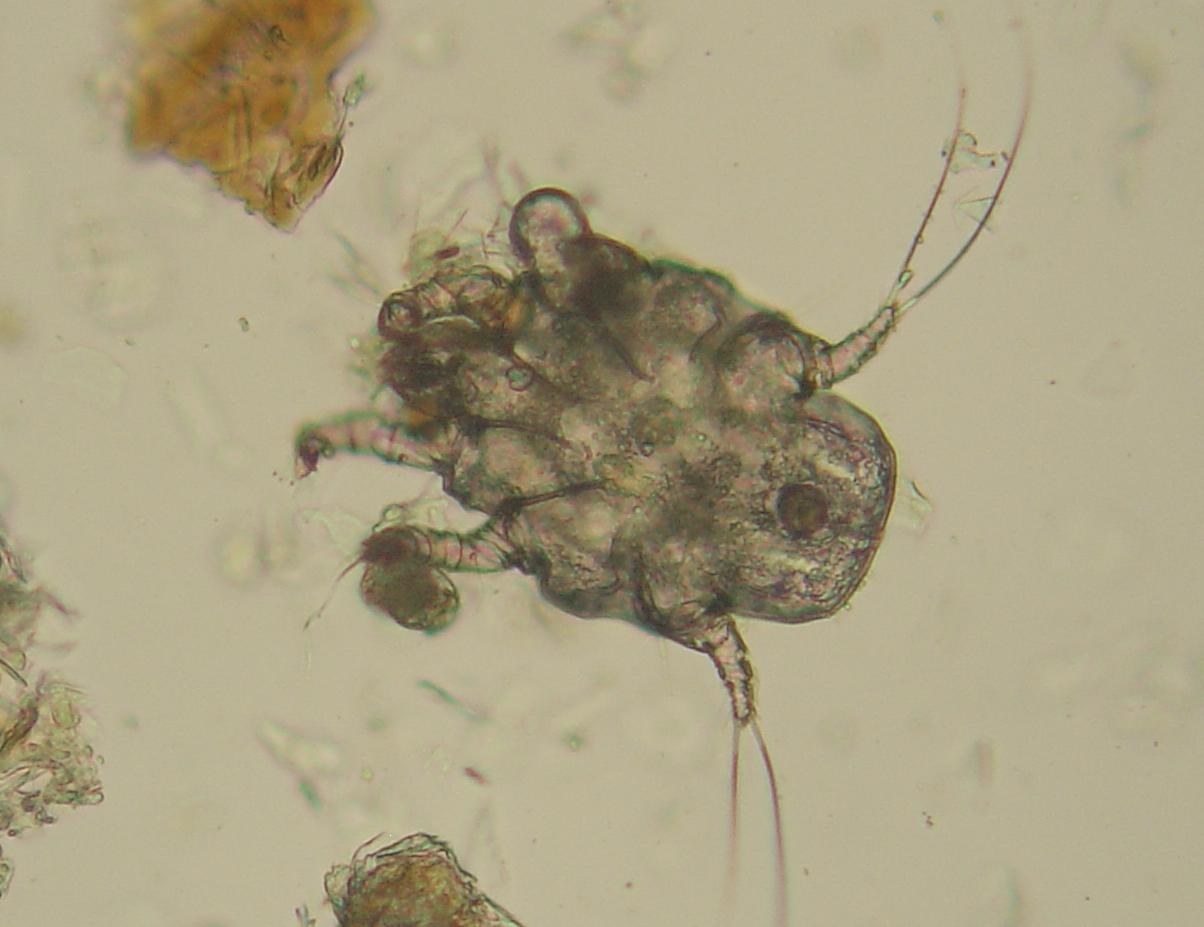
Key Visual Features
Ear mites (Otodectes cynotis and related species) are tiny surface-dwelling mites best identified through close or microscopic examination rather than casual observation.
- Size: Very small, roughly 0.3–0.5 mm long, at the edge of visibility to the naked eye.
- Color: Pale white to cream, translucent enough that internal structures can sometimes be seen under magnification.
- Body shape: Rounded, oval body typical of surface mites, with a somewhat flattened profile.
- Legs: Eight legs; in this genus, legs are relatively long and unjointed pedicels (stalks) tip several of the leg pairs, ending in small suckers.
- Wings/antennae: None — no wings and no true antennae, consistent with all mites.
- Markings: Body surface is largely smooth and pale, with the leg structure — long stalked legs with suckers — serving as the main distinguishing feature under magnification.
Where and When You'd See Them
Ear mites live directly within ear canal environments of their host and complete their full life cycle — egg, larva, nymph stages, and adult — in that same sheltered space over a period of a few weeks. Because of this closely associated lifestyle and microscopic size, they are essentially never observed moving freely in open environments; identification in practice relies on examining material from the ear canal under magnification rather than spotting the mite unaided.
Similar-Looking Bugs
- Follicle mites are similarly tiny but have an elongated, worm-like body rather than the rounded shape of the ear mite.
- Scabies mites are a comparable size and also pale, but have a more domed, tortoise-like body and burrow into surface tissue rather than living within the ear canal.
- Chicken and bird mites are larger, free-living, and mobile across open surfaces, unlike the host-associated, sheltered ear mite.
- Dust mites are similar in size and pale coloring but lack the stalked, sucker-tipped legs characteristic of the ear mite genus.
Quick ID Checklist
- Extremely small, roughly 0.3–0.5 mm, requiring magnification to examine
- Pale white to cream, translucent body
- Rounded, oval, somewhat flattened shape
- Long stalked legs tipped with small suckers on several leg pairs
- Entire life cycle completed within the sheltered ear canal environment over a few weeks
Frequently asked questions
Can ear mites be seen without magnification?
No, they are extremely small at roughly 0.3–0.5 mm, so a microscope or strong magnification is needed for a clear look at identifying features.
What color are ear mites?
They are pale white to cream and somewhat translucent, without any bold markings.
How is an ear mite's body shape different from a follicle mite's?
Ear mites have a rounded, oval body, while follicle mites are elongated and worm-like, making body shape a useful way to tell the two apart under magnification.
How long does an ear mite's life cycle take?
The full cycle from egg through larval and nymph stages to adult typically spans a few weeks, all completed within the same sheltered environment.
Ear Mite identified by the community
Recent Ear Mite finds identified with Bug Identifier.