
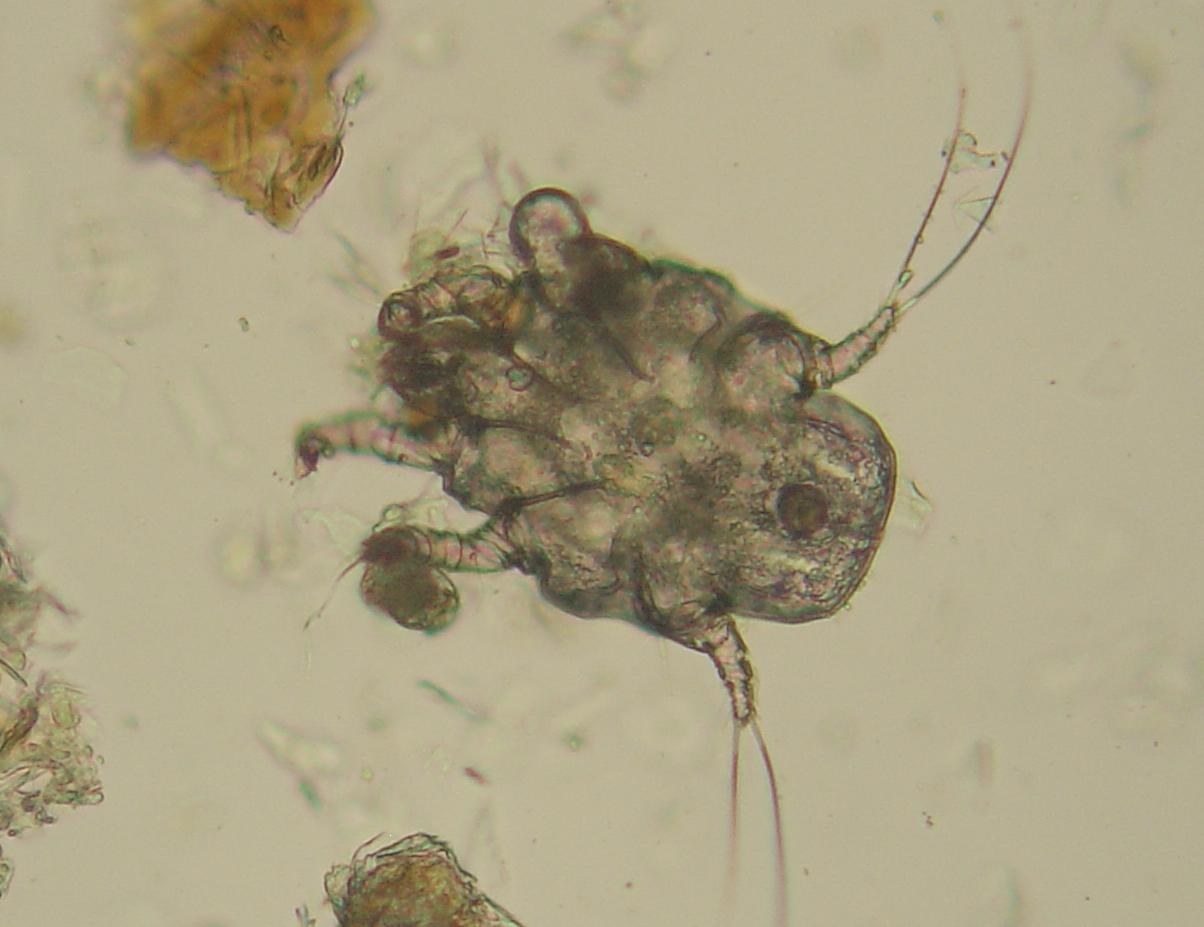
Ear Mite
Otodectes cynotis
A microscopic, pale mite that lives out its entire life cycle within the ear canal of its host, completing egg to adult development in a warm, sheltered environment without ever leaving.
- Size
- 0.3-0.5 mm
- Habitat
- Ear canals of various mammal hosts
- Danger
- Bites
Spotted a bug like this?
Identify any bug or insect from a photo, free.
Overview
The ear mite is a tiny, non-burrowing parasitic mite that spends its entire life cycle within the ear canal of its host, feeding on skin debris, wax, and other material found there. It is one of the most host-specific mites known, with individuals rarely straying beyond the ear canal environment where they complete every developmental stage from egg to adult.
Unlike many mites that burrow into skin tissue, ear mites remain on the surface of the ear canal lining, using their piercing mouthparts to feed on skin flakes, secretions, and other organic debris rather than penetrating deeper tissue layers. Their entire biology is adapted to this narrow, warm, sheltered microhabitat.
Ear mites are distributed globally wherever their mammalian hosts occur and represent a highly specialized example of parasitic mite adaptation to a single, very specific body region rather than the skin or fur more broadly.
How to Identify
- Extremely small, roughly 0.3 to 0.5 mm long, essentially invisible without a microscope or otoscope-assisted magnification
- Pale white to cream colored body, oval in outline
- Eight legs as adults, with the front two pairs typically extending beyond the body margin
- Lacks the burrowing adaptations of mange mites that live within skin tissue, instead residing on the ear canal surface
- Best identified through microscopic examination of ear canal debris rather than visual inspection alone
Habitat & Range
Ear mites are found worldwide, wherever their host species occur, living exclusively within the ear canal environment of mammals. This specialized habitat provides consistent warmth, humidity, and a steady supply of skin debris and secretions on which the mites feed.
Because they are so tightly adapted to this microhabitat, ear mites are rarely, if ever, found free-living in the external environment, and their distribution essentially mirrors that of their host species.
Behavior & Diet
Ear mites feed on skin debris, wax, and other organic material within the ear canal, remaining in this sheltered environment throughout their entire life. They do not typically migrate to other parts of the body or leave the host under normal circumstances, spending their whole life cycle in this single, specialized niche.
Transmission between hosts generally occurs through close physical contact, allowing mites to move from one individual to another. As a highly host-associated parasite, the ear mite's ecological role is limited to its narrow niche within the ear canal environment of its hosts.
Life Cycle
The ear mite life cycle includes egg, larval, two nymphal stages, and adult, all of which take place within the ear canal itself. The complete cycle from egg to adult typically takes around three weeks under favorable conditions.
Eggs are laid within the ear canal and hatch into larvae, which molt through nymphal stages before reaching adulthood, with each stage continuing to feed on the same skin debris and secretions found in this environment. Because the entire life cycle occurs in one contained location, populations can build up steadily within an individual host over time.
Frequently asked questions
Where do ear mites live?
Ear mites spend their entire life cycle, from egg to adult, within the ear canal of their host, rarely if ever venturing to other parts of the body or the outside environment.
What do ear mites eat?
They feed on skin debris, wax, and other organic material found on the surface lining of the ear canal, rather than burrowing into deeper tissue.
How long does it take an ear mite to develop from egg to adult?
Under favorable conditions within the ear canal, the complete life cycle from egg through larval and nymphal stages to adult takes roughly three weeks.
Can ear mites be seen without magnification?
No, they are extremely small, typically only 0.3 to 0.5 mm long, and identification generally requires microscopic examination of ear canal debris.
Ear Mite guides
In-depth guides for identifying, understanding, and living alongside Ear Mite.
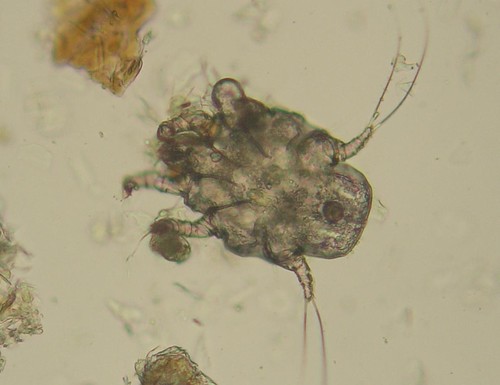
Ear Mite identified by the community
Real finds identified with Bug Identifier.
Other bugs you may enjoy
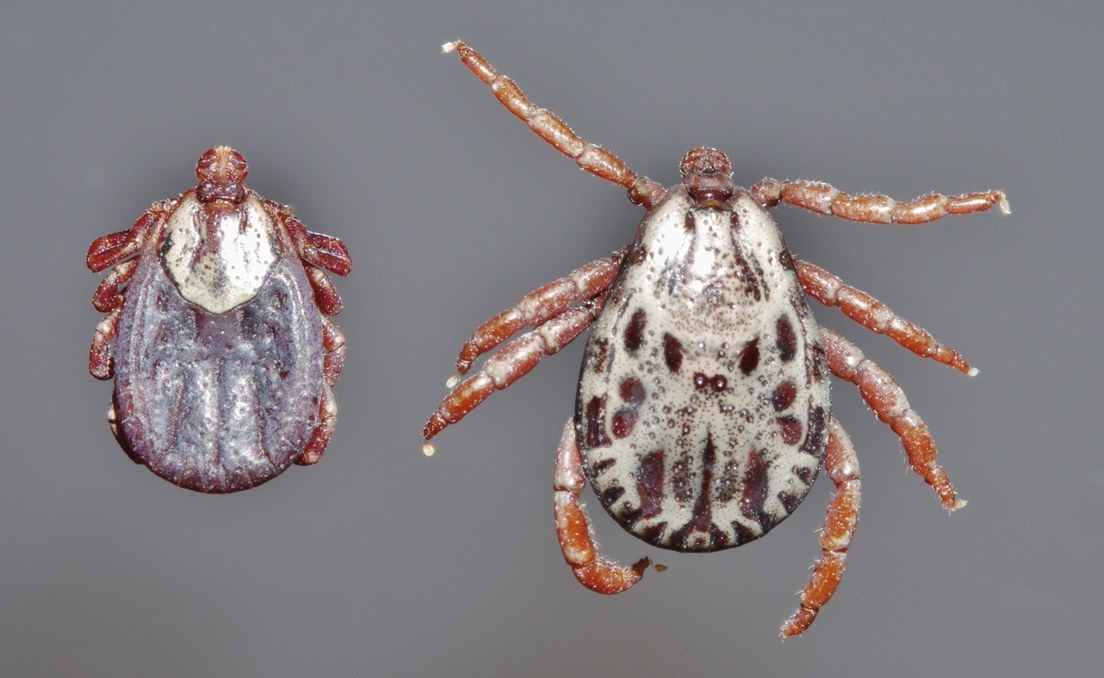
Wood Tick
Grassland, shrub-steppe, and open woodland of western North America
Yellow Scorpion
Arid scrubland, rocky slopes, and desert margins
Whip Spider
Tropical caves, rainforest leaf litter, and under bark
Water Mite
Ponds, lakes, streams, and other freshwater bodies
American Dog Tick
Grassy fields, trails, and low vegetation near woodlands
Arizona Bark Scorpion
Rocky desert terrain, tree bark, and structures in the Southwest
Tick
Tall grass, brush, woodland edges, and animal trails
Soil Mite
Soil, leaf litter, moss, and decaying organic matter worldwide
Rocky Mountain Wood Tick
Sagebrush shrublands, grasslands, and montane forest edges
Two-Spotted Spider Mite
Undersides of leaves on garden plants, crops, and houseplants
Spider Mite
Undersides of leaves on garden plants, houseplants, and field and orchard crops worldwide
Whip Scorpion
Tropical and subtropical caves, tree bark, and rock crevices worldwide